
Transformers: Dark Of The Moon
Director: Michael Bay
Starring: Shia LaBeouf, Rosie Huntington-Whiteley and Josh Duhamel
Follow @jamieneish
Transformers: Dark Of The Moon
Director: Michael Bay
Starring: Shia LaBeouf, Rosie Huntington-Whiteley and Josh Duhamel
Follow @jamieneish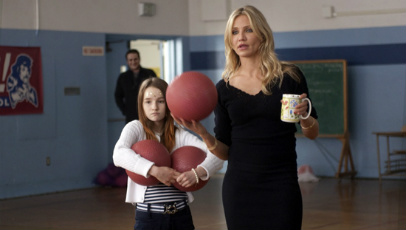
Synopsis: Some teachers just don’t give an F. Case in point: Elizabeth (Cameron Diaz). She’s foul-mouthed, ruthless, and inappropriate. She drinks, she gets high, and she can’t wait to marry her meal ticket and get out of her bogus day job. When she’s dumped by her fiancé, she sets her plan in motion to win over a rich, handsome substitute (Justin Timberlake) – competing for his affections with an overly energetic colleague, Amy (Lucy Punch). When Elizabeth also finds herself fighting off the advances of a sarcastic, irreverent gym teacher (Jason Segel), the consequences of her wild and outrageous schemes give her students, her coworkers, and even herself, an education like no other.
While the premise itself is obviously interesting, and the characters have a great potential to be explored, screenwriters Gene Stupnitsky and Lee Eisenberg are too busy trying to shock with crass humour, ridiculous gags and offensive one liners. There are glimmers of hope with a sprinkling of particularly funny moments – mostly to do with Punch’s Amy and her various interactions with Diaz’s Elizabeth – but, due to the inconstant nature in which they unfold, the humour falls flat as quickly as it arrives.
Jake Kasdan’s direction, on the other hand, is surprisingly rich and crisp for a comedy production, adding a pretty gloss that, at times, adequately masks the poorly structured and played out narrative. We’ve seen with Walk Hard: The Dewey Cox Story and Orange County that Kasdan has huge potential, so it’s a disappointment to see him wasting his obvious skills as a director on such a misguided comedy.
Diaz is unavoidably miscast in the role of Elizabeth. Though she works wonders with the mediocre dialogue, she simply doesn’t have the versatility needed as an actress to pull off the various sides Elizabeth harbours. Sure, she can do the whole sexy, radiant thing, but it’s hard to believe her evil side when you’re aware of how nice she is in real life.
Timberlake tries a little too hard to be the sexy nerd, but he never quite pulls it off. Segel, however, makes a valiant attempt at the sexy rogue, but is thwarted by a lack of screen time. (Yes, there is indeed a theme of “sexy-insert-secondary-character-trait-here” going on throughout.) Essentially, this means that Bad Teacher belongs to Punch, who manages to be almost constantly hilarious as Amy: seemingly nice yet harbouring an insane evil streak. She fills the role with a terrific sense of physicality – so much so that you find yourself wishing she’d switch roles with Diaz purely so she can have more time onscreen.
Ultimately, Bad Teacher is a beguiling and poorly written comedy that shamefully wastes its array of talent. Aside from a few laughs, and a scene stealing turn from Punch, it’s almost entirely insufferable.
Follow @jamieneish
Synopsis: Shot by filmmakers all around the world, Life In A Day aims to show future generations what it was like to be alive on July 24, 2010.
Co-directed by Kevin Macdonald, and produced by filmmaker brothers Ridley Scott and Tony Scott, Life In A Day’s concept is a relatively austere one: invite millions of people from around the world to film their lives on July 24, 2010, submitting the results to YouTube with the possibility of being included in a new documentary. The response was overwhelming, with a total of 4,500 hours of footage being collected.
The resulting documentary is a neatly pieced together, surprisingly moving peek into a day into the life of Earth’s inhabitants. Director McDonald begins at midnight, and proceeds to take us through the entire day over the course of a tidy 90 minute running time. Moving from continent to continent, individual to individual, Life In A Day wonderfully documents ordinary people going about their ordinary lives, from the humdrum aspects of human life – such as eating, talking, love and laughter – to the more challenging – death, disease, war, discrimination and brutality.
Profoundly benevolent, marvellously captivating and pleasingly authentic, Life In A Day is a worldly, important documentary that offers a brief yet wholly authentic and revealing glimpse into humanity. A triumphant achievement in contemporary cinema.
Life in a Day is currently playing at DCA Dundee.
Follow @jamieneish
1. Bridesmaids – £3.5M
2. Kung Fu Panda 2 – £1.5M
3. Green Lantern – £1.1M
4. Bad Teacher – £1M
5. The Hangover Part II – £801,000
6. X-Men: First Class – £710,000
7. Pirates Of The Caribbean: On Stranger Tides – £523,000
8. Senna – £264,000
9. Diary Of A Wimpy Kid 2: Rodrick Rules – £155,000
10. Double Dhamaal – £117,000
Follow @jamieneish
Never Let Me Go
Director: Mark Romanek
Starring: Carey Mulligan, Keira Knightley and Andrew Garfield
No Strings Attached
Director: Ivan Reitman
Starring: Natalie Portman, Ashton Kutcher and Kevin Kline
Yogi Bear
Director: Eric Brevig
Starring: Dan Aykroyd, Justin Timberlake and Anna Faris
Season Of The Witch
Director: Dominic Sena
Starring: Nicolas Cage, Ron Perlman and Claire Foy
Ghosted
Director: Craig Viveiros
Starring: John Lynch, David Schofield and Martin Compston
Meet Monica Velour
Director: Keith Bearden
Starring: Kim Cattrall, Dustin Ingram and Brian Dennehy
Cold Fish
Director: Shion Sono
Starring: Makoto Ashikawa, Denden and Mitsuru Fukikoshi
Follow @jamieneish
1. Cars 2 – $68M
2. Bad Teacher – $31M
3. Green Lantern – $18.4M
4. Super – $12.1M
5. Mr. Popper’s Penguins – $10.3M
6. X-Men: First Class – $6.6M
7. The Hangover Part II – $5.6M
8. Bridesmaids – $5.3M
9. Pirates Of The Caribbean: On Stranger Tides – $4.7M
10. Midnight In Paris – $4.4M
Follow @jamieneish
Essentially, Perfect Sense is a romantic love story set against an apocalyptic backdrop. It tells of how a chef, Michael (Ewan McGregor), and a scientist, Susan (Eva Green), fall in love as an epidemic begins to rob people of their sensory perceptions.
Kim Fupz Aakeson’s cunningly written screenplay imagines a world in which the inhabitants slowly lose their senses, one by one. The apocalypse is refreshingly personal and, to an extent, psychological. Whilst we are made aware – through cleverly placed and constructed newsreel-style footage – that the epidemic is happening globally, Perfect Sense chooses to focus on a handful of characters rather than the world at large. The most important of these are Michael and Susan, who are drawn together as their lives descend into chaos.
The storytelling style, though an enthralling rollercoaster of emotional highs and lows, is deliberately restrained, with Mackenzie cleverly approaching the material in a subdued, intimate and character-centric way – immediately setting Perfect Sense apart from other films of its nature. For the dark subject matter it’s also surprisingly optimistic: after each sensory loss, those affected look to find a way of coping by returning to some form of normality.
The film is also stunningly shot by Director of Photography Gilles Nuttgens, under the watchful eye of experienced filmmaker David Mackenzie. What’s truly breathtaking, though, is the way in which the editing superbly complements the separate stages of sensory loss – for the post-hearing scenes, for example, the sound is softened (if not muted entirely) to give viewers a real sense of what it would be like if this were to happen to them. It’s wonderfully achieved, and helps to include viewers in the characters’ struggle for survival.
Max Richter’s score adds to the mournful mood, building up tension and emotion when needed. The same, however, can’t be said for the narration which, after a while jars, and often detracts from the involvement in Michael and Susan’s story.
The cast works brilliantly together. McGregor and Green, in particular, play off each other’s emotions in a way that makes Michael and Susan’s unlikely relationship seem so believable and authentic. Their individual personalities, as well as their relationship with one another, evolve throughout the course of the film, almost as if they need one another’s love in order to cope with the death and destruction surrounding them. Connie Nielson, Ewen Bremner and Stephen Dillane make up the noteworthy supporting cast, delivering respectable performances in their subsequently diminished roles.
Perfect Sense – while not without faults – is a beautifully intricate and personal piece of cinema, bolstered by phenomenal direction, terrific performances and truly affecting, surprisingly original screenplay.
Incendies
Director: Denis Villeneuve
Starring: Lubna Azabal, Mélissa Désormeaux-Poulin andMaxim Gaudette
Ghosted
Director: Craig Viveiros
Starring: John Lynch, David Schofield and Martin Compston
Countdown To Zero
Director: Lucy Walker
Starring: Graham Allison, James Baker III and Bruce Blair
The First Grader
Director: Justin Chadwick
Starring: Naomie Harris, Tony Kgoroge and Oliver Litondo
Viva Riva!
Director: Djo Munga
Starring: Patsha Bay, Manie Malone and Hoji Fortuna
Follow @jamieneish
Synopsis: Heartbeats centers on two close friends, Francis (Xavier Dolan) and Marie (Monia Chokri), who find themselves fighting for the affections of the same striking young man (Neils Schneider). The more intimate the trio becomes, the more unattainable the object of their infatuation seems, sending the friends’ obsession into overdrive.
Heartbeats’ narrative may be a simple one, but it’s matched cleverly by the overindulgence in hyper-stylised aesthetic. This achieves Dolan’s overall purpose through the use of tricks and gimmicks – such as slow-motion, an intense pallet and musical motifs – controlling the viewer’s experience and capturing the superficiality of Marie and Francis’ banal obsession with Nicolas.
His self-asserting directing style is a lot like that of Pedro Almodóvar, Gus Van Sant and Wong Kar-wai – idolising both the vivacity of woman as well as the inherent beauty of men, blurring the boundaries of sexuality in the process. He does this with laid-back, lingering cinematography and striking set designs, making use of vivid colours to represent many of the themes explored within the context of the narrative. Some may think of it as style over substance, but the way in which Dolan shapes his characters and their reactions to one another shows that this is simply isn’t the case.
Through his emphatic writing, Dolan fashions a classic ménage à trois tale about the trials and tribulations of love, obsession and jealousy, often exquisitely echoing two fairly recent examples: Alfonso Cuarón’s Y Tu Mamá También and John Cameron Mitchell’s Shortbus. Heartbeats is a simple story about how, due to our exceedingly high expectations, we let ourselves down by making brash, off the cuff decisions that never work out. Dolan’s understanding of such a complex and indefinable subject shows him as a talent with a belief and knowledge of worldly ideals miles beyond his tender age.
Performance wise, the three leads are near flawless. Chokri brings a welcome level of wit and comprehension to Maria, which is beautifully undercut by her obvious flaws, most noteworthy her naivety towards romance. Dolan, as expected, plays Francis as a straight up pretty boy with a severe lack of self-confidence and an inability to read people’s emotions. Schneider, to his merit, keeps Nicolas undeniably enchanting throughout. He may be the foil to Maria and Francis’ life-long friendship, and the object of both their obsessions, but he’s oblivious to the pain and destruction he’s causing. To some degree, this makes up for his deplorable carelessness.
This is all supported by a particularly brilliant and ecclectic soundtrack, featuring songs such as Dalida’s Bang Bang, Fever Ray’s Keep the Streets Empty for Me and The Kills’ Pass This On. Not only do these songs work incredibly well together, but they also add a new level of depth to the film, speaking louder than words themselves at times when dialogue isn’t possible.
Heartbeats is a remarkable, joyous, captivating, intricately stylised and extraordinarily well pieced together piece of cinema from a budding multi-faceted talent.
Follow @jamieneish
Writer/director Nicolás Goldbart’s Phase 7 tells the story of a young couple – Coco (Daniel Hendler) and Pipi (Jazmín Stuart) – who discover their apartment building is to be immediately quarantined due to the appearance of a deadly virus. Their ensuing seclusion brings about a series of monstrous events, alliances and double-crossings amongst the neighbours.
Phase 7 is a relatively taut apocalyptic thriller from Goldbart, an up-and-coming Argentinian talent, that, instead of focusing on the worldwide panic that follows an epidemic, centres on a lowly apartment building and its tenants as they deal with the outbreak – with often disastrous consequences.
Goldbart’s screenplay is tight, valiantly choosing to be an intimate character piece rather than an all-out action-fuelled thriller, representing how everyday people would react to a sudden deadly epidemic. Where it falters, however, is with the jarring lurches into black comedy that ultimately do little more than diffuse tension, and not always at the times when it is necessary. The humour, including some lo-fi social commentary, is often too dry, languid and half-hearted to make much of a lasting impression.
Merit, though, must be awarded to Goldbart’s direction, which is wonderfully low-key. It’s hard to believe this is his directorial debut, as he displays such a laid-back, confident approach. He pays close attention to the characters and their responses to each other, rather than trying to create something bigger than itself. For the most part, it works well, and shows Goldbart as a director with a lot of flair and enthusiasm, but viewers will see striking resemblances to REC, Right at Your Door, and even Shaun of the Dead, which may infringe upon overall enjoyment.
Guillermo Guareschi’s complimentary score is a shining success, paying a fitting homage to similar genre films of the seventies and eighties. The oft-sinister compositions are top-notch: perfectly loud, bombastic synth sounds that hit prompts hard, audaciously and effectively when needed – especially in the second half, when the action is amped, and the film develops from a tense character study into a bloody battle for survival.
Hendler delivers an admirable turn as Coco, striking a fine line between passive coward and protective soon-to-be father and husband. While Yayo Guridi runs with Goldbart’s demented one liners as the immaculately prepared Horacio, it’s Federico Luppi as Zanutto who truly steals the show with a blisteringly calamitous performance as the physical manifestation of the epidemic, uses every means possible – whether it be combative or destructively deadly – to assume control of the apartment block and its disorderly inhabitants.
At times, Phase 7 is a nail-bitingly tense thriller, with keen performances and a savvy, evocative soundtrack. But, due in part to an often isolating plot and iffy tone, it never quite hits the heights of its auspicious and unrivalled premise. A commendable effort nonetheless, but not quite the cult classic it’s brazenly being labelled as.
 Empty Screens