Review: Final Destination 5 (2011)

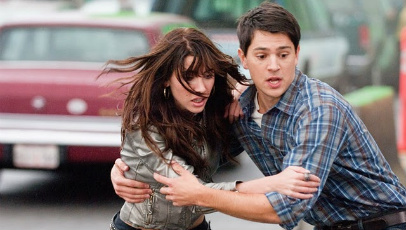
The fifth instalment in New Line Cinema’s massively successful horror franchise, Final Destination 5 isn’t terribly dissimilar to the films before it, which always center on a character who has a premonition about a fatal accident and must cheat Death in order to prevent multiple fatalities. In this incarnation, Sam Lawton (Nicholas D’Agosto) experiences exactly this, witnessing the death of both himself and his co-workers.

No matter how stoic and predicable the Final Destination films have come to be, credit must be given to the filmmakers and writers of each instalment who have always valiantly tried to veer away from the typical trajectory and create something new and exciting with each new instalment. Thankfully, the same can be said for Final Destination 5, in which screenwriter Continue reading “Review: Final Destination 5 (2011)”

Review: The Skin I Live In (2011)

Pedro Almodóvar is a world-renowned cinematic master at interlacing a multitude of plot threads and themes into a discernable and absorbing piece of filmmaking with a seemingly blasé attitude. His latest film, The Skin I Live In, personifies that applaudable ability further.

The Skin I Live In is a gloriously twisted and inherently psychological take on Thierry Jonquet’s short story Mygale: an almost Frankensteinian-esque fable centering on one’s ability to harbour wicked control through science. It tells the story of Robert Ledgard (Antonio Banderas, who was always Almodóvar’s first choice), a highly successful plastic surgeon who, after a Continue reading “Review: The Skin I Live In (2011)”

Review: The Devil’s Double (2011)

Tentatively based on the life story of Latif Yahia, body double to Saddam Hussein’s son Uday, The Devil’s Double tells of Uday’s world and his lust for a life of power, wealth and debauchery. When ordinary Iraqi Latif is handpicked for a life as someone else, he must battle against the system to reclaim his existence and be reunited with his family. Continue reading “Review: The Devil’s Double (2011)”

Review: Rise Of The Planet Of The Apes (2011)

An origin story to Franklin J. Schaffner’s Planet Of The Apes, Rise Of The Planet Of The Apes centers on Will Rodman (James Franco). Rodman is a scientist at Gen-Sys, whose attempts to develop a cure for Alzheimer’s Syndrome have led him to experimentation on apes. When baby ape Caesar (Andy Serkis) is accidentally orphaned in one of these trials, Will takes him Continue reading “Review: Rise Of The Planet Of The Apes (2011)”

Review: Project Nim (2011)

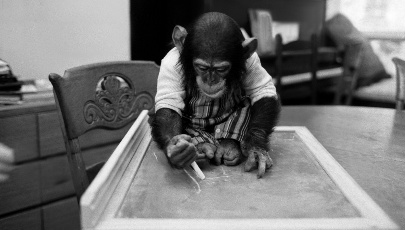
After the extraordinary success of Man on Wire, Academy Award winning director James Marsh returns to documentary filmmaking with Project Nim: an insightful account of a chimpanzee’s experimental life in the 1970′s.

In more depth, Project Nim documents the life of Nim Chimpsky: a chimpanzee taken from his mother shortly after birth by one Continue reading “Review: Project Nim (2011)”

Review: Harry Potter And The Deathly Hallows: Part 2 (2011)

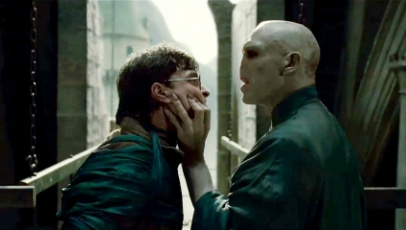
Synopsis: The final instalment begins as Harry (Daniel Radcliffe), Ron (Rupert Grint) and Hermoine (Emma Watson) continue their pursuit to find and destroy Voldemort’s three remaining Horcruxes, the enchanted components responsible for his perpetuity. But as the mystical Deathly Hallows are unearthed, and Voldemort learns of their plan, the ultimate battle begins. Life as life as they Continue reading “Review: Harry Potter And The Deathly Hallows: Part 2 (2011)”

Review: Arrietty (2010)

Synopsis: 14-year-old Arrietty and the rest of the Clock family live in peaceful anonymity as they make their own home from items “borrowed” from the house’s human inhabitants. However, life changes for the Clocks when a human boy discovers Arrietty.

Marking the directorial debut of animator Hiromasa Yonebayashi, Arrietty – Studio Ghibli’s latest output – is a magical adaptation of Mary Norton’s much-loved British classic The Borrowers, and a personal project for esteemed Ghilbi co-founder and animator extraordinaire Hayao Miyazaki.

The screenplay, co-written between Miyazaki and Isao Takahata some forty years ago, is distinctly respectful of Norton’s source material: so much so that it often personally references the books in a noticeably conscientious yet appropriately nuanced manner. Everything from Arrietty’s encounter with an aggressive feline, to her very first Borrowing mission with her father, and even her burgeoning relationship with Sho is played out at a charming pace. It almost feels eternal, which is sure to help in making Arrietty a well-remembered and adored Ghibli feature.

The abundant animation is – as is expected from a Ghibli film – absolutely sensational. Yonebayashi directs with such passion, delicacy and attention to detail that it’s hard not to feel enthralled by the magical world that created. What’s truly striking, however, is how lush and rustic the animation feels. During daylight hours, the delectable landscape is utterly lustrous yet by night it has a luminous and wondrously enchanting quality: a contrast that works tremendously, supplying excellent scope and lineage to the already dazzling canvas.

French musician – and regular Ghibli counterpart – Cecile Corbel’s score blends seamlessly with the action and animation, speaking volumes to the personal touch that all involved have painstakingly applied, ensuring that Arrietty is bestowed in a special old-fashioned finery. Its wistfully idyllic folk-vibe accentuates the animation style further, as though the two were destined to be played alongside one another. At times, the score is in danger of domineering the action, but it’s always pulled back before getting out of hand.

The only problem with Arrietty, and something that might deter older viewers, is that it’s very much a kids film. Aside from a few witty touches, it doesn’t stretch to accommodate adults in the way that Pixar and a number of past Ghibli productions have nailed. That said, it’s hardly something that can be condemned, and on many levels it benefits the film, keeping it grounded and simplistic, rather than trying to appeal to too many demographics and packing it silly with adult-appropriate references.

Arrietty may not hits the heights of Howl’s Moving Castle, Spirited Away, or a number of other well-respected Ghibli classics, but it has exuberant charm, illustrious animation and a high level of intimacy – basically everything you’ve come to expect from a Ghibli film, but on a smaller, more child-focused scale.

Review: Horrible Bosses (2011)

For Nick (Jason Bateman), Kurt (Jason Sudeikis) and Dale (Charlie Day), the only thing that would make the daily grind more tolerable would be to grind their intolerable bosses into dust. Quitting is not an option, so, with the benefit of a few-too-many drinks and some dubious advice from a hustling ex-con, the three friends devise a convoluted and seemingly foolproof plan to rid themselves of their respective employers…permanently. There’s only one problem: even the best laid plans are only as foolproof as the brains behind them.

While the premise for Horrible Bosses starts off as a simplistic and mundane everyday comedy, it quickly (and welcomely) develops into something far more devilish and sinister. Screenwriters Michael Markowitz, John Francis Daley and Jonathan M. Goldstein may not bring a whole lot of plausibility or realism to the table, and you may find yourself scratching your head at the film’s outlandish ideas, but their zealous efforts go towards creating something bold, eccentric and ahead of the game.

The central trio of Bateman, Day and Sudeikis is what really bolsters this comedy. Their characters are vastly different but gel so well together, bouncing off one another with an incredible charm and quick wit. Bateman has sharpened his skill to deliver a raw comedic performance, and Sudeikis is solidly on-from. Out of the three though, it’s Day who truly stands out, doing so at every available opportunity. His rapport with Aniston in particular is expertly acted.

In terms of the bosses, and in that respect the main supporting cast, Kevin Spacey owns his role. Obviously in performance euphoria, he rabidly shoots off abuse like he’s been waiting his whole career to play this slave-driving psycho. Though shamefully kept in the background, Colin Farrell entirely embraces his less than flattering physical transformation, along with a daft vocabulary and racist sensibilities. As for Jennifer Aniston, she has finally been cast against type as the nymphomaniac Dr. Harris, dropping one hysterical vulgarity after another. Rachel Green is no more, and Aniston has a whole lot more to offer as an actress than most cinemagoers have been led to believe. She has, for better or worse, well and truly shed her good girl image.

As a director, Gordon fares very well. On the back of his outstanding documentary The King Of Kong: A Fistful Of Quarters, Four Christmases was a clear career misstep. To Horrible Bosses, however, he has brought unabashed zany humour, immersive interspersed drama and an offbeat directing style: techniques clearly built up during his time spent making documentaries and working on veteran television comedies, such as 30 Rock. In short: a perfect mix for welcomely off-kilter comedy film.

The two most noticeable flaws of Horrible Bosses, however, are that it never fully measures up to its outrageously dark premise, and that it ends up feeling borderline offensive at times. The film does provide elements of dark comedy, finding humour in scenes of death, mutilation and drug use, but it’s played all too cosily and light-hearted, never evoking the desired reaction. Also, however fun it is to watch Dr. Harris sexually harass Dale and hear how much Kurt wants to sleep with every living female, it often comes across as crass and degrading, and can be uncomfortable to watch.

That said, Horrible Bosses is still frequently hilarious, with laughs arriving both hard and often once the film finds its feet, thanks in no part to the sharply written script and enthusiasm evident in the well selected cast. There are even times when it sets itself up as a new favourite for the workplace comedy genre in the vein of Office Space or Anchorman: The Legend Of Ron Burgundy, but it ultimately falls short and feels miles away from its courageously crazy premise. Nevertheless, it’s a well-intended and laugh-out-loud comedy worth a chance.

Review: Super (2010)

Synopsis: When sad-sack loser Frank (Rainn Wilson) sees his ex-addict wife (Liv Tyler) willingly snatched by a seductive drug dealer (Kevin Bacon), he finds himself bereft and wholly unable to cope. Nevertheless, he soon decides to fight back under the guise of a DIY superhero called Crimson Bolt. With a hand-made suit, a wrench and a crazed sidekick named Boltie (Ellen Page), the Crimson Bolt beats his way through the mean streets of crime in hopes of saving his wife. The rules were written a long time ago: you are not supposed to molest children, cut lines or key cars. If you do, prepare to face the wrath of the Crimson Bolt!

Super is the latest instalment in the D.I.Y. superhero sub-genre, treading familiar ground so expertly set by Matthew Vaughn’s acclaimed Kick-Ass. However, while Super undeniably exhibits similarities to Kick-Ass, it is in fact a much more shady dark-comedy – pitch black in places. The violence is raw, utterly realistic, and plentiful.

While some will be appalled and find the shift between humour and real-life complications far too quick and precarious, there’s no denying that Super benefits from a more muted, obscure execution. The script, penned by director James Gunn, strikes the right balance between heartfelt drama and hard-hitting violence, offering a more realistic view of crime and one man’s struggle against the forces the world seems so keen to throw his way. This is homemade filmmaking at its most exposed. There’s no Hollywood-ised gloss, which undeniably makes it almost entirely sincere, powerful and truthful in its storytelling and the way it presents its characters.

Gunn’s direction, therefore, mirrors the films extremely low-budget. Instead of over-the-top, glorified camera angles and editing techniques, he keeps things low-key, letting the hard-hitting narrative and extremely harsh characters do the talking. At times, however, the overuse of hand-held camera shots and the ridiculously excessive reliance on abrupt stylisation become too much, resulting in the film being too coarse and buoyant for its own good.

Luckily for Gunn, Super is blessed with a stellar cast, all of whom are up to the task of making one of the most vigorous dark comedies of the year. Wilson delivers an adept performance, and it’s nice to see him taking on a more challenging role, but it’s clear that he’s most comfortable in the comedic scenes. However, Frank’s character arc hasn’t been fleshed out enough for Wilson to truly understand his emotional plight, and he often struggles to convey his alter-ego’s turbulent emotions

For better or for worse, Page steals the film from under Wilson’s well positioned feet. She is quite frankly on top of her game as Libby. The antithesis to Frank, she plays the character with such emotional depth that she completely transforms into “Libby”. The same can’t be said for Tyler, Bacon and Nathan Fillion who, despite being adequate enough in their respective roles, aren’t given the screen time to stand out against the two leads.

Super presents itself as a seductive, often hilarious, subversion of the growingly familiar pop culture glorification of the D.I.Y. superhero. It may come across as too detached to appeal to a wide audience, but it’s certainly a film that deserves to be discovered for its clever, unrelenting and intuitive demeanour.

Review: Trust (2010)

Synopsis: Safe and sound in their suburban home, Will (Clive Owen) and Lynn Cameron (Catherine Keener) used to sleep well at night. When their 14-year-old daughter, Annie (Liana Liberato), makes a new friend on-line – a 16-year-old boy named Charlie – Will and Lynn don’t think much of it. But when Annie and Charlie make a plan to meet, the following 24 hours changes the family forever.

Trust is actor-turned-director David Schwimmer’s second effort behind the camera, and it marks a radical departure from 2007’s lighthearted comedy Run, Fat Boy, Run. Scripted by Andy Bellin and Robert Festinger, Trust goes beyond examining the mere mechanics of how online predators work and delves deeper, exploring the ripple effects on the people and families affected, as well as our culture as a whole.

The first half is Trust at its best, playing out as an expertly crafted, slow-burning, deeply emotive character orientated drama. Schwimmer’s direction is both careful enough and sufficiently low-key to play second fiddle to the screenplay and terrific cast. He intelligently approaches the subject without any pre-conditioned ideas about online relations, predators, or rape, instead allowing audiences to make their own decisions with regard to the narrative. He simply presents the action as it plays, rather than focusing too much on one character or belief.

Schwimmer’s choice in tackling a subject that is still very much taboo in our culture is very brave, and it makes his accomplishment all the more impressive and commendable. Also, by doing so, he proves himself as a very socially conscious director, not one purely out to make audiences laugh, but also to make them think about their lives and how people could be endangering themselves on a day to day basis. The cross-platform seduction is horrifying plausible and will undoubtedly make the audience squeamish and seriously reconsider the way they, and the way their own children, present themselves online.

The second half, while still gripping, isn’t a touch on the first. By bringing in the FBI, the film suddenly, and rather annoyingly, turns into more of a fight-for-truth thriller. While still handled well by both Schwimmer and his cast, the latter scenes feel more standard, predictable, and significantly less affecting than those which came before.

Owen and Keener artfully portray Annie’s parents. Owen is incredible as Will, Annie’s overly protective father. Keener’s Lynn is a doting mother and wife, desperately trying to be there for her family. Her distress as things fall apart is wonderfully executed. Meanwhile, Keener’s Lynn is a more doting mother and wife, desperately trying to make her daughter feel human again after such an emotionally scarring act is committed. Her distress at Will’s inhumane behaviour is wonderfully executed. She’s unable to think, live, breathe and can’t understand Will’s anger.

Viola Davis makes a brief yet wholly key appearance as Annie’s guidance counsellor. She remains calm and respective of Annie’s distance and disbelief, slowing opening her up and making her realise her worth and the carelessness of her online behaviour. It’s Liberato, however, that’s the true revelation here. The mix of sweetness and intensity she brings to Annie is utterly spellbinding, providing a gut-wrenchingly honest and realistic portrayal of a young girl letting her emotions get ahead of her age. The Annie we see at the end is an entirely different character. The believability of this is a testament to Liberato’s performance.

Trust is an honest, haunting and socially relevant drama, supported by extraordinarily gripping performances across the board, an almost perfectly layered narrative and confident, restrained direction.