Review: The Silent House (2010)

Claiming to be based on a true story, The Silent House is a daring and captivating new Uruguayan horror film from director Gustavo Hernández.

The film focuses on Laura (Florencia Colucci) and her father, Wilson (Gustavo Alonso), as they move into an empty house in order to renovate it in preparation for its impending sale.

The owner leaves them with only one instruction: don’t go upstairs. However, when they suddenly hear loud banging coming from the upper level, Wilson decides to disobey the order and goes up to see what is going on. Laura is left on her own, waiting for her father to re-emerge.

Supposedly shot in a single take, Hernández uses this relatively unusual technique to his advantage, establishing a sinister, troubling atmosphere from the offset and allowing that to escalate and and expand in an inspired, torrid way as the narrative progresses. However, it comes with its own innate problems. Mistakes, such as the other people on set being glimpsed in reflections, damage the carefully constructed atmosphere and pull you out of the experience.

Nevertheless, bumps, groans and hide-behind-your-pillow shocks, all superbly shot and executed through a darkly lit handheld mini-cam, make The Silent House one hell of a thrill ride, managing to keep the audience engaged and jittery throughout – something that hasn’t been achieved this exquisitely since the original Paranormal Activity invaded our cinemas.

We are given enough of the characters’ background to be able to fully emote and empathise with them, but the actors, Colucci and Alonso, aren’t experienced enough to maintain the level of dedication and skill needed to carry a film of this nature.

That said, The Silent House isn’t a character piece, and shouldn’t be judged too harshly for its lack of character development and shoddy acting.

Admittedly, the paradoxical ineffectiveness of the way the film is shot makes it clear the events that take place are theatrical, and the ending is perhaps a little too ambiguous for its own good, but The Silent House is nothing short of a bold, ingeniously executed and genuinely terrifying tour de force. Seek it out.

Review: Mars Needs Moms (2011)

Mars Needs Moms is the latest motion-capture animation film from Robert Zemeckis’ ImageMovers Digital production studio, and is an adaptation of Berkeley Breathed’s beloved children’s novel.

The film centers on Milo, a young boy who gains a deeper appreciation for his mum after Martians come to Earth and take her away to harvest her mothering prowess for their nanny bots.

Simon and Wendy Wells have penned a screenplay that is so devoid of magic and charm that it ultimately lacks an engaging narrative, three-dimensional characters and any humour. It often resorts to thrill ride antics, detached action and a lot of racing around in the desperate hope of evoking some enjoyment, but falls flat on its face in the process.

Aside from attempting to convey a very well hidden message about children devoting more time and attention to their parents, it’s an altogether impersonal experience. The script, by never allowing enough time to get to know Milo and his mum – or any other character for that matter – on a personal basis, has clearly been brushed aside in favour of these so-called more realistic digital imager effects.

Due to the digital obsession, the characters are extremely unlikeable. Behind the revolutionary motion-capture technology, they feel too simplistic and superficial or, in more simple terms, totally dead behind the eyes to emote with.

Seth Green, Dan Fogler and Joan Cusack provide respectable voice-overs, but aren’t distracting enough, or able to transpose enough of their personality and passion to bring the dialogue and concealed heartfelt message to life.

The motion-capture animation, which has been implemented by Zemeckis before on The Polar Expess, is worse than ever. It’s hard to remember that a visionary director such as Zemeckis was responsible for such instrumental films as Back to the Future and Who Framed Roger Rabbit?, when we’re bestowed with such nonsense.

The 3D is unnecessary and, along with the bland, dark and unattractive cinematography, makes Mars looks like a dreadful planet, somewhere you’d desperately want to avoid at all costs.

Mars Needs Moms is a badly animated, dispassionate and irresolute mess that will unquestionably scorn Walt Disney Pictures’ renowned brand for years to come.

Review: Cave Of Forgotten Dreams (2010)

Cave Of Forgotten Dreams is a new piece of filmmaking examining the recently discovered – and strictly preserved – Chauvet Cave in France, and is directed by Werner Herzog: a visionary renowned for his love of uncovering the unknown.

Herzog, whose prior left-field works include Encounters At The End Of The World and Grizzly Man, personally approached the French culture minister, Frederic Mitterand, who authorised unprecedented yet severely restricted access to the rapturous Chauvet Cave where Paleolithic drawings of a multitude of mammals have been left untouched for up to 32,000 years.

To enhance the experience, Herzog finds a refreshing alternative use for 3D technology. He collaborates with Peter Zeitlinger to show us the inside of the cave system in a remarkably bold and accessible approach, as well as displaying the many mammals that embellish the walls in all their three-dimensional glory by highlighting their realistic characteristics through long, slow and beautifully accentuating camera movements.

Herzog is clearly a director who – rather than administering it unnecessarily in the hope it will add something to a scene, shot or effect – is very careful about using the new fangled technology to the best of its ability.

It’s a very clever tactic, and works wonders to transport us, the viewer, into the eerie depths of the cave system, giving us a better appreciation of the paintings and how the artists that composed them managed to make them blend harmoniously – and three dimensionally – with the cave’s natural milieu.

Herzog is clearly a director who – rather than administering it unnecessarily in the hope it will add something to a scene, shot or effect – is very careful about using the “newfangled” technology to its fullest potential.

His extremely majestic use of cinematography not only enhances the contours of the artwork and the walls which they inhabit, but also suggestively mirrors the ways in which the artists used their environment. Lighting and positioning were clearly important, and Herzog employs both to accentuate specific renderings.

It’s marvellous to see Herzog achieve so much under extremely limited equipment (two cameras and several handheld, battery-operated lighting devices) and severe time restrictions.

By interviewing various expert scientists and archeologists throughout, Herzog – in his own eccentric and enthralling way – is able to provide an incredible, decidedly realistic interpretation of the artists.

Upon leaving the cave and encountering various contrasting unnatural consequences of modern man’s interactions with nature, Herzog is able to pose a number of outlandish and ponderous questions, such as those regarding humanity, in a way that will undoubtedly leave you entangled in the subject matter for days.

Cave Of Forgotten Dreams may not be to everyone’s tastes, but there’s no doubt it’s a compelling, questioning and pensive piece of filmaking from a prophetic director showing that, even in the earliest millennia of our civilisation, our ancestors were driven by the same impulses that compel us to create art in the modern age.

Review: Source Code (2011)

Source Code is BAFTA Award-winning director Duncan Jones’ follow-up to the critically acclaimed Moon and sees him tackling the big-budget Hollywood action genre.

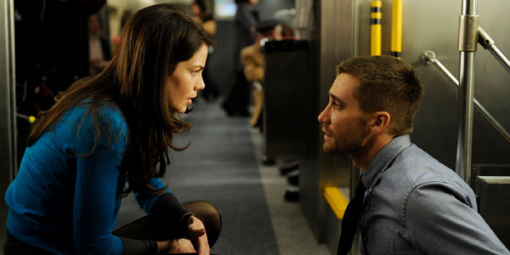
Colter Stevens (Jake Gyllenhaal) is a former soldier who wakes up in the body of an unknown man. Over time Colter discovers he’s part of an experimental government program, and on a mission to find the bomber of a Chicago commuter train: a mission that enables him to cross over into another man’s identity in the last eight minutes of his life.

Colter relives the incident time and again until he can find the bomber and prevent further acts of terrorism. During his mission, he learns increasingly more about the Source Code from his Commanding Officer, Colleen Goodwin (Vera Farmiga), and develops a relationship with fellow train passenger Christina Warren (Michelle Monaghan).

There’s an impressive swift-paced lightness to Ben Ripley’s script, in that it never gets bogged down in the scientific explanations of Colter’s circumstances or the serious issues the film poses – specifically about loss of identity and terrorism – instead choosing to challenge the audience with remarkable twists and proclamations.

Quite simply, it’s a fast-paced, refreshingly smart and well-written sci-fi thriller. It has the coercion and credible nature needed to lure you into the world and take you on an absorbing journey, one without any superfluous ridiculousness.

Jones directs with terrific urgency, devouring the script and delivering a remarkably taut, immersive thrill ride. He doesn’t spare a single moment of its lean duration, and there are several moments in particular that are refined with startling poise.

He paints the city of Chicago in a wonderfully natural, luminescence. This is something which has a particularly striking effect in the closing scenes of the film.

The train disaster, though repeated multiple times, never loses its visceral and exciting intensity. It is truly incredible to see Jones finding new ways to add visual touches to limited, low-budget and theoretically repetitive action scenes.

Gyllenhaal is superb as Stevens, delivering a zealous, courageous, and vulnerable performance as a man thrown time-after-time into the same peculiar situation, driven only by his desire to communicate with his estranged father, to be a loyal soldier and to save Christina.

He shares a genuine, passionate spark with Monaghan, making the romance between their characters, Colter and Christina, entirely believable despite its complicated circumstances.

Monaghan, in arguably the most challenging supporting role, brings a fresh and appealing disposition to Christina. It works wonders for a character who suffers from being a romantic interest, and whose existence is limited to eight repetitive minutes. Through each 8 minute segment Christina’s personality is opened up more and more, and Monaghan is the perfect actress to bring humility and warmth to the woman Colter strives to save.

Farmiga makes so much of her compact part, slowly unveiling Goodwin’s warmth and humanity. Jeffrey Wright also pulls off the contrasting role of Rutledge: the uneasy, ambitious and often callous inventor of the Source Code experiment.

Source Code doesn’t quite match the near-perfection of Moon, but it’s a wholly engaging, swiftly paced and solidly performed sci-fi thriller, confirming Jones as a unique, natural-born genre director.

Review: Faster (2010)

Faster is a new action-thriller from director George Tillman, Jr.

The film centers on an ex-con, Driver (Dwayne Johnson), who sets out to avenge his brother’s death after they were double-crossed during a heist years ago. During his campaign, however, he’s tracked by a veteran cop (Billy Bob Thornton) and an egocentric hit man (Oliver Jackson-Cohen).

While the premise has several notable elements of intrigue, the treatment, by writing duo Tony and Joe Gayton, is every bit as bleak and lackluster as expected; weighed down by exposition, formulaic direction and clichéd plot points.

It’s not at all helped by the screenwriters’ tendency to shift emphasis onto pointless, misleading subplots, like Killer’s backstory: a character that simply lacks the urgency needed to occupy such a large part that bears little importance to the main plot’s overall direction.

Tillman Jr’s unwillingness to take advantage of the narrative’s innately fun, B-movie potential guarantees that Faster – aside from the odd car chase and shoot-out – is every bit as intolerable as audiences have come to expect with such a conventional genre, the complete opposite of what Drive Angry, a film similar in ideas, achieved.

Johnson is – somewhat surprisingly – Faster’s greatest assest, in a role that proves he possesses the charm and presence needed to excel in the action genre. Here he’s the tough guy he needs to be, delivering a truly menacing performance: reticent, destructive and unrelenting.

It’s easily one of Johnson’s most compelling performances – certainly enough to redeem him of his recent fare of deplorable “family-comedy” roles.

Thornton looks annoyed and every bit reluctant to be in such frivolous fluff, but in a decidedly head-scratching way this informs his on screen persona, Cop, in an interesting, alluring and slick fashion.

Aside from Thornton, Adewale Akinnuoye-Agbaje and Carla Gugino – as one of the men on Driver’s hit list and a detective after his head respectively – are the only two supporting cast members who distinguish themselves and carve out plausible characters you can empathise with – and that’s miraculous considering their shamefully limited screen time and laughable dialogue.

The rest of the supporting troupe – including the barely seen Jennifer Carpenter, Maggie Grace and Jackson-Cohen – are trivial and wholly disposable.

Faster is a passable yet mediocre and highly forgettable action-thriller, salvaged only by Johnson’s surprisingly rousing performance.

Review: The Eagle (2011)

Adapted from Rosemary Sutcliff’s novel The Eagle Of The Ninth, The Eagle is an historical adventure film directed by Kevin Macdonald.

Set in Roman-ruled Britain, The Eagle tells the story of a young Roman soldier (Channing Tatum) who endeavors to honour his father’s memory by finding his lost legion’s golden emblem.

A simple story, perhaps, and nothing original in terms of narrative elements, but the opening act is intelligent, fast-paced and engaging enough to maintain the audiences attention. At the halfway mark, however, the narrative shifts a gear, its pace changes and it suddenly becomes a chase film, ending in an uninspired way that somewhat ruins the polished opening setup.

Relying massively on standard cinematic methods as opposed to often cheap and fake-looking state-of-the-art CGI effects, the battle sequences are given a commendable sense of visceral realism. This works in Macdonald’s favour.

The aforementioned sequences are occasionally brutal and bloody, but not overly so. Moreover, aside from one or two mild profanities and the obviously simmering homoeroticism between Marcus and Esca, the film is, to its merit, refreshingly devoid of unnecessary sexual content.

One of the films major flaws is that Macdonald, and screenwriter Jeremy Brock, are too afraid to let the material be about what it should be: violence. Instead, they try too hard to make it into a more intimate character piece, which ends up feeling all too superfluous.

While he may seem like an odd fit, Channing Tatum rises to the occasion and fills the role of Marcus Aquila admirably – as does his co-star, Bell, in his. The dynamic and tension between their characters is outstanding. By combining their individualistic personalities and working together, the audience is allowed a better understanding of their motives, no matter how nonsensical they are.

The performances from the supporting cast – including turns from Donald Sutherland, Mark Strong and Tahar Rahim – are competent enough, but they’re all too disposable to make much of an impact on the overall narrative.

As an historical epic, The Eagle falls short. But as minor escapist fare, with fun, engaging and bold ideas, it unexpectedly succeeds.

Review: Unknown (2011)

Loosely based on Didier van Cauwelaert’s novel Out Of My Head, Unknown is an action-thriller from director Jaume Collet-Serra.

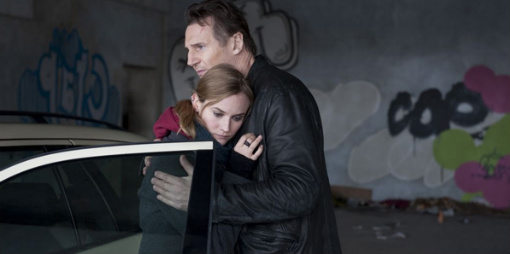
Dr. Martin Harris (Liam Neeson) awakens after a car accident in Berlin to discover that his wife (January Jones) suddenly doesn’t recognise him, and another man (Aidan Quinn) has assumed his identity.

Ignored by disbelieving authorities and hunted by mysterious assassins, he finds himself alone, tired and on the run.

Aided by an unlikely ally (Diane Kruger), Martin plunges headlong into a deadly mystery that will force him to question his sanity, his identity, and just how far he’s willing to go to uncover the truth.

In many ways the plotline is reminiscent of many recent thrillers, although not identical. It’s certainly infeasible to call Unknown an original entry into the fickle genre, but the script harbours enough twists and thrills to stop it being labelled a complete failure.

The same, however, can’t be said for the dialogue and delivery, which are both somewhat lacklustre in comparison.

On a positive note, the action scenes are excellently filmed by Collet-Serra, especially the superb car chases through the iconic streets of Berlin – entertaining to watch, but too generic to really matter.

Much of the cinematography remains squarely in the gray-blue territory which, along with the overblown colours used in the flashback scenes, is a choice that sometimes makes the action seem a little bewildering and uninspired for such an intriguing premise.

The acting, although a little exaggerated at times, is adequate enough, with steadfast turns from Kruger and Jones. Neeson, on the other hand, is a disappointment, reducing Martin to a irksome, uninteresting character. His performance here is almost exactly the same as the one he delivered in Taken.

Unknown is a humdrum, implausible and clunky action-thriller, with mediocre performances and direction.

Review: Limitless (2011)

Directed by Neil Burger, Limitless is a techno-thriller based on the Alan Glynn novel: The Dark Fields.

A copywriter, Eddie Morra (Bradley Cooper), discovers a top-secret drug which bestows him with super-human abilities. As his usage begins to change his life, he starts to consider the drugs shadowy origins. Meanwhile, a group of killers follow his every move.

This premise is very interesting and, while far-fetched, touches upon some pretty serious issues – the most important being drug usage and addiction. This helps keep the somewhat implausible scenario grounded.

However, despite effectively letting the audience bring their own experiences to the table, none of the issues are wrapped up in a clear and dignified manner, and are often skimmed over with an irritating level of disregard.

This isn’t necessarily a bad thing as, along with Cooper’s tongue-in-cheek performance, the narrative manages to remain simplistic enough throughout, never taking itself too seriously. It’s only in the final act, where all the loose ends are being haphazardly pieced together, that the cracks are exposed.

Similarly, characters are introduced left, right and centre – and disposed of almost as quickly. Understandably, the film is too short to explore everyone’s backstories, but certain people – such as Anna Friel’s Melissa and Abbie Cornish’s Lindy – are too fascinating to be so brazenly wasted.

Burger is clearly an extremely talented filmmaker. He creates a very stylized, visually intriguing world: a dimension that wonderfully emphasizes what the characters experience when ingesting the harmless-looking NZT-48 pill.

Cooper embodies Eddie perfectly, continuing his growth as a very adept actor. There’s something enthralling in his impoverished style that makes him wholly appealing, and the ideal choice for the role.

Eddie’s first-person narration, with its deliriously fast pace, not only compliments the visual side effects of the pill, but also offers a smart insight into the serious impacts drug-taking can have on an individuals lifecycle.

Robert De Niro delivers a solid turn as businessman Carl Van Loon, but feels an odd fit for such a under-developed and audacious character.

Abbie Cornish and Johnny Whitworth are believable enough in their respective roles, and Anna Friel brings an oddly likable, honest and raw nature to Eddie’s ex-wife. Nevertheless, none are employed as much as their talents demand.

Limitless, on the whole, is harmless entertainment and, at 105 minutes, offers a pleasant enough distraction, even managing to pose some meaningful, thought-provoking questions along the way.

Review: You Will Meet A Tall Dark Stranger

You Will Meet A Tall Dark Stranger, writer/director Woody Allen’s fortieth feature film, is tale of chicanery, infatuation and disappointment, and reunites one of the world’s best directors with the beautiful city of London.

The film follows a pair of married couples, Alfie (Anthony Hopkins) and Helena (Gemma Jones), and their daughter Sally (Naomi Watts) and husband Roy (Josh Brolin), as their passions, ambitions, and anxieties lead them into trouble and out of their minds.

After Alfie leaves Helena to pursue his lost youth and a free-spirited call girl named Charmaine (Lucy Punch), Helena abandons rationality and surrenders her life to the loopy advice of a charlatan fortune teller.

Unhappy in her marriage, Sally develops a crush on her handsome art gallery owner boss, Greg (Antonio Banderas), while Roy, a novelist nervously awaiting the response to his latest manuscript, becomes moonstruck over Dia (Freida Pinto), a mystery woman who catches his gaze through a nearby window.

Though not Allen’s strongest material, You Will Meet A Tall Dark Stranger still has a solid story, blending the ups and downs of each relationship, and highlighting the hypocrisies of marriage. Allen clearly still has a way of letting his stories unfold in an eloquent and timely manner.

Through the unstable characters’ troubled relationships, Allen not only examines how people deal with mortality but also how we cope with life, love and existence in general.

The film, however many life-altering questions it brings up, ends just when complications set in, which not only makes you wonder how invested Allen really is with the characters’ lives, but also makes it harder to empathise with their troubled being.

The characters, from Jones’ Helena neurotic to Brolin’s anguished Roy, feel more like puppets rather than human beings with natural instincts, human emotions and comprehensible senses. They all come over as extremely egocentric and have little to offer in the way of benevolence to their counterparts.

Jones leads the cast perfectly with her portrayal of Helena. Watts, Brolin and Hopkins fail to break free of their limited dialogue and uncoloured characters, and, the shamefully wasted trio of Punch, Friel and Banderas who, despite having the most interesting on-screen personaes, are not given enough time to thrive amongst their equally underused counterparts.

While the acting isn’t up to the heights of Vicky Christina Barcelona, Annie Hall or even Match Point, it’s impressively low key enough to be a joy to watch.

You Will Meet A Tall Dark Stranger is by no means Allen’s best film, but it’s also not his worst. It’s well-plotted, beautifully directed, contains some mildy humorous moments and isn’t short of talented actors.

It’s irritating, then, that it’s let down so wrongly by glorified scenery, under-developed characters and a script that seems to foolishly avoid dramatic impact.

Review: Chalet Girl (2011)

Chalet Girl, a new Brit rom-com from director Phil Traill, centers on Kim (Felicty Jones), a former champion skateboarder stuck in a dead end job trying to support her Dad.

When the opportunity of a catering job in the one of the most exclusive chalets in the Alp comes knocking Kim takes the chance to discover snowboarding, and uses the big end-of-season competition to win some much-needed prize money. But before she can become a champion again, Kim has to dig deep to overcome her fears, and deal with the complicating factor of Jonny (Ed Westwick), her handsome – though spoken for – boss.

Phil Traill creates a reasonably believable world, and even makes up for the atrocious All About Steve. But his choice of bland cinematography and overbearing lighting do nothing for the beautiful scenery, or giddy action of the snowboarding scenes. The snow-blanketed Alps make for a very impressive backdrop, but Traill simply doesn’t have the experience to know how to use this to the films advantage, which in turn makes the endless montages and obvious stunt doubles more obvious and unbearable.

The script, written by Tom Williams, tries incredibly hard to please, stuffing every scene with every sort of gag possible, broadly caricatured characters and tongue-in-cheek dialogue, but it never hits the giddy highs of other teenage comedies, often succumbing to overuses of montage and falling over gags.

The core of the film, though, is Felicity Jones, in her first leading role. She’s a buoyantly likable lead, who mixes sarcasm and dead pan irony to superb avail, to the point where you even forgive her for choosing such a pointless film. It’s a light-hearted and fun performance, and a pleasant surprise to see such a talented British actress cast as a strong and forceful female.

The supporting cast, on the other hand, are hit and miss. Bill Nighy and Tamsin Egerton are forces of nature as Richard and Georgie respectively, each maintaining something of a comic composure while delivering quirky, comical and stand-out performances. Westwick, however, simply doesn’t have the credentials and screen presence needed to turn Jonny into a likeable, honest and interesting character. He’s pure and simple eye candy for Kim.

Chalet Girl is – aside from providing a few laughs – frustratingly dull and nothing more than a showcase for two talented British actresses: Felicity Jones and Tamsin Egerton.