Cinema Releases: July 8, 2011

The Tree Of Life

Director: Terrence Malick

Starring: Brad Pitt, Sean Penn and Jessica Chastain

Holy Rollers

Director: Kevin Asch

Starring: Jesse Eisenberg, Justin Bartha and Danny A. Abeckaser

Trust

Director: David Schwimmer

Starring: Clive Owen, Catherine Keener and Liana Liberato

Super

Director: James Gunn

Starring: Rainn Wilson, Ellen Page and Liv Tyler

Huge

Director: Ben Miller

Starring: Noel Clarke, Johnny Harris and Ralph Brown

Film Socialisme

Director: Jean-Luc Godard

Starring: Catherine Tanvier, Christian Sinniger and Jean-Marc Stehlé

The Princess Of Montpensier

Director: Bertrand Tavernier

Starring: Mélanie Thierry, Lambert Wilson and Grégoire Leprince-Ringuet

The Devil’s Rock

Director: Paul Campion

Starring: Craig Hall, Matthew Sunderland and Gina Varela

Review: Trust (2010)

Synopsis: Safe and sound in their suburban home, Will (Clive Owen) and Lynn Cameron (Catherine Keener) used to sleep well at night. When their 14-year-old daughter, Annie (Liana Liberato), makes a new friend on-line – a 16-year-old boy named Charlie – Will and Lynn don’t think much of it. But when Annie and Charlie make a plan to meet, the following 24 hours changes the family forever.

Trust is actor-turned-director David Schwimmer’s second effort behind the camera, and it marks a radical departure from 2007’s lighthearted comedy Run, Fat Boy, Run. Scripted by Andy Bellin and Robert Festinger, Trust goes beyond examining the mere mechanics of how online predators work and delves deeper, exploring the ripple effects on the people and families affected, as well as our culture as a whole.

The first half is Trust at its best, playing out as an expertly crafted, slow-burning, deeply emotive character orientated drama. Schwimmer’s direction is both careful enough and sufficiently low-key to play second fiddle to the screenplay and terrific cast. He intelligently approaches the subject without any pre-conditioned ideas about online relations, predators, or rape, instead allowing audiences to make their own decisions with regard to the narrative. He simply presents the action as it plays, rather than focusing too much on one character or belief.

Schwimmer’s choice in tackling a subject that is still very much taboo in our culture is very brave, and it makes his accomplishment all the more impressive and commendable. Also, by doing so, he proves himself as a very socially conscious director, not one purely out to make audiences laugh, but also to make them think about their lives and how people could be endangering themselves on a day to day basis. The cross-platform seduction is horrifying plausible and will undoubtedly make the audience squeamish and seriously reconsider the way they, and the way their own children, present themselves online.

The second half, while still gripping, isn’t a touch on the first. By bringing in the FBI, the film suddenly, and rather annoyingly, turns into more of a fight-for-truth thriller. While still handled well by both Schwimmer and his cast, the latter scenes feel more standard, predictable, and significantly less affecting than those which came before.

Owen and Keener artfully portray Annie’s parents. Owen is incredible as Will, Annie’s overly protective father. Keener’s Lynn is a doting mother and wife, desperately trying to be there for her family. Her distress as things fall apart is wonderfully executed. Meanwhile, Keener’s Lynn is a more doting mother and wife, desperately trying to make her daughter feel human again after such an emotionally scarring act is committed. Her distress at Will’s inhumane behaviour is wonderfully executed. She’s unable to think, live, breathe and can’t understand Will’s anger.

Viola Davis makes a brief yet wholly key appearance as Annie’s guidance counsellor. She remains calm and respective of Annie’s distance and disbelief, slowing opening her up and making her realise her worth and the carelessness of her online behaviour. It’s Liberato, however, that’s the true revelation here. The mix of sweetness and intensity she brings to Annie is utterly spellbinding, providing a gut-wrenchingly honest and realistic portrayal of a young girl letting her emotions get ahead of her age. The Annie we see at the end is an entirely different character. The believability of this is a testament to Liberato’s performance.

Trust is an honest, haunting and socially relevant drama, supported by extraordinarily gripping performances across the board, an almost perfectly layered narrative and confident, restrained direction.

Feature: Top Ten Films Of 2011: January – June

So far, 2011 has been a fantastic year for film. Below, I’ve compiled a list of my ten favourites from the last six months, with a few honourable mentions that just missed out on a place. Finally, I’ve listed some somewhat less honourable mentions that you should probably avoid at all costs.

10. Never Let Me Go (February 2011)

Mark Romanek’s shamefully overlooked adaptation of Kazuo Ishiguro’s momentous novel Never Let Me Go wasn’t exactly the hit Fox Searchlight were banking on, but that didn’t stop it being a beautifully explorative, acted and directed piece of cinema.

9. Animal Kingdom (February 2011)

This Australian crime-thriller rose from the underbelly, picking up momentum thick and fact for its astoundingly honest portrayal of a fully functional crime family. Striking direction, raw performances and compelling source material have made well worth seeking out.

8. Archipelago (March 2011)

Joanna Hogg’s stark look at family turmoil is beautifully captured and carefully paced to provide a deeply resonant and affecting glimpse into the highs and lows of family life and what makes people tick.

7. Heartbeats (May 2011)

Multi-faceted Xavier Dolan follows in the footsteps of acclaimed filmmakers Gus Van Sant, Pedro Almodóvar and Wong Kar Wai to write and direct Heartbeats, a film of true beauty, wisdom and depth beyond its years.

6. Arrietty (June 2011 – EIFF)

Studio Ghibli’s sprightly interpretation of Mary Norton’s acclaimed children’s book The Borrowers is directed by Hiromasa Yonebayashi, under the watchful eye of filmmaker extraordinaire Hayao Miyazaki. Arrietty boasts some truly illustrious animation and a score by French musician Cecile Corbel that made me go weak at the knees.

5. Bridesmaids (June 2011)

Kristen Wiig, well known for her long-standing stint on Saturday Night Live, was launched to stardom with hit comedy Bridesmaids. Directed by Paul Feig, the film features an array of flawless comedic performances, unforgettable gags and the goddess-like figure Rose Bryne.

4. Albatross (June 2011 – EIFF)

Niall McCormick’s British coming-of-age film premiered at the 65th Edinburgh International Film Festival to rave reviews. Written by burgeoning writer Tamzin Refn, Albatross is a fully realised and thought-provoking piece of cinema, chock full of heart, depth and humour to boot. If Jessica Findlay-Brown doesn’t become a star, then there’s something seriously wrong with the world.

3. Black Swan (January 2011)

Granted, this film opened last year in America, but due to different release schedules it was early January before I had a chance to see Natalie Portman give an Academy Award winning performance in Darren Aronofsky’s daringly dark psychological ballet thriller. Hauntingly brilliant.

2. Submarine (March 2011)

Former IT Crowd actor Richard Ayoade made his directorial debut with the mesmerising, outlandish and warm-hearted indie comedy Submarine. The entire cast, not least relative newcomer Craig Roberts, delivered remarkable performances.

1. Blue Valentine (January 2011)

This emotionally crippling insight into one couple’s turbulent relationship shot Ryan Gosling and Michelle Williams back into the limelight, and earned them a few dozen award nominations in the process. After years of suffering various unfortunate setbacks, Derek Cianfrance’s passion project came to fruition with such intensity that it was hard to ignore. From the offset I was hooked, so it’d be impossible for Blue Valentine not to be my top film of the year so far.

Films of notable interest: Hobo With A Shotgun, Trust, Project Nim, Attack The Block, Rango, The Extraordinary Adventures Of Adèle Blanc-Sec, Rubber, Pina 3D, Scream 4, Winnie The Pooh, Meek’s Cutoff, X-Men: First Class, The Silent House, 13 Assassins, Perfect Sense, Thor and Cave Of Forgotten Dreams.

Films to think no more of: Mars Needs Moms, Larry Crowne, Ghosted, I Am Number Four, The Rite, Faster, Chalet Girl, Red Riding Hood and Battle: Los Angeles.

UK Box Office: July 1 – 3, 2011

1. Transformers: Dark Of The Moon – £10.7M

2. Bridesmaids – £2.1M

3. Kung Fu Panda 2 – £728,000

4. Bad Teacher – £512,000

5. Larry Crowne – £346,000

6. The Hangover Part II – £301,000

7. Green Lantern – £279,000

8. X-Men: First Class – £215,000

9. Delhi Belly – £155,000

10. Pirates Of The Caribbean: On Stranger Tides – £148,000

DVD Releases: July 4, 2011

The Adjustment Bureau

Director: George Nolfi

Starring: Matt Damon, Emily Blunt and Florence Kastriner

Drive Angry

Director: Patrick Lussier

Starring: Nicholas Cage, Amber Heard and William Fichtner

Hall Pass

Director: Bobby Farrelly and Peter Farrelly

Starring: Owen Wilson, Jason Sudeikis and Christina Applegate

The Resident

Director: Antti Jokinen

Starring: Hilary Swank, Jeffrey Dean Morgan and Christopher Lee

Anuvahood

Director: Adam Deacon and Daniel Toland

Starring: Adam Deacon, Femi Oyeniran and Ollie Barbieri

Norwegian Wood

Director: Anh Hung Tran

Starring: Rinko Kikuchi, Ken’ichi Matsuyama and Kiko Mizuhara

US Box Office: July 1 – 3, 2011

1. Transformers: Dark Of The Moon – $97.4M

2. Cars 2 – $25.1M

3. Bad Teacher – $14.1M

4. Larry Crowne – $13M

5. Monte Carlo – $7.6M

6. Super 8 – $7.5M

7. Green Lantern – $6.3M

8. Mr. Popper’s Penguins – $5.1M

9. Bridesmaids – $3.5M

10. Midnight In Paris – $3.4M

Review: Larry Crowne (2011)

Synopsis: When appealing everyman Larry Crowne (Tom Hanks) is inexplicably fired from his job as a big box store clerk, he realizes it’s time for some meaningful change in his life. Deeply in debt and without direction he returns to college, where he befriends a group of scooter-riding students and eventually develops a real affection for the beautiful Mercedes Tainot (Julia Roberts), the instructor of his Speech class.

The premise is an interesting one which highlights some genuinely valid and thought provoking questions, relating to the credit crunch, middle aged dating and returning to education. While intriguing at first, the main problem with Larry Crowne is that it simply abandons every interesting aspect and point of intrigue, leaving whole plot strands unresolved. This can mainly be attributed to the flawed screenplay, co-written by Nia Vardalos (recipient of an Academy Award for the screenplay of My Big Fat Greek Wedding) and Hanks himself. More often than not, it resorts to modern rom-com cliché, rendering the narrative implausible when it does manage to touch upon more relevant and thought-provoking ideas.

In this respect, coupled with the feeling that when plot strands are tied up, they are done so in such a relaxed manner as to make them feel unnecessary and completely artificial, it’s evident that there’s not much at stake within the narrative. The audience is left feeling nothing towards any of the characters – especially Larry and Mercedes. Vardalos and Hanks are evidently more interested in tying their romance up in a neat little digestible bow, losing it’s inherent uniqueness along the way. It descends into a nondescript, pointless bore. The only character arc that sees some genuine development is that of Larry’s wacky friend Talia, played by Gugu Mbatha-Raw, who follows her passion and helps Larry become less inhibited.

Hanks’ direction is much the same as his narrative: artificial and almost entirely blasé. He opts for a grainy tint that clouds the film in a subdued and depressing air. Hanks’ intention may have been to make the story and its characters seem more lifelike and relatable, but it ultimately doesn’t work, often making everything seem overly drab and ugly. It’s almost as if the director himself doesn’t know the best way to present the story and characters.

In terms of his acting, Hanks embodies Larry with a honest and likeable nature. It’s in his relationships with his co-stars that he falters. The burgeoning “will-they, won’t-they” relationship between Larry and Mercedes, though believable, never feels entirely sincere. The chemistry comes across as more an unlikely friendship than a full blown, predestined love. Similarly, his awkward father-daughter companionship with Talia comes across as well intended and slightly humorous, especially in the way she butters him up in an attempt to release his charming side – but it’s all too flat and unexplored to have any particular meaning.

Roberts doesn’t fare much better than Hanks. In all her years as an actress, she’s played characters like Mercedes many times – all to much better effect than is on display here. Sure, she’s attractive, easy enough to watch and brings an alluring warmth to any character she plays, but she doesn’t make a full enough transition from Roberts the A-list actress to Mercedes the college professor that warrants any significant emotional investment or interest in her backstory. She simply exists as herself trying to play someone else, in an overly obvious fashion that become distracting as the film wears on. It’s a shame, as it’s simply more evidence that her career isn’t as inspiring and award winning as it once was.

The supporting cast is made up of a zany collection of weird and wonderful actors and actresses, from the respected and well cast (Taraji P. Henson and Bryan Cranston) to the nondescript and uncomfortable background commodities (Cedric the Entertainer and George Takei). Takei in particular feels completely unsure what the hell he’s doing there – much like how the audience will react when he first appears on screen.

That said, despite the fact it plods along at a snail’s pace and doesn’t reward its audience’s investment, Larry Crowne’s saving grace is that it’s inoffensive, easy to watch, and subtly charming. In other words, it exists for easy consumption, mindless romantic entanglements, and its attractive, mass-audience grabbing stars.

Cinema Releases: July 1, 2011

Larry Crowne

Director: Tom Hanks

Starring: Julia Roberts, Tom Hanks and Bryan Cranston

The Conspirator

Director: Robert Redford

Starring: James McAvoy, Robin Wright and Tom Wilkinson

A Separation

Director: Asghar Farhadi

Starring: Peyman Moaadi, Leila Hatami and Sareh Bayat

Cinema Releases: June 29, 2011

Transformers: Dark Of The Moon

Director: Michael Bay

Starring: Shia LaBeouf, Rosie Huntington-Whiteley and Josh Duhamel

Review: Bad Teacher (2011)

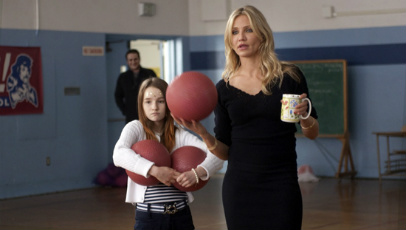
Synopsis: Some teachers just don’t give an F. Case in point: Elizabeth (Cameron Diaz). She’s foul-mouthed, ruthless, and inappropriate.  She drinks, she gets high, and she can’t wait to marry her meal ticket and get out of her bogus day job.  When she’s dumped by her fiancé, she sets her plan in motion to win over a rich, handsome substitute (Justin Timberlake) – competing for his affections with an overly energetic colleague, Amy (Lucy Punch).  When Elizabeth also finds herself fighting off the advances of a sarcastic, irreverent gym teacher (Jason Segel), the consequences of her wild and outrageous schemes give her students, her coworkers, and even herself, an education like no other.

While the premise itself is obviously interesting, and the characters have a great potential to be explored, screenwriters Gene Stupnitsky and Lee Eisenberg are too busy trying to shock with crass humour, ridiculous gags and offensive one liners. There are glimmers of hope with a sprinkling of particularly funny moments – mostly to do with Punch’s Amy and her various interactions with Diaz’s Elizabeth – but, due to the inconstant nature in which they unfold, the humour falls flat as quickly as it arrives.

Jake Kasdan’s direction, on the other hand, is surprisingly rich and crisp for a comedy production, adding a pretty gloss that, at times, adequately masks the poorly structured and played out narrative. We’ve seen with Walk Hard: The Dewey Cox Story and Orange County that Kasdan has huge potential, so it’s a disappointment to see him wasting his obvious skills as a director on such a misguided comedy.

Diaz is unavoidably miscast in the role of Elizabeth. Though she works wonders with the mediocre dialogue, she simply doesn’t have the versatility needed as an actress to pull off the various sides Elizabeth harbours. Sure, she can do the whole sexy, radiant thing, but it’s hard to believe her evil side when you’re aware of how nice she is in real life.

Timberlake tries a little too hard to be the sexy nerd, but he never quite pulls it off. Segel, however, makes a valiant attempt at the sexy rogue, but is thwarted by a lack of screen time. (Yes, there is indeed a theme of “sexy-insert-secondary-character-trait-here” going on throughout.) Essentially, this means that Bad Teacher belongs to Punch, who manages to be almost constantly hilarious as Amy: seemingly nice yet harbouring an insane evil streak. She fills the role with a terrific sense of physicality – so much so that you find yourself wishing she’d switch roles with Diaz purely so she can have more time onscreen.

Ultimately, Bad Teacher is a beguiling and poorly written comedy that shamefully wastes its array of talent. Aside from a few laughs, and a scene stealing turn from Punch, it’s almost entirely insufferable.