UK Box Office: June 17 – 19, 2011

1. Green Lantern – £2.5M

2. Kung Fu Panda 2 – £2.2M

3. Bad Teacher – £1.9M

4. The Hangover Part II – £1.5M

5.  X-Men: First Class – £1.2M

6. Pirates Of The Caribbean: On Stranger Tides – £920,000

7. Senna – £380,000

8. Diary Of A Wimpy Kid: Rodrick Rules – £230,000

9. Potiche – £200,000

10. Honey 2 – £180,000

DVD Releases: June 20, 2011

I Am Number Four

Director: D.J. Caruso

Starring: Alex Pettyfer, Timothy Olyphant and Dianna Agron

The Fighter

Director: David O. Russell

Starring: Mark Wahlberg, Christian Bale and Amy Adams

The Rite

Director: Mikael Håfström

Starring: Colin O’Donoghue, Anthony Hopkins and Ciarán Hinds

How Do You Know

Director: James L. Brooks

Starring: Reese Witherspoon, Owen Wilson and Paul Rudd

Rabbit Hole

Director: John Cameron Mitchell

Starring: Nicole Kidman, Aaron Eckhart and Dianne Wiest

Howl

Director: Rob Epstein and Jeffrey Friedman

Starring: James Franco, Todd Rotondi and Jon Prescott

Brighton Rock

Director: Rowan Joffe

Starring: Sam Riley, Andrea Riseborough and Helen Mirren

West Is West

Director: Andy DeEmmony

Starring: Aqib Khan, Om Puri and Linda Bassett

US Box Office: June 17 – 19, 2011

1. Green Lantern – $52.6M

2. Super 8 – $21.2M

3. Mr. Popper’s Penguins – $18.2M

4. X-Men: First Class – $11.5M

5. The Hangover Part II – $9.6M

6. Kung Fu Panda 2 – $8.7M

7. Bridesmaids – $7.4M

8. Pirates Of The Caribbean: On Stranger Tides – $6.2M

9. Midnight In Paris – $5.2M

10. Judy Moody And The Not Bummer Summer – $2.2M

Review: Albatross (2010)

BAFTA award-winning director Niall MacCormick makes his feature length debut with Albatross: a nuanced, charming and veritably witty coming-of-age drama, penned by Tamzin Rafn – a budding new screenwriter.

The film tells the story of a frustrated author, Jonathan (Sebastian Koch), and the incendiary effect of the arrival of verbose would-be writer Emelia (Jessica Brown-Findlay) on his family. Emelia first befriends and liberates his bookish daughter Beth (Felicity Jones), before going on to irritate his ever-frustrated wife, Joa (Julia Ormond), and finally bewitching Jonathan himself. Can Emelia shed the albatross that hangs around her neck and rewrite her personality?

Rafn’s nuanced screenplay opens as a freeloading, comical teenage drama, but slowly unravels into a highly intelligible, fully engaging and wonderfully articulate coming-of-age tale. Although the sexual relationship between Emelia and Jonathan is very much at the focus for the majority of the film, it actually plays as more of a catalyst to the main narrative: the budding friendship between Emelia and Beth, who rely on each other as their lives and personalities evolve over the course of the short but sweet running time.

At its heart, however – and behind the meaningless fabrications, sexual dalliances and supposed lifelong friendships – the script is more curious in questioning the overall purpose of life, the journeys we take, and how the people we meet along the way each have a different – but nonetheless important – effect on our individual growth and the understanding we have of our own personal being.

Having built up his artistry on numerous TV projects, MacCormick – with the aid of Director of Photography Jan Jonaeus – makes an almost seamless transition to feature length filmmaking with such delicate immediacy. Albatross is beautifully shot and wonderfully framed. The outdoor, scenic shots represent the freeness and unpredictability of life, and they are wonderfully contrasted by much more common indoor ones. These manage to convey the contained and often emotionally structured lives we become used to. The only time this isn’t apparent is during Emelia and Beth’s trip to Oxford, which highlights the freedom they feel being away from their small, claustrophobic home town, and the dominance of both their parents and the stresses of life.

What’s most surprising is how well placed the music is within the course of the film. Mixing both indie music – such as excellent uses of Frightened Rabbit and Editors – and composed tracks by Jack Arnold, MacCormick finds a perfect balance. The music adds another dimension to what’s happening on the screen, often enhancing the themes explored in the narrative, pushing them to the forefront and making them central to our understanding of the films underlying message.

The performances across the board are sublime. Brown-Findlay and Jones in particular, who play Emelia and Beth, each deliver astounding performances, defining their position as two of the most interesting and enthusiastic young actresses currently working in the British film and television industries. It’s the relationship between Emelia and Beth that is very much the backbone of the entire film, and so it’s a pleasure to see both Jones and Brown-Findlay so passionate and at one with their respective characters that their on screen friendship, with all its trials and tribulations, feels entirely authentic to the eye and within the context of the narrative as a whole.

Koch, Ormond and Peter Vaughan are the most noteworthy members of the supporting cast. Each show their warmth, never fading into the background, and always using Rafn’s terrific dialogue to push themselves and their individual performances. The interaction between Koch and Ormond is, at its best, unforgettable: full of sarcastic banter and humorous one-liners, while Vaughn brings a calm and contemplative nature to the table as Emelia’s unnamed grandfather. Ultimately, to see such a talented array of actors working in unison with such a sincere, witty and multi-faceted script is an utter pleasure.

On the surface, Albatross may – due to its similarities with other quirky coming-of-age drama – seem like an easy to foretell imitation. But, as the layers unfold, it transforms into a fully realised and thought-provoking piece of cinema, chock full of heart, depth and humour to boot. In simple terms, it’s very much a film that demands your attention from the offset, and pays dividends for your fathomless investment as it reaches a head.

Cinema Releases: June 17, 2011

Green Lantern

Director: Martin Campbell

Starring: Ryan Reynolds, Blake Lively and Peter Sarsgaard

Bad Teacher

Director: Jake Kasdan

Starring: Cameron Diaz, Jason Segel and Justin Timberlake

The Beaver

Director: Jodie Foster

Starring: Mel Gibson, Jodie Foster and Anton Yelchin

Life In A Day

Director: Kevin Macdonald

Starring: Cindy Baer, Moica and Caryn Waechter

Potiche

Director: François Ozon

Starring: Catherine Deneuve, Gérard Depardieu and Fabrice Luchini

The Messenger

Director: Oren Moverman

Starring: Woody Harrelson, Ben Foster and Samantha Morton

Stake Land

Director: Jim Mickle

Starring: Connor Paolo, Kerry McGillis and Nick Damici

Swinging With The Finkles

Director: Jonathan Newman

Starring: Martin Freeman, Mandy Moore and Melissa George

The Round Up

Director: Rose Bosch

Starring: Jean Reno, Mélanie Laurent and Gad Elmaleh

Review: Ghosted (2011)

Ghosted, a gritty and brutal prison drama, is the feature length debut from camera-operator and short filmmaker Craig Viveiros. The film centers on Jack (John Lynch), a model prisoner who has kept his head down and is close to completing his time. However, after his wife leaves him for another man, his final lifeline comes in the form a new, naive prisoner, Paul (Martin Compston). When Paul falls under the influence of the psychotic Clay (Craig Parkinson), Jack soon finds he must risk his own life and sanity to help the newcomer survive.

The action opens strongly, with a respectably concise introduction to the central characters. It may be sparse on dialogue, but it sets the film up well, despite the already overbearing cliches. From here, however, when it should be establishing a new take on the prison drama, it settles into a dull pace, full of easy to foretell twists, inmates with perennial problems, battles between characters for prison dominance and an ending that feels all too contrived to make any sort of lasting impact. The running time – clocking it at over 110 minutes – is ridiculous, and doesn’t do the overall product any favours.

Thankfully, then, Viveiros’ direction is something to celebrate, even managing to distract attention from the commonplace plot strands on several welcomed occasions. Apart from the overuse of self-indulgent mirror shots and unnecessary slow-motion, Ghosted is a pleasantly competent and accomplished piece of filmmaking, with some particularly striking and well executed scenes breaking up the strong sense of familiarity that runs throughout – most notably the merciless shower scene, a scene that represents Jack’s problems drowning him, and an incredibly brutal encounter towards the end that will have you flinching in your seat.

The acting is possibly Ghosted most noteworthy distinction. Compston, who’s been on the rise since being plucked from obscurity to star in Ken Loach’s Sweet Sixteen and was dazzling in last years shamefully underrated The Disappearance of Alice Creed, impresses as the emotionally disjointed Paul, while Parkinson delivers a fittingly admirable performance as the volatile Clay. But it’s Lynch as the unhinged Jack, who steals the show, bringing a truly tremendous level of depth and nobility to Jack’s damaged soul, particularly in the absorbing scenes shared with Compston’s Paul.

While acted in a more than satisfactory mannor and technically effective, Ghosted sadly fails to break free of vastly overdone prison drama cliches, instead becoming an overwrought and predestined misfire.

Review: Tomboy (2011)

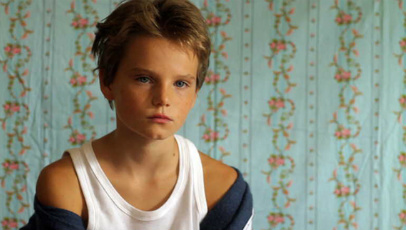
Tomboy is French writer-director Céline Sciamma’s follow-up to the highly praised Water Lilies, and it again follows a confused child discovering her sexuality. This time the narrative centers on Laure (Zoé Héran), a 10-year-old tomboy. When she moves to a new neighbourhood with her parents, she engages in a gender confused role-play in which she pretends to be a boy to make new friends, not realising the hurt she’s causing along the way.

On the surface, Tomboy may seem like another film about a lonely child trying to fit in, but it’s a really rather intricate and dramatically insightful exploration into how, and more importantly why, one child in particular feels the need to invert their own identity to find acceptance in society or even within themselves.

Instead of launching in at the deep end, Sciamma opts for a more laid back and soulful approach, letting Laure’s personality etch out and unravel in a mysteriously yet fully encapsulating fashion, one that’s both completely and entirely welcomingly impartial. The bottom line is that Laure isn’t gay, nor is she transgendered: she’s simply finding a way to live her life in the most comfortable way possible.

Sciamma’s direction, much like her screenplay, is confident yet unobtrusive. Most of the mise-en-scene is colourfully minimal, with the action almost entirely set in Laure’s apartment or the nearby parks and lakes. The vast majority of scenes are shot from a distance, bar a few close-ups on Laure and new friend Lisa (Jeanne Disson) that, due to their opposing natures and concealed home lives, fully highlight their burgeoning yet deeply flawed and shrouded relationship.

The role of Laure is played to a degree of excellence by relative newcomer Héran. Despite being 10-years-old, she conveys such emotion, innocence and desperation for acceptance, mostly through her eyes and body language. The remainder of the cast – including Mathieu Demy and Sophie Cattani as Laure’s mother and father – offer strong yet cautious support, never matching the spirit Héran so naturally achieves, but playing off her with an incredibly skilled nature, especially for a crop of such young actors.

Affecting, well envisioned and delicately captured, Tomboy takes a serious look at the taboo subject matter of the sexual ambivalence experienced by children, suggesting that even though your biological sex is predetermined, this has little sway on your true sexual identity. Perhaps, in a sense, it’s played out a little too cautiously and only barely scratches the surface of Laure’s inner turmoil, but if viewers are looking for a true gem, then Tomboy certainly deserves as big a loving audience as it can find.

Review: The Guard (2011)

Writer-director John Michael McDonagh (brother of In Bruges’ Martin McDonagh) makes his feature length directorial debut with action-comedy The Guard – a welcome variation on the typical buddy-cop format. The film centres on Gerry Boyle (Brendan Gleeson): a drug-taking, prostitute-loving and socially unorthodox Irish cop who – when an international drug-smuggling gang decides to start using the small town as a hub for their illegal deliveries – is teamed up with FBI agent Wendell Everett (Don Cheadle) to investigate.

What ensues follows a fairly typical action-comedy structure, and it doesn’t deviate much throughout the majority of the film. However, rather than focusing heavily on forgettable plot strands, McDonagh admirably shifts the attention to Boyle’s character, and occasionally to his peculiar relationship with Everett. He lets the subplots arise from and fall back into the background in equal measure. At times, the narrative wavers enough for viewers to begin to question the film’s purpose and overall direction, but it mostly remains surprisingly focused. For a debut feature, this is no easy task.

McDonagh’s script, much like his brother’s for In Bruges, is packed full of profane humour, unforgettable one-liners and an array of distinctive characters. He has also instilled it with a subtle, yet acutely aware social commentary that not only impiously takes the piss out of Irish culture, but also makes you very aware of the seriousness of the underlying racism and the lay of the law. It often playfully nudges at the edge of disbelief, but – considering the comical take on the subject matter – it always reins itself in and never pushes the audience too far. The dialogue in particular is extremely enjoyable, breathing life into each individual character, while the welcome self-awareness pays undeniable homage to the likes of Edgar Wright and Diablo Cody.

Gleeson nails Boyle’s unconventional nature perfectly, and he delivers a wonderfully whimsical and forthright performance, adding a feeling of improvisation to the already blistering dialogue. This is also evident in the way he approaches the relationship with Cheadle’s uptight Everett. Despite being almost polar opposites, the pair share a tangible bond.

Big fans of Cheadle may be displeased at how little screen time Everett is allowed, but this is Gleeson’s vehicle through and through. While it’s a shame that his character’s background and ethics are skimmed over, it simply wouldn’t make sense for McDonagh to spend any more time on the supporting cast. Admittedly, they all hold their own in their respective roles, with Mark Strong and Fionnula Flanagan delivering particularly noteworthy performances. Strong inhabits the lead drug-smuggler Clive Cornell with a cool ease, while Flanagan delights as Boyle’s whiskey-swigging mother.

Aside from a comparatively inconclusive and evasive third act and the under-explored dynamic between Boyle and the trio of villains, The Guard is an admirably executed and often hilarious variation on the overdone action-comedy genre, elevated by stand-out performances across the board and an extraordinarily well-executed script from McDonagh.

DVD Releases: June 13, 2011

Paul

Director: Greg Mottola

Starring: Simon Pegg, Nick Frost and Seth Rogen

True Grit

Director: Joel Coen and Ethan Coen

Starring: Jeff Bridges, Matt Damon and Hailee Steinfeld

Hereafter

Director: Clint Eastwood

Starring: Matt Damon, Cécile De France and Bryce Dallas Howard

Sanctum

Director: Alister Grierson

Starring: Rhys Wakefield, Allison Cratchley and Christopher Baker

Inside Job

Director: Charles Ferguson

Starring: Matt Damon, Daniel Alpert and William Ackman

Age Of Heroes

Director: Adrian Vitoria

Starring: Sean Bean, Danny Dyer and Izabella Miko

US Box Office: June 10 – 12, 2011

1. Super 8 – $35.4M

2. X-Men: First Class – $24.1M

3. The Hangover Part II – $17.6M

4. Kung Fu Panda 2 – $16.5M

5. Pirates Of The Caribbean: On Stranger Tides – $10.9M

6. Bridesmaids – $10M

7. Midnight In Paris – $6.1M

8. Judy Moody And The Not Bummer Summer – $6M

9. Thor – $2.4M

10. Fast Five – $1.7M