Review: Larry Crowne (2011)

Synopsis: When appealing everyman Larry Crowne (Tom Hanks) is inexplicably fired from his job as a big box store clerk, he realizes it’s time for some meaningful change in his life. Deeply in debt and without direction he returns to college, where he befriends a group of scooter-riding students and eventually develops a real affection for the beautiful Mercedes Tainot (Julia Roberts), the instructor of his Speech class.

The premise is an interesting one which highlights some genuinely valid and thought provoking questions, relating to the credit crunch, middle aged dating and returning to education. While intriguing at first, the main problem with Larry Crowne is that it simply abandons every interesting aspect and point of intrigue, leaving whole plot strands unresolved. This can mainly be attributed to the flawed screenplay, co-written by Nia Vardalos (recipient of an Academy Award for the screenplay of My Big Fat Greek Wedding) and Hanks himself. More often than not, it resorts to modern rom-com cliché, rendering the narrative implausible when it does manage to touch upon more relevant and thought-provoking ideas.

In this respect, coupled with the feeling that when plot strands are tied up, they are done so in such a relaxed manner as to make them feel unnecessary and completely artificial, it’s evident that there’s not much at stake within the narrative. The audience is left feeling nothing towards any of the characters – especially Larry and Mercedes. Vardalos and Hanks are evidently more interested in tying their romance up in a neat little digestible bow, losing it’s inherent uniqueness along the way. It descends into a nondescript, pointless bore. The only character arc that sees some genuine development is that of Larry’s wacky friend Talia, played by Gugu Mbatha-Raw, who follows her passion and helps Larry become less inhibited.

Hanks’ direction is much the same as his narrative: artificial and almost entirely blasé. He opts for a grainy tint that clouds the film in a subdued and depressing air. Hanks’ intention may have been to make the story and its characters seem more lifelike and relatable, but it ultimately doesn’t work, often making everything seem overly drab and ugly. It’s almost as if the director himself doesn’t know the best way to present the story and characters.

In terms of his acting, Hanks embodies Larry with a honest and likeable nature. It’s in his relationships with his co-stars that he falters. The burgeoning “will-they, won’t-they” relationship between Larry and Mercedes, though believable, never feels entirely sincere. The chemistry comes across as more an unlikely friendship than a full blown, predestined love. Similarly, his awkward father-daughter companionship with Talia comes across as well intended and slightly humorous, especially in the way she butters him up in an attempt to release his charming side – but it’s all too flat and unexplored to have any particular meaning.

Roberts doesn’t fare much better than Hanks. In all her years as an actress, she’s played characters like Mercedes many times – all to much better effect than is on display here. Sure, she’s attractive, easy enough to watch and brings an alluring warmth to any character she plays, but she doesn’t make a full enough transition from Roberts the A-list actress to Mercedes the college professor that warrants any significant emotional investment or interest in her backstory. She simply exists as herself trying to play someone else, in an overly obvious fashion that become distracting as the film wears on. It’s a shame, as it’s simply more evidence that her career isn’t as inspiring and award winning as it once was.

The supporting cast is made up of a zany collection of weird and wonderful actors and actresses, from the respected and well cast (Taraji P. Henson and Bryan Cranston) to the nondescript and uncomfortable background commodities (Cedric the Entertainer and George Takei). Takei in particular feels completely unsure what the hell he’s doing there – much like how the audience will react when he first appears on screen.

That said, despite the fact it plods along at a snail’s pace and doesn’t reward its audience’s investment, Larry Crowne’s saving grace is that it’s inoffensive, easy to watch, and subtly charming. In other words, it exists for easy consumption, mindless romantic entanglements, and its attractive, mass-audience grabbing stars.

Review: Bad Teacher (2011)

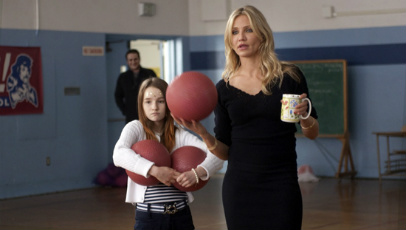
Synopsis: Some teachers just don’t give an F. Case in point: Elizabeth (Cameron Diaz). She’s foul-mouthed, ruthless, and inappropriate.  She drinks, she gets high, and she can’t wait to marry her meal ticket and get out of her bogus day job.  When she’s dumped by her fiancé, she sets her plan in motion to win over a rich, handsome substitute (Justin Timberlake) – competing for his affections with an overly energetic colleague, Amy (Lucy Punch).  When Elizabeth also finds herself fighting off the advances of a sarcastic, irreverent gym teacher (Jason Segel), the consequences of her wild and outrageous schemes give her students, her coworkers, and even herself, an education like no other.

While the premise itself is obviously interesting, and the characters have a great potential to be explored, screenwriters Gene Stupnitsky and Lee Eisenberg are too busy trying to shock with crass humour, ridiculous gags and offensive one liners. There are glimmers of hope with a sprinkling of particularly funny moments – mostly to do with Punch’s Amy and her various interactions with Diaz’s Elizabeth – but, due to the inconstant nature in which they unfold, the humour falls flat as quickly as it arrives.

Jake Kasdan’s direction, on the other hand, is surprisingly rich and crisp for a comedy production, adding a pretty gloss that, at times, adequately masks the poorly structured and played out narrative. We’ve seen with Walk Hard: The Dewey Cox Story and Orange County that Kasdan has huge potential, so it’s a disappointment to see him wasting his obvious skills as a director on such a misguided comedy.

Diaz is unavoidably miscast in the role of Elizabeth. Though she works wonders with the mediocre dialogue, she simply doesn’t have the versatility needed as an actress to pull off the various sides Elizabeth harbours. Sure, she can do the whole sexy, radiant thing, but it’s hard to believe her evil side when you’re aware of how nice she is in real life.

Timberlake tries a little too hard to be the sexy nerd, but he never quite pulls it off. Segel, however, makes a valiant attempt at the sexy rogue, but is thwarted by a lack of screen time. (Yes, there is indeed a theme of “sexy-insert-secondary-character-trait-here” going on throughout.) Essentially, this means that Bad Teacher belongs to Punch, who manages to be almost constantly hilarious as Amy: seemingly nice yet harbouring an insane evil streak. She fills the role with a terrific sense of physicality – so much so that you find yourself wishing she’d switch roles with Diaz purely so she can have more time onscreen.

Ultimately, Bad Teacher is a beguiling and poorly written comedy that shamefully wastes its array of talent. Aside from a few laughs, and a scene stealing turn from Punch, it’s almost entirely insufferable.

Review: Life In A Day (2011)

Synopsis: Shot by filmmakers all around the world, Life In A Day aims to show future generations what it was like to be alive on July 24, 2010.

Co-directed by Kevin Macdonald, and produced by filmmaker brothers Ridley Scott and Tony Scott, Life In A Day’s concept is a relatively austere one: invite millions of people from around the world to film their lives on July 24, 2010, submitting the results to YouTube with the possibility of being included in a new documentary. The response was overwhelming, with a total of 4,500 hours of footage being collected.

The resulting documentary is a neatly pieced together, surprisingly moving peek into a day into the life of Earth’s inhabitants. Director McDonald begins at midnight, and proceeds to take us through the entire day over the course of a tidy 90 minute running time. Moving from continent to continent, individual to individual, Life In A Day wonderfully documents ordinary people going about their ordinary lives, from the humdrum aspects of human life – such as eating, talking, love and laughter – to the more challenging – death, disease, war, discrimination and brutality.

Profoundly benevolent, marvellously captivating and pleasingly authentic, Life In A Day is a worldly, important documentary that offers a brief yet wholly authentic and revealing glimpse into humanity. A triumphant achievement in contemporary cinema.

Life in a Day is currently playing at DCA Dundee.

Review: Perfect Sense (2011)

Essentially, Perfect Sense is a romantic love story set against an apocalyptic backdrop. It tells of how a chef, Michael (Ewan McGregor), and a scientist, Susan (Eva Green), fall in love as an epidemic begins to rob people of their sensory perceptions.

Kim Fupz Aakeson’s cunningly written screenplay imagines a world in which the inhabitants slowly lose their senses, one by one. The apocalypse is refreshingly personal and, to an extent, psychological. Whilst we are made aware – through cleverly placed and constructed newsreel-style footage – that the epidemic is happening globally, Perfect Sense chooses to focus on a handful of characters rather than the world at large. The most important of these are Michael and Susan, who are drawn together as their lives descend into chaos.

The storytelling style, though an enthralling rollercoaster of emotional highs and lows, is deliberately restrained, with Mackenzie cleverly approaching the material in a subdued, intimate and character-centric way – immediately setting Perfect Sense apart from other films of its nature. For the dark subject matter it’s also surprisingly optimistic: after each sensory loss, those affected look to find a way of coping by returning to some form of normality.

The film is also stunningly shot by Director of Photography Gilles Nuttgens, under the watchful eye of experienced filmmaker David Mackenzie. What’s truly breathtaking, though, is the way in which the editing superbly complements the separate stages of sensory loss – for the post-hearing scenes, for example, the sound is softened (if not muted entirely) to give viewers a real sense of what it would be like if this were to happen to them. It’s wonderfully achieved, and helps to include viewers in the characters’ struggle for survival.

Max Richter’s score adds to the mournful mood, building up tension and emotion when needed. The same, however, can’t be said for the narration which, after a while jars, and often detracts from the involvement in Michael and Susan’s story.

The cast works brilliantly together. McGregor and Green, in particular, play off each other’s emotions in a way that makes Michael and Susan’s unlikely relationship seem so believable and authentic. Their individual personalities, as well as their relationship with one another, evolve throughout the course of the film, almost as if they need one another’s love in order to cope with the death and destruction surrounding them. Connie Nielson, Ewen Bremner and Stephen Dillane make up the noteworthy supporting cast, delivering respectable performances in their subsequently diminished roles.

Perfect Sense – while not without faults – is a beautifully intricate and personal piece of cinema, bolstered by phenomenal direction, terrific performances and truly affecting, surprisingly original screenplay.

Review: Heartbeats (2010)

Synopsis: Heartbeats centers on two close friends, Francis (Xavier Dolan) and Marie (Monia Chokri), who find themselves fighting for the affections of the same striking young man (Neils Schneider). The more intimate the trio becomes, the more unattainable the object of their infatuation seems, sending the friends’ obsession into overdrive.

Heartbeats’ narrative may be a simple one, but it’s matched cleverly by the overindulgence in hyper-stylised aesthetic. This achieves Dolan’s overall purpose through the use of tricks and gimmicks – such as slow-motion, an intense pallet and musical motifs – controlling the viewer’s experience and capturing the superficiality of Marie and Francis’ banal obsession with Nicolas.

His self-asserting directing style is a lot like that of Pedro Almodóvar, Gus Van Sant and Wong Kar-wai – idolising both the vivacity of woman as well as the inherent beauty of men, blurring the boundaries of sexuality in the process. He does this with laid-back, lingering cinematography and striking set designs, making use of vivid colours to represent many of the themes explored within the context of the narrative. Some may think of it as style over substance, but the way in which Dolan shapes his characters and their reactions to one another shows that this is simply isn’t the case.

Through his emphatic writing, Dolan fashions a classic ménage à trois tale about the trials and tribulations of love, obsession and jealousy, often exquisitely echoing two fairly recent examples: Alfonso Cuarón’s Y Tu Mamá También and John Cameron Mitchell’s Shortbus. Heartbeats is a simple story about how, due to our exceedingly high expectations, we let ourselves down by making brash, off the cuff decisions that never work out. Dolan’s understanding of such a complex and indefinable subject shows him as a talent with a belief and knowledge of worldly ideals miles beyond his tender age.

Performance wise, the three leads are near flawless. Chokri brings a welcome level of wit and comprehension to Maria, which is beautifully undercut by her obvious flaws, most noteworthy her naivety towards romance. Dolan, as expected, plays Francis as a straight up pretty boy with a severe lack of self-confidence and an inability to read people’s emotions. Schneider, to his merit, keeps Nicolas undeniably enchanting throughout. He may be the foil to Maria and Francis’ life-long friendship, and the object of both their obsessions, but he’s oblivious to the pain and destruction he’s causing. To some degree, this makes up for his deplorable carelessness.

This is all supported by a particularly brilliant and ecclectic soundtrack, featuring songs such as Dalida’s Bang Bang, Fever Ray’s Keep the Streets Empty for Me and The Kills’ Pass This On. Not only do these songs work incredibly well together, but they also add a new level of depth to the film, speaking louder than words themselves at times when dialogue isn’t possible.

Heartbeats is a remarkable, joyous, captivating, intricately stylised and extraordinarily well pieced together piece of cinema from a budding multi-faceted talent.

Review: Phase 7 (2011)

Writer/director Nicolás Goldbart’s Phase 7 tells the story of a young couple – Coco (Daniel Hendler) and Pipi (Jazmín Stuart) – who discover their apartment building is to be immediately quarantined due to the appearance of a deadly virus. Their ensuing seclusion brings about a series of monstrous events, alliances and double-crossings amongst the neighbours.

Phase 7 is a relatively taut apocalyptic thriller from Goldbart, an up-and-coming Argentinian talent, that, instead of focusing on the worldwide panic that follows an epidemic, centres on a lowly apartment building and its tenants as they deal with the outbreak – with often disastrous consequences.

Goldbart’s screenplay is tight, valiantly choosing to be an intimate character piece rather than an all-out action-fuelled thriller, representing how everyday people would react to a sudden deadly epidemic. Where it falters, however, is with the jarring lurches into black comedy that ultimately do little more than diffuse tension, and not always at the times when it is necessary. The humour, including some lo-fi social commentary, is often too dry, languid and half-hearted to make much of a lasting impression.

Merit, though, must be awarded to Goldbart’s direction, which is wonderfully low-key. It’s hard to believe this is his directorial debut, as he displays such a laid-back, confident approach. He pays close attention to the characters and their responses to each other, rather than trying to create something bigger than itself. For the most part, it works well, and shows Goldbart as a director with a lot of flair and enthusiasm, but viewers will see striking resemblances to REC, Right at Your Door, and even Shaun of the Dead, which may infringe upon overall enjoyment.

Guillermo Guareschi’s complimentary score is a shining success, paying a fitting homage to similar genre films of the seventies and eighties. The oft-sinister compositions are top-notch: perfectly loud, bombastic synth sounds that hit prompts hard, audaciously and effectively when needed – especially in the second half, when the action is amped, and the film develops from a tense character study into a bloody battle for survival.

Hendler delivers an admirable turn as Coco, striking a fine line between passive coward and protective soon-to-be father and husband. While Yayo Guridi runs with Goldbart’s demented one liners as the immaculately prepared Horacio, it’s Federico Luppi as Zanutto who truly steals the show with a blisteringly calamitous performance as the physical manifestation of the epidemic, uses every means possible – whether it be combative or destructively deadly – to assume control of the apartment block and its disorderly inhabitants.

At times, Phase 7 is a nail-bitingly tense thriller, with keen performances and a savvy, evocative soundtrack. But, due in part to an often isolating plot and iffy tone, it never quite hits the heights of its auspicious and unrivalled premise. A commendable effort nonetheless, but not quite the cult classic it’s brazenly being labelled as.

Review: Bridesmaids (2011)

Synopsis: Annie‘s life is a mess. But when she finds out her lifetime best friend is engaged, she simply must serve as Lillian‘s maid of honor. Though lovelorn and broke, Annie bluffs her way through the expensive and bizarre rituals. With one chance to get it perfect, she‘ll show Lillian and her bridesmaids just how far you‘ll go for someone you love.

Though billed as the female counterpart to Todd Phillips’ massively successful The Hangover, Bridesmaids towers over the male orientated crass comedy in every sense of the word. Paul Feig, with the help of the writers and the entire cast, manages to create a film that not only subverts the predictable female comedy genre, but also brings a level of sincerity and nuance to a formula that has become so predictable and stale in its recent years. It’s fresh, exciting and almost completely original.

Kristen Wiig and Annie Mumolo’s well-crafted screenplay strives to keep away from the obvious clichés, instead presenting us with a female ensemble comedy that is incredibly mature, well paced, and strikingly played by all involved. It is, however, also one that knows when to have a laugh at itself: most notably in the wonderful dress-fitting and aeroplane scenes which, though a little contrived, are two of the funniest moments of cinema this year.

What’s most important, though, are the performances. Wiig, in her first lead role, thrives as Annie, proving her unquestionable comedy chops. She’s charming, sympathetic, wacky and completely believable as the naive yet quick-witted Annie. Rose Byrne plays Lillian’s new best friend Helen – Annie’s jealousy inducing opposite. She uses the role to prove her maneuverability as an actress by playing someone a little more unpredictable and improvised than she’s used to, and she absolutely nails it.

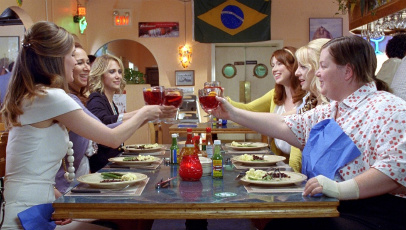
The rest of the cast, including Maya Rudolph as Lillian, Melissa McCarthy as Megan (who is, at times, utterly priceless), Wendi McLendon-Covey as Rita, Ellie Kemper as Becca, Jill Clayburgh as Annie’s mum, Chris O’Dowd as Nathan and Jon Hamm as Ted, are equally as entertaining in their respective roles. McCarthy and O’Dowd in particular, who are more used to TV roles, show their ability to mould into comically charged characters and hold their own against other more versatile and established actors. Bridesmaids is very much a team effort, and that’s what makes it work so well in comparison to other films of its nature.

If there are any criticisms to be made, it’s that at a hefty 125 minutes, Bridesmaids can feel, at times, a little too drawn out in places and could have benefited from a slight trim here and there. Similarly, with a cast as extensive as this, some actors are shamefully underplayed or, in the case of McLendon-Covey’s Rita and Kemper’s Becca, almost completely tossed aside halfway through. These, however, are minor issues and, in the bigger picture, seem relatively non-existant.

Bridesmaids is a truly hilarious ensemble comedy, with some of the best writing, performances and direction you’ll see all year. Find it, see it, love it.

Review: Albatross (2010)

BAFTA award-winning director Niall MacCormick makes his feature length debut with Albatross: a nuanced, charming and veritably witty coming-of-age drama, penned by Tamzin Rafn – a budding new screenwriter.

The film tells the story of a frustrated author, Jonathan (Sebastian Koch), and the incendiary effect of the arrival of verbose would-be writer Emelia (Jessica Brown-Findlay) on his family. Emelia first befriends and liberates his bookish daughter Beth (Felicity Jones), before going on to irritate his ever-frustrated wife, Joa (Julia Ormond), and finally bewitching Jonathan himself. Can Emelia shed the albatross that hangs around her neck and rewrite her personality?

Rafn’s nuanced screenplay opens as a freeloading, comical teenage drama, but slowly unravels into a highly intelligible, fully engaging and wonderfully articulate coming-of-age tale. Although the sexual relationship between Emelia and Jonathan is very much at the focus for the majority of the film, it actually plays as more of a catalyst to the main narrative: the budding friendship between Emelia and Beth, who rely on each other as their lives and personalities evolve over the course of the short but sweet running time.

At its heart, however – and behind the meaningless fabrications, sexual dalliances and supposed lifelong friendships – the script is more curious in questioning the overall purpose of life, the journeys we take, and how the people we meet along the way each have a different – but nonetheless important – effect on our individual growth and the understanding we have of our own personal being.

Having built up his artistry on numerous TV projects, MacCormick – with the aid of Director of Photography Jan Jonaeus – makes an almost seamless transition to feature length filmmaking with such delicate immediacy. Albatross is beautifully shot and wonderfully framed. The outdoor, scenic shots represent the freeness and unpredictability of life, and they are wonderfully contrasted by much more common indoor ones. These manage to convey the contained and often emotionally structured lives we become used to. The only time this isn’t apparent is during Emelia and Beth’s trip to Oxford, which highlights the freedom they feel being away from their small, claustrophobic home town, and the dominance of both their parents and the stresses of life.

What’s most surprising is how well placed the music is within the course of the film. Mixing both indie music – such as excellent uses of Frightened Rabbit and Editors – and composed tracks by Jack Arnold, MacCormick finds a perfect balance. The music adds another dimension to what’s happening on the screen, often enhancing the themes explored in the narrative, pushing them to the forefront and making them central to our understanding of the films underlying message.

The performances across the board are sublime. Brown-Findlay and Jones in particular, who play Emelia and Beth, each deliver astounding performances, defining their position as two of the most interesting and enthusiastic young actresses currently working in the British film and television industries. It’s the relationship between Emelia and Beth that is very much the backbone of the entire film, and so it’s a pleasure to see both Jones and Brown-Findlay so passionate and at one with their respective characters that their on screen friendship, with all its trials and tribulations, feels entirely authentic to the eye and within the context of the narrative as a whole.

Koch, Ormond and Peter Vaughan are the most noteworthy members of the supporting cast. Each show their warmth, never fading into the background, and always using Rafn’s terrific dialogue to push themselves and their individual performances. The interaction between Koch and Ormond is, at its best, unforgettable: full of sarcastic banter and humorous one-liners, while Vaughn brings a calm and contemplative nature to the table as Emelia’s unnamed grandfather. Ultimately, to see such a talented array of actors working in unison with such a sincere, witty and multi-faceted script is an utter pleasure.

On the surface, Albatross may – due to its similarities with other quirky coming-of-age drama – seem like an easy to foretell imitation. But, as the layers unfold, it transforms into a fully realised and thought-provoking piece of cinema, chock full of heart, depth and humour to boot. In simple terms, it’s very much a film that demands your attention from the offset, and pays dividends for your fathomless investment as it reaches a head.

Review: Ghosted (2011)

Ghosted, a gritty and brutal prison drama, is the feature length debut from camera-operator and short filmmaker Craig Viveiros. The film centers on Jack (John Lynch), a model prisoner who has kept his head down and is close to completing his time. However, after his wife leaves him for another man, his final lifeline comes in the form a new, naive prisoner, Paul (Martin Compston). When Paul falls under the influence of the psychotic Clay (Craig Parkinson), Jack soon finds he must risk his own life and sanity to help the newcomer survive.

The action opens strongly, with a respectably concise introduction to the central characters. It may be sparse on dialogue, but it sets the film up well, despite the already overbearing cliches. From here, however, when it should be establishing a new take on the prison drama, it settles into a dull pace, full of easy to foretell twists, inmates with perennial problems, battles between characters for prison dominance and an ending that feels all too contrived to make any sort of lasting impact. The running time – clocking it at over 110 minutes – is ridiculous, and doesn’t do the overall product any favours.

Thankfully, then, Viveiros’ direction is something to celebrate, even managing to distract attention from the commonplace plot strands on several welcomed occasions. Apart from the overuse of self-indulgent mirror shots and unnecessary slow-motion, Ghosted is a pleasantly competent and accomplished piece of filmmaking, with some particularly striking and well executed scenes breaking up the strong sense of familiarity that runs throughout – most notably the merciless shower scene, a scene that represents Jack’s problems drowning him, and an incredibly brutal encounter towards the end that will have you flinching in your seat.

The acting is possibly Ghosted most noteworthy distinction. Compston, who’s been on the rise since being plucked from obscurity to star in Ken Loach’s Sweet Sixteen and was dazzling in last years shamefully underrated The Disappearance of Alice Creed, impresses as the emotionally disjointed Paul, while Parkinson delivers a fittingly admirable performance as the volatile Clay. But it’s Lynch as the unhinged Jack, who steals the show, bringing a truly tremendous level of depth and nobility to Jack’s damaged soul, particularly in the absorbing scenes shared with Compston’s Paul.

While acted in a more than satisfactory mannor and technically effective, Ghosted sadly fails to break free of vastly overdone prison drama cliches, instead becoming an overwrought and predestined misfire.

Review: Tomboy (2011)

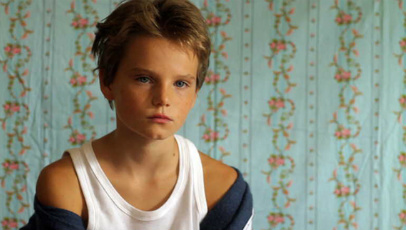
Tomboy is French writer-director Céline Sciamma’s follow-up to the highly praised Water Lilies, and it again follows a confused child discovering her sexuality. This time the narrative centers on Laure (Zoé Héran), a 10-year-old tomboy. When she moves to a new neighbourhood with her parents, she engages in a gender confused role-play in which she pretends to be a boy to make new friends, not realising the hurt she’s causing along the way.

On the surface, Tomboy may seem like another film about a lonely child trying to fit in, but it’s a really rather intricate and dramatically insightful exploration into how, and more importantly why, one child in particular feels the need to invert their own identity to find acceptance in society or even within themselves.

Instead of launching in at the deep end, Sciamma opts for a more laid back and soulful approach, letting Laure’s personality etch out and unravel in a mysteriously yet fully encapsulating fashion, one that’s both completely and entirely welcomingly impartial. The bottom line is that Laure isn’t gay, nor is she transgendered: she’s simply finding a way to live her life in the most comfortable way possible.

Sciamma’s direction, much like her screenplay, is confident yet unobtrusive. Most of the mise-en-scene is colourfully minimal, with the action almost entirely set in Laure’s apartment or the nearby parks and lakes. The vast majority of scenes are shot from a distance, bar a few close-ups on Laure and new friend Lisa (Jeanne Disson) that, due to their opposing natures and concealed home lives, fully highlight their burgeoning yet deeply flawed and shrouded relationship.

The role of Laure is played to a degree of excellence by relative newcomer Héran. Despite being 10-years-old, she conveys such emotion, innocence and desperation for acceptance, mostly through her eyes and body language. The remainder of the cast – including Mathieu Demy and Sophie Cattani as Laure’s mother and father – offer strong yet cautious support, never matching the spirit Héran so naturally achieves, but playing off her with an incredibly skilled nature, especially for a crop of such young actors.

Affecting, well envisioned and delicately captured, Tomboy takes a serious look at the taboo subject matter of the sexual ambivalence experienced by children, suggesting that even though your biological sex is predetermined, this has little sway on your true sexual identity. Perhaps, in a sense, it’s played out a little too cautiously and only barely scratches the surface of Laure’s inner turmoil, but if viewers are looking for a true gem, then Tomboy certainly deserves as big a loving audience as it can find.