Review: Fair Game (2010)

Fair Game is a new political conspiracy-thriller from The Bourne Identity and Jumper director Doug Liman.

The film is based on the autobiography of real-life undercover CIA operative Valerie Plame (Naomi Watts), whose career was destroyed and marriage strained to its limits when her covert identity was exposed by a politically motivated press leak.

As a covert officer in the CIA’s Counter-Proliferation Division, Valerie leads an investigation into the existence of weapons of mass destruction in Iraq. Valerie’s husband, diplomat Joe Wilson (Sean Penn), is drawn into the investigation to substantiate an alleged sale of enriched uranium from Niger. But when the administration ignores his findings and uses the issue to support the call to war, Joe writes a New York Times editorial outlining his conclusions and ignites a firestorm of controversy.

Liman keeps things moving at a tight and efficient pace, but the overall aesthetic is quite dull – mostly existing in subdued shades and dulled environments – and he uses the handheld, shaky camera technique far too much.

The visuals and direction aren’t necessarily are bad, but they are bland and don’t engage with the viewer enough to maintain our attention – Liman was clearly going for a realistic tone but instead misses the mark and creates something fake in the way he overplays the solemnity of the source material.

The script, from John-Henry and Jez Butterworth, feels too convulted, moving from engaging political thriller to uncomfortable and uninteresting family melodrama in a clumsy and equivocal manner.

The performances are uneven. Watts steps into Valerie’s shoes accurately enough, but the material doesn’t have enough depth or emotional heart for her to show her true talent and diversity.

Penn, on the other hand, wonderfully depicts Joe’s inner turmoil, torn between two acts that both seem right in their own way; to protect his family or to expose a political scandal that’s torn his family to pieces.

These characters are are all too simple caricatures of what the filmmakers think these people are really like. They aren’t fleshed out enough for you to feel much sympathy for their personal and career downfalls.

Fair Game asks some interesting questions, but never quite reaches the heights it should, especially considering the powerful source material, renowned direction and world-class acting talent on hand.

Review: The Resident (2011)

The Resident, a home invasion thriller directed by Antti Jokinen, is Hammer second shot at commercial horror after the marginally successful Let Me In.

The film centers on Juliet (Hillary Swank), a doctor who, after a messy break-up with her boyfriend (Lee Pace), rents a spacious apartment in Brooklyn, subsequently finding herself beset on all sides by a mysterious, unseen force of evil.

Jokinen’s direction, from the offset, is shaky as he tries to build quiet suspense and an eerie atmosphere on the shoddy premise and haphazard script. That said, he does make effective use of CCTV security footage captured on motion-sensitive cameras, using them to instill some low-key terror. The problem is he’s too timid to take it anywhere.

What works, is the fine fine examples of Hammer’s classic horror film aesthetic embedded within the action; from ripe dialogue, and enthusiastic cast to fog-thick atmosphere and some tense camera-work. It’s a breath of fresh air to see these techniques being used once again, it’s just a shame so see them go wasted.

In terms of casting, Swank and Jeffrey Dean Morgan both bring adequate shading to their respective characters, delivering equally respectable performances. Neither of then, however, feel comfortable enough with the source material to truly captivate us, and make us sympathise with their characters.

Sadly, Christopher Lee – in his first Hammer film for close to three decades – is shamefully wasted as August, who immediately – despite his limited screen time – brings a smidgen of credibility to the film.

The Resident is not outright awful, but it’s nothing more than a routine Hammer horror film that fails to create any atmosphere around its premise.

Review: Submarine (2011)

Adapted from Joe Dunthorne’s novel, Submarine is a quirky indie-comedy that marks the feature film debut of actor/music video director Richard Ayoade.

Submarine tells the story of Oliver Tate (Craig Roberts), a teenager in a small Welsh town with two goals: to lose his virginity and to prevent his mother (Sally Hawkins) from leaving his father (Noah Taylor) for her dance teacher (Paddy Considine).

However, Oliver’s attempts at adult interaction are hampered by a level of self-absorption that’s both witty and poignant in equal measures.

To some, the plot may sound fairly conventional, but Submarine refuses to succumb to common genre clichés to hold our attention. Instead it remains perfectly in tune with Oliver’s swirling, complex imagination, drawing us into his perspective, which in turn allows for an altogether more comprehensive, naturalistic view of his reality.

The script, despite its sometimes obvious lack of major revelations and twists, is packed to the hilts with heart, dry humour and cinematic love. So much so that Oliver’s strong, entertaining and incredibly eccentric story is left to thrive and impact our hearts in distinctive ways.

Ayoade, relishing in the opportunity to show his awareness of cinematic principles, subtly yet magnificently employs freeze frames, slow-motion and tightly framed close ups to accentuate the necessary thematic elements. It’s rare to see a director so in command and assured of film form so early in their career.

By bathing the peripheral scenes in abundant natural light, Ayoade immerses the film in a lustrous, and wholly naturalistic charm.

Alex Turner’s extremely emotive soundtrack punctuates the film in sporadic, beautiful and imaginative ways, heightening the stories overall emotional impact to abundant avail.

The casting is a revelation. Roberts is simply superb as Oliver, turning in a star-making, assured and above his age performance that sees him competently master both comic and dramatic aspects of the narrative. Yasmin Page, who plays Oliver’s love interest, delivers a notably intricate Jordana, portraying her as a thickset yet susceptible teenage girl.

Additionally, in key supporting roles, Taylor and Considine both turn in faultless performances as very opposing, yet equally tormented, middle-aged men. Hawkins, in possibly her most incandescent performance since her breakout in Happy-Go-Lucky, bedazzles as Oliver’s mum, displaying a priceless aura of reticent hysteria that manages to be both humorous and deeply affecting in equal measurements.

From the wonderfully written dialogue, to the astute visual style (reminiscent of Wes Anderson or Noah Baumbach) and the sincerity and winsome nature of the characters, Submarine is a mesmerising, outlandish and warm-hearted indie comedy, produced with such elegance that, if there’s any justice, should thrust Ayoade from relative obscurity to a true, unequivocal visionary.

In simple terms, it’s 97 minutes of absolute joy.

Review: The Adjustment Bureau (2011)

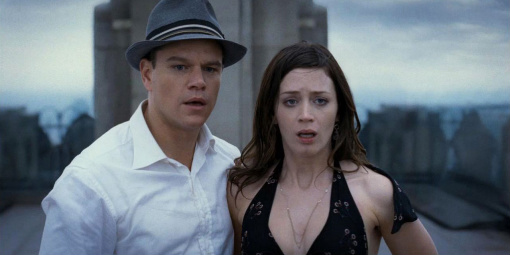
On the brink of winning a seat in the U.S. Senate, ambitious politician David Norris (Matt Damon) meets beautiful contemporary ballet dancer Elise Sellas (Emily Blunt) – a woman like none he’s ever known.

But just as he realizes he’s falling for her, mysterious men conspire to keep the two apart. David learns he is up against the agents of fate itself – the men of ‘The Adjustment Bureau’ – who will do everything in their considerable power to prevent David and Elise from being together.

In the face of overwhelming odds, he must either let her go and accept a predetermined path…or risk everything to defy fate and be with her.

Adapted from Philip K. Dick’s short story Adjustment Team, George Nolfi’s directorial debut has all the typical elements of a traditional thriller, but instead –  and to its merit – shifts focus onto the sincerity of its love story, the intensity and sting of its dialogue and the poignancy of its two lead characters.

Nolfi’s script is compellingly light on its feet, merrily skimming over any laboured exposition on the deep, underlying questions in an old-fashioned Hollywood way; and there’s a wonderfully pleasant, authentically believable echantment between Damon and Blunt.

Visually, the film is stylishly shot by John Toll. The sumptuous New York backdrop is bathed for all its worth, resolving the action sublimely with a peerless top-of-the-world, eloquent climax, thanks in no part to the pulsating score and symbolic use of natural lighting through mise-en-scène.

In terms of drama, The Adjustment Bureau doesn’t quite set all lights blazing, and the overall story lacks in the kind of gut-wrenching twist or moment of pathos that would propel it to a higher stature. But in no way shape or form does this infringe upon the overall point of the film – the sincere, clever and unique romantic nature.

The heart of the film, and the films most impressive element, is the plausible relationship between David and Elise, so exquisitely played by Matt Damon and Emily Blunt, who both exude a captivating level of warmth and naturalism that makes their potentially life-threatening romance instantly credible and captivating to behold.

Damon sturdily channels David’s bruised side, contrasting this with his level-headed political disposition, giving an extraordinarily full-bodied, comprehensive performance, one that will undoubtedly be shamefully overlooked.

And Blunt, in arguably her most enthralling role since The Devil Wears Prada, undercuts Elise’s cutting, untrustworthy exterior with her honest, vulnerable inner heart to perfect, pertinent avail. Her ballet skills may not be the best, but she more than makes up for that in other, more necessary areas.

The supporting actors, most notably a very impressive Anthony Mackie, a slick and crafty John Slattery, and an always on-form Terence Stamp, deliver committed, uniformly ardent turns as various members of ‘The Adjustment Bureau’.

The Adjustment Bureau is a fun, thought-provoking uniquely discerning and superbly acted entertainment romance-thriller. Unlike the marking campaign suggests, it isn’t Bourne meets Inception, but it does have the necessary ingredients to stand out as a solid piece of filmmaking.

Review: Rango (2011)

Rango is a new computed animation film from the quintessential avant-guarde director Gore Verbinski.

The film centres on Rango, a chameleon and aspiring swashbuckling thespian, who finds himself in a Western town plagued by bandits and is forced to literally play the role in order to protect it.

John Logan’s script, while it deals with big issues, such as the lack of water in certain countries, works best as an intellectual character piece, and its through the compelling voice talent and extraordinary emotion capture that the film truly shows its grandeur.

The pacing is a delight, full of humour and fortitude, sometimes quiet and retrained, while others noisy and outlandish. It’s a film that, to its merit, dares to be in-your-face and to tell a very personal, sometimes restricted story.

The real accomplishment, though, is the visual style, which makes even the best animated 3D look feeble in comparison. Meticulous attention has clearly been paid to mise-en-scene, emotion detailing, and the inspired framing of individual shots. It’s truly fascinating to behold the surprises the filmmakers dispel throughout the film.

The voice cast, top-lined by an on-form Johnny Depp, each deliver inspired and witty performances. Isla Fisher, in particular, must be commended for her beguiling Western accent, much better than the Scottish accent attempted in last year’s disappointing Burke & Hare.

While the action can be violent, and the dialogue more intense than other animation films, Rango excels as an innovative, intelligent and witty piece of filmmaking. It may not be to everyone’s taste, or welcome a wide demographic, but it’s a feat to embrace, not discount.

The sheer imagination and heart is further accentuated by Hans Zimmer’s soaring score which, by reworking Ennio Morricone’s past scores, instills an exciting, sometimes comic aura that perfectly matches the tone of the film.

Rango is a quirky, delightfully unique and inspired piece of animation.

Review: The Rite (2011)

Loosely based on Matt Baglio’s novel The Rite: The Making of a Modern Excorcist, The Rite traces the experiences of Michael Kovak (Colin O’Donoghue), a young seminary student who discovers the true powers of faith when he’s drafted into the Vatican’s Exorcism School and confronted by the forces of darkness.

Mikael Håfström’s direction is competent, and makes full use of the wonderful city of Rome, but never breaks free from its bleak, by-the-numbers nature.

The script, by Michael Pertroni, is predictable, starting off placid and, aside from picking up slightly when Father Matthew enters, ends in a rushed, disappointing manner, one that predominantly sticks to the thoroughly-mined themes of previous exorcism-orientated horror films.

Fortunately, even with the film falling apart at the seams, Hopkins stays on form, continually shining. He plays Father Lucas as a smooth and effortlessly witty priest, in the vein of Hannibal Lector. Everything he does is interesting to watch, and somehow makes you believe you’re watching a very different, more compelling film.

It’s a shame, then, that the film continually pulls focus back to Kovak. While intriguing, O’Donoghue doesn’t have the zealous nature to hold audiences attention, and Kovak suffers for it, never achieving the powerful stance required, often coming across as plain boring.

The supporting cast, including turns from Ciarán Hinds, Alice Braga and Rutger Hauer, populate the background to great avail, delivering compelling performances in their shamefully limited roles.

The Rite, despite a solid turn from Hopkins, is ultimately a strained, predictable and largely irrelevant addition to the exorcism sub-genre.

Review: Rubber (2010)

Rubber revolves around a tyre, Robert, that’s been buried and forgotten in the middle of the desert. When, for some unknown reason, Robert wakes up and discovers his destructive telepathic powers, he soon sets his sights on a desert town; in particular, a mysterious woman who becomes his obsession.

The film, an ode to 1970’s experimental filmmaking, serves as a wonderful social commentary piece of film by not only playing on the typical conventions of commonplace horror films, but by bravely eradicating the “fourth wall” by establishing a subplot of spectators watching the action through binoculars; essentially a film within a film.

The script is solid, and the humour builds on itself in tiers, sprouting from the perplexing moments of hilarity to the ludicrous crescendo of the conclusion, where every element of the film comes together in an ending that, if nothing else, will make sure you never look at a supposedly inanimate object the same ever again.

Quentin Dupieux’ vision, inspired dialogue and dark, stony humor is fluently brought to life by the innovative cast, and the buoyant nature Robert annihilates other living beings.

Jack Plotnick, especially, exhibits the uncommon talent to carry a scene from laugh out loud humorous to acutely afflicting in a matter of seconds, delivering his lines in a magnificent, whimsical style.

Mr Oizo’s soundtrack compliments the on-screen action sublimely and, by working in unison with the excellently lingering, often intentionally off-frame cinematography, builds up and up as Robert, a rolling tyre, is made into the main character, one displaying wholly human characteristics, a feat that’s rarely achieved so distinctively.

Rubber is a uniquely screwy horror-comedy that supplies a fascinating blend of carnage and farcicality, moulding it into a striking romp that deserves to find its audience.

Review: Drive Angry 3D (2011)

Drive Angry 3D follows Milton (Nicolas Cage), a hardened felon who has broken out of hell in order to save his baby granddaughter from being sacrificed to a satanic cult, led by the man who murdered his daughter, Jonah King (Billy Burke).

Teaming up with young sexy-smart waitress, Piper (Amber Heard), Milton must put the cult to an end while outrunning the advances of an enigmatic killer known only as The Accountant (William Fichtner), who is sent from hell to bring Milton back.

Patrick Lussier has elevated his My Bloody Valentine craft to an even trashier level, with the accentuation on uninspired tones, sexy woman and fast cars contriving that 70’s exploitation feel, throwing carnage at the screen with delirious exuberance.

He keeps the pacing tight, conforming to the ticking clock aspect of the plot and lets the film advance along on a never-ending cascade of fistfights, gunfights, explosions and snarky banter.

However, no matter how much blood and bare flesh grace the screen, Drive Angry, especially in it’s third act, is left feeling lifeless and padded at times, mainly due to the slapdash script, never quite matcheing the success Quentin Tarantino reached with his magnificent Death Proof.

The 3D element serves its purpose by immersing the viewer in the world and seldom being distracting, but it never adds anything or reinforces the overall viewing experience to compensate the heightened ticket price.

Cage, in a role similar to the one he played in Ghost Rider, looks tired, acting throughout with a glazed expression that implies he simply isn’t enjoying himself or has any belief in the source material, which, in turn, withholds the film from reaching its true potential.

Heard and Fichtner triumph over Cage in every way; getting the best dialogue, having the most convincing physical presence, and purely playing characters that are entertaining to watch.

Drive Angry 3D is easy, somewhat fun weekend viewing. Simple as that.

Review: I Am Number Four (2011)

Directed by D.J. Caruso – and adapted by Alfred Gough, Miles Miller and Marti Noxon – I Am Number Four is new teen-based sci-fi adventure film based on the best-selling novel by Pittacus Lore.

Extraordinary teen John Smith (Alex Pettyfer) is a fugitive on the run from ruthless enemies sent to destroy him. Changing his identity, moving from town to town with his guardian Henri (Timothy Olyphant), John is always the new kid with no ties to his past.

In the small Ohio town he now calls home, John encounters unexpected, life-changing events – his first love (Dianna Agron), powerful new abilities, and a connection to the others who share his incredible destiny.

The first two thirds of the film are irritating, evoking scenes from any pointless high school drama series you’d care to waste your time naming. It’s a bland, and all-too smooshy opening, one that drags on for an unrelenting amount of time.

Thankfully, but ultimately much too late, the third act pushes the saccharine romance to one side and hits a higher point with the arrival of Number Six (Teresa Palmer), a deadpan snarker in black leather, who unites with Number Four to defend their species from the invading Mogadorians, wrecking a path of carnage as they release their newfound supernatural powers.

Alex Pettyfer, in his second attempt to hit the big time, makes for a satisfactory lead, but ultimately feels out of his depth, never quite encapsulating Number Four to the extend needed to hold viewers’ attention.

Dianna Agron is good enough in the role of Number Four’s eternal soulmate, but she doesn’t have the experience, or solid-enough source material, to elevate her character to a higher level.

The special effects are competent, but nothing exceptional, and fail bring the intriguing subject matter, and life-altering final battle to life.

The soundtrack, and use of songs from pop bands The xx to King of Leon, feels bizarre and enervating, never contributing or highlight anything of importance in the film.

I Am Number Four is a pedestrian, poorly executed and badly cast supernatural thriller that tries hard, but ultimately fails to connect.

Review: Just Go With It (2011)

Synopsis: A plastic surgeon (Adam Sandler), romancing a much younger schoolteacher (Brooklyn Decker), enlists his loyal assistant (Jennifer Aniston) to pretend to be his soon to be ex-wife, in order to cover up a careless lie. When more lies backfire, the assistant’s kids become involved, and everyone heads off for a weekend in Hawaii that will change all their lives.

The overall set-up (mooted by Allan Loeb and Timothy Dowling) borders on farce, but through short-sharp bursts of comedy, manages to make a commendable attempt to break-free of rom-com conventions and head into surprisingly heartwarming territory.

Still, no matter how hard it tries, it unfortunately remains a desperately uneven film, suffering from Dennis Dugan’s basic, overly glossy direction and a ludicrously bloated, lingering running time.

The two leads, Sandler and Aniston, display a very natural comedic flare and, to the films advantage, combine their strengths – Sandler’s acerbic sweetness with Aniston’s down-to-earth warmth – to reasonable avail, establishing a tenable and charismatic on-screen duo.

It’s a testament to Aniston who, no matter how deadpan her post-Friends career has become, remains one of the best comedic actresses of her generation, wonderfully transferring her glowing off-screen, warm-natured personality, and sizeable womanly assets, into Katherine’s likeable and winning nature, essentially bringing her to life.

Prevailing in a supporting role, Bailee Madison, who plays Katherine’s youngest daughter, delivers a bubbly, witty and energetic preeminent performance.

Nicole Kidman, on the other hand, stars as Katherine’s frenemy Devlin Adams. It’s a somewhat inspired role, and certainly brings a breath of fresh air to the trailing central plot, but Kidman’s performance comes across as forced, unnatural and down right insane. Your never sure whether to laugh or cringe.

Just Go With It is so ridiculously overblown that it’s bereft of any true mentality, with the end wrapped up so hastily it makes the whole ordeal arguably pointless. Yet, through a zealous performance from Aniston and a suitably pushy script, it’s an infrequently entertaining effort.