Director: Spencer Susser
Starring: Joseph Gordon-Levitt, Natalie Portman, Rainn Wilson and Devin Brochu
Director: Spencer Susser
Starring: Joseph Gordon-Levitt, Natalie Portman, Rainn Wilson and Devin Brochu
Director: Glenn Ficarra and John Requa
Starring: Steve Carell, Ryan Gosling, Julianne Moore and Emma Stone

Cave Of Forgotten Dreams is a new piece of filmmaking examining the recently discovered – and strictly preserved – Chauvet Cave in France, and is directed by Werner Herzog: a visionary renowned for his love of uncovering the unknown.
Herzog, whose prior left-field works include Encounters At The End Of The World and Grizzly Man, personally approached the French culture minister, Frederic Mitterand, who authorised unprecedented yet severely restricted access to the rapturous Chauvet Cave where Paleolithic drawings of a multitude of mammals have been left untouched for up to 32,000 years.
To enhance the experience, Herzog finds a refreshing alternative use for 3D technology. He collaborates with Peter Zeitlinger to show us the inside of the cave system in a remarkably bold and accessible approach, as well as displaying the many mammals that embellish the walls in all their three-dimensional glory by highlighting their realistic characteristics through long, slow and beautifully accentuating camera movements.
Herzog is clearly a director who – rather than administering it unnecessarily in the hope it will add something to a scene, shot or effect – is very careful about using the new fangled technology to the best of its ability.
It’s a very clever tactic, and works wonders to transport us, the viewer, into the eerie depths of the cave system, giving us a better appreciation of the paintings and how the artists that composed them managed to make them blend harmoniously – and three dimensionally – with the cave’s natural milieu.
Herzog is clearly a director who – rather than administering it unnecessarily in the hope it will add something to a scene, shot or effect – is very careful about using the “newfangled” technology to its fullest potential.
His extremely majestic use of cinematography not only enhances the contours of the artwork and the walls which they inhabit, but also suggestively mirrors the ways in which the artists used their environment. Lighting and positioning were clearly important, and Herzog employs both to accentuate specific renderings.
It’s marvellous to see Herzog achieve so much under extremely limited equipment (two cameras and several handheld, battery-operated lighting devices) and severe time restrictions.
By interviewing various expert scientists and archeologists throughout, Herzog – in his own eccentric and enthralling way – is able to provide an incredible, decidedly realistic interpretation of the artists.
Upon leaving the cave and encountering various contrasting unnatural consequences of modern man’s interactions with nature, Herzog is able to pose a number of outlandish and ponderous questions, such as those regarding humanity, in a way that will undoubtedly leave you entangled in the subject matter for days.
Cave Of Forgotten Dreams may not be to everyone’s tastes, but there’s no doubt it’s a compelling, questioning and pensive piece of filmaking from a prophetic director showing that, even in the earliest millennia of our civilisation, our ancestors were driven by the same impulses that compel us to create art in the modern age.

1. Hop – £1,392,740
2. Source Code – £1,306,661
3. Limitless – £1,206,219
4. Sucker Punch – £814,976
5. The Eagle – £472,357
6. A Turtle’s Tale: Sammy’s Adventures – £365,258
7. Rango – £289,021
8. Unknown – £276,657
9. Anuvahood – £219,688
10. The Lincoln Lawyer – £146,962

Megamind
Director: Tom McGrath
Starring: Will Ferrell, Jonah Hill and Brad Pitt
The American
Director: Anton Corbijn
Starring: George Clooney, Paolo Bonacelli and Violante Placido
Somewhere
Director: Sofia Coppola
Starring: Stephen Dorff, Elle Fanning and Michelle Monaghan
Miral
Director: Julian Schnabel
Starring: Freida Pinto, Hiam Abbass and Willem Dafoe
For Colored Girls
Director: Tyler Perry
Starring: Janet Jackson, Anika Noni Rose and Whoopi Goldberg
My Soul To Take
Director: Wes Craven
Starring: Max Thieriot, John Magaro and Denzel Whitaker
1. Hop – $38,118,000
2. Source Code – $15,053,000
3. Insidious – $13,496,000
4. Diary Of A Wimpy Kid: Rodrick Rules – $10,200,000
5. Limitless – $9,402,000
6. The Lincoln Lawyer – $7,050,000
7. Sucker Punch – $6,085,000
8. Rango – $4,560,000
9. Paul – $4,300,000
10. Battle: Los Angeles – $3,500,000
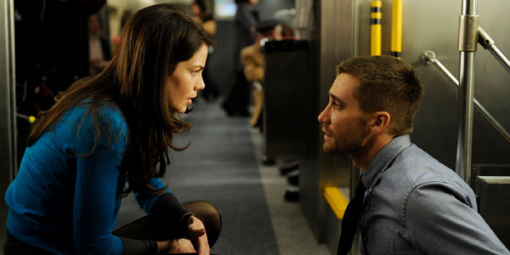
Source Code is BAFTA Award-winning director Duncan Jones’ follow-up to the critically acclaimed Moon and sees him tackling the big-budget Hollywood action genre.
Colter Stevens (Jake Gyllenhaal) is a former soldier who wakes up in the body of an unknown man. Over time Colter discovers he’s part of an experimental government program, and on a mission to find the bomber of a Chicago commuter train: a mission that enables him to cross over into another man’s identity in the last eight minutes of his life.
Colter relives the incident time and again until he can find the bomber and prevent further acts of terrorism. During his mission, he learns increasingly more about the Source Code from his Commanding Officer, Colleen Goodwin (Vera Farmiga), and develops a relationship with fellow train passenger Christina Warren (Michelle Monaghan).
There’s an impressive swift-paced lightness to Ben Ripley’s script, in that it never gets bogged down in the scientific explanations of Colter’s circumstances or the serious issues the film poses – specifically about loss of identity and terrorism – instead choosing to challenge the audience with remarkable twists and proclamations.
Quite simply, it’s a fast-paced, refreshingly smart and well-written sci-fi thriller. It has the coercion and credible nature needed to lure you into the world and take you on an absorbing journey, one without any superfluous ridiculousness.
Jones directs with terrific urgency, devouring the script and delivering a remarkably taut, immersive thrill ride. He doesn’t spare a single moment of its lean duration, and there are several moments in particular that are refined with startling poise.
He paints the city of Chicago in a wonderfully natural, luminescence. This is something which has a particularly striking effect in the closing scenes of the film.
The train disaster, though repeated multiple times, never loses its visceral and exciting intensity. It is truly incredible to see Jones finding new ways to add visual touches to limited, low-budget and theoretically repetitive action scenes.
Gyllenhaal is superb as Stevens, delivering a zealous, courageous, and vulnerable performance as a man thrown time-after-time into the same peculiar situation, driven only by his desire to communicate with his estranged father, to be a loyal soldier and to save Christina.
He shares a genuine, passionate spark with Monaghan, making the romance between their characters, Colter and Christina, entirely believable despite its complicated circumstances.
Monaghan, in arguably the most challenging supporting role, brings a fresh and appealing disposition to Christina. It works wonders for a character who suffers from being a romantic interest, and whose existence is limited to eight repetitive minutes. Through each 8 minute segment Christina’s personality is opened up more and more, and Monaghan is the perfect actress to bring humility and warmth to the woman Colter strives to save.
Farmiga makes so much of her compact part, slowly unveiling Goodwin’s warmth and humanity. Jeffrey Wright also pulls off the contrasting role of Rutledge: the uneasy, ambitious and often callous inventor of the Source Code experiment.
Source Code doesn’t quite match the near-perfection of Moon, but it’s a wholly engaging, swiftly paced and solidly performed sci-fi thriller, confirming Jones as a unique, natural-born genre director.
Sucker Punch
Director: Zack Snyder
Starring: Emily Browning, Abbie Cornish and Vanessa Hudgens
Source Code
Director: Duncan Jones
Starring: Jake Gyllenhaal, Vera Farmiga and Michelle Monaghan
Hop
Director: Tim Hill
Starring: Russell Brand, James Marsden and Elizabeth Perkins
Killing Bono
Director: Nick Hamm
Starring: Krysten Ritter, Ben Barnes and Pete Postlethwaite
Essential Killing
Director: Jerzy Skolimowski
Starring: Vincent Gallo, Emmanuelle Seigner and David L. Price
Oranges & Sunshine
Director: Jim Loach
Starring: Hugo Weaving, Emily Watson and David Wenham
1. Limitless – £2,087,363
2. A Turtle’s Tale: Sammy’s Adventure – £1,122,067
3. The Eagle – £1,038,954
4. Rango – £670,992
5. Unknown – £477,531
6. Battle: Los Angeles – £425,952
7. Anuvahood – £392,212
8. Chalet Girl – £339,947
9. The Lincoln Lawyer – £324,146
10. Hall Pass – £304,571
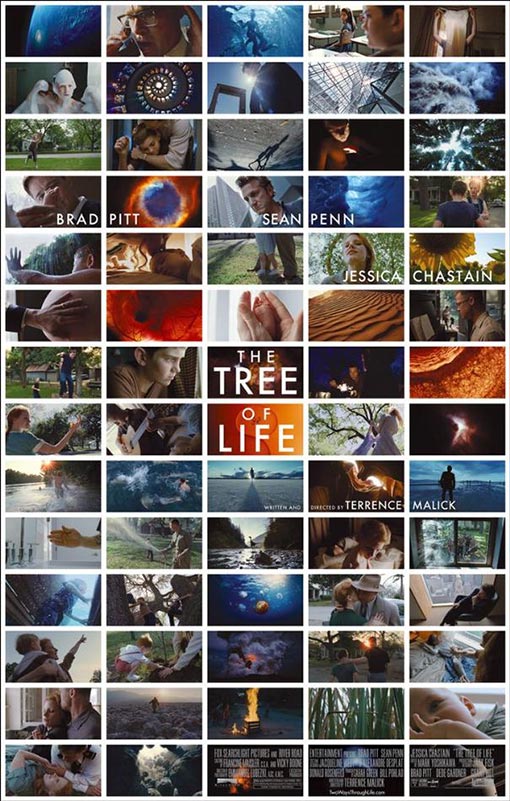
Director – Terrence Malick
Starring – Brad Pitt, Sean Penn, Jessica Chastain and Kari Matchett
 Empty Screens