Review: Thor (2011)

Directed by Kenneth Branagh, Thor is the latest comic-book adaptation from Marvel, and stars Chris Hemsworth, Anthony Hopkins, Tom Hiddleston, Natalie Portman, Kat Dennings and Stellan Skarsgård.

The film centres on Thor (Hemsworth), a powerful but arrogant warrior, who is cast down to Earth by his father Odin (Hopkins) and is forced to live among humans. A beautiful young scientist, Jane Foster (Portman), has a profound effect on Thor, awakening romantic feelings for the first time.

It’s while on Earth that Thor must learn what it takes to be a true hero when the most dangerous villain of his world sends the darkest forces of Asgard to invade Earth.

Branagh, who seemed at first like an odd choice for director, succeeds in making the fantastical elements feel grounded and realistic: something which was always going to be tricky to achieve. He employs plenty of sweeping cinematography to fully explore the intricately detailed environments, never letting the epic scale get out of hand.

This is aided in no small part by a strong, humorous and consistent screenplay – full of snappy dialogue, subtle references and nifty cameos – which improves the somewhat predictable morality tale. Moreover, he has elicited convincing, enthusiastic performances from his eclectic cast.

Hemsworth truly embodies Thor, proving himself more than capable both in terms of action and humour, stepping up from minor supporting actor to a leading Hollywood star.

He stands out amongst a heavy-weight supporting cast, including ditzy and on-fire Portman, a hilarious and shamefully understated Dennings and an ever-solid Skarsgård.

Hiddleston delivers an effective, and wholly opposing, performance as Thor’s twisted brother Loki – a far cry from his recent low-key turn in Archipelago. Hopkins, as is to be expected, adds a touch of cinematic class as the patriarchal Odin.

It’s a shame the supporting characters aren’t further explored, but it’s a minor issue and understandable considering the circumstances. It’s encouraging to hear that various roles were beefed up after test-screening reactions.

There are, like many big-budget productions, a number of visual and narrative flaws, but Thor manages to be a superbly grounded, infectiously gratifying and valiantly executed summer blockbuster, completely defying mediocre expectations.

All involved in production have done a commendable job in making this superhero movie feel as seasoned and entertaining as possible, embracing the absurd in a way that entirely proves Branagh a sensible choice in director, and Hemsworth a fantastic Thor.
Review: Fast Five (2011)

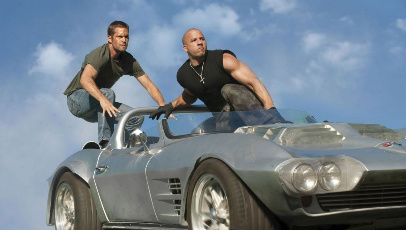
Directed by Justin Lin, Fast Five is the fifth instalment in the globally successful Fast & Furious franchise, and stars Vin Diesel, Paul Walker, Dwayne Johnson and Jordana Brewster.

Former cop Brian O’Conner (Walker) partners with ex-con Dom Toretto (Diesel) from the opposite side of the law. Ever since Brian and Mia Toretto (Brewster) broke Dom out of custody, they’ve blown across borders to elude authorities. Now backed into a corner in Rio de Janeiro, they must pull one last job in order to gain their freedom.

As they assemble their elite team of top racers, the unlikely allies know their only shot of getting out for good means confronting the corrupt businessman who wants them dead. But he’s not the only one on their tail. Hard-nosed federal agent Luke Hobbs (Johnson) never misses his target.

When he is assigned to track down Dom and Brian, he and his strike team launch an all-out assault to capture them. But as his men tear through Brazil, Hobbs learns he can’t separate the good guys from the bad. Now, he must rely on his instincts to corner his prey… before someone else runs them down first.

The plot – while obviously simple, heavily flawed, and packed full of ludicrously clichéd dialogue – has a certain charm that helps every moment of inept absurdity slide and encourages you to lose yourself in the dumb action.

Kudos goes to Lin, who directs with passion. Despite his tendency to blurriness in action sequences, the stunts are practical and realistic while being viscerally powerful and hugely entertaining. The car scenes, in particular, are shot with a superb attention-to-detail. He clearly knows his crowd, and has tailor made the film to appeal squarely to them.

As far as performances go, it’s an entirely mixed bag. Diesel is solid as Dom, and Johnson is a welcome addition as the heavily aggressive yet darkly humorous Hobbs. Meanwhile, Walker feels out of place, like his character’s been worn too thin, and while the inclusion of past characters is welcome – helping you to ignore the gaping plot holes – they simply don’t have enough screen time to be anymore than that.

Fast Five is, for long-standing fans of the Fast & Furious franchise and action lovers, simply an unabashed popcorn entertainment flick. For those adverse to the genre, however, it’s pretty non-descript.

Review: Archipelago (2010)

Archipelago is Joanna Hogg’s second directorial feature, and stars Tom Hiddleston, Christopher Baker, Kate Fahy, Amy Lloyd and Lydia Leonard.

The film follows an upper class family and their holiday on Tresco, Isles of Scilly. Patricia (Fahy) calls together daughter Cynthia (Leonard) and son Edward (Hiddleston) for some quality time before Edward embarks upon a volunteer placement in Africa While their father appears only over phone calls, he casts an unseen presence on the characters’ development. With hired cook Rose (Lloyd) and family friend Christopher (Baker), the family’s relationships soon begin to strain, and its foundations are tested and tortured as the holiday continues.

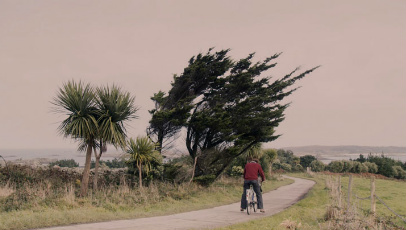
Filmed on location, the weather, natural lighting, and the raw, irresolute environment perfectly echo the family’s turbulent relationships, switching from light optimism as they initially gather to a dull grey monotone when they eventually depart.

In long, static takes, full of wide shots which dare to linger and embrace the awkwardness, Hogg delicately exposes the chasm between polite pretences and repressed animosity.

The script exquisitely fluctuates between the brutally comic and the frustratingly trivial actions. Some may find it uncomfortable, but Hogg instills the right amount of indignation to keep the audience emotionally invested throughout, taking her time to carefully examine each character, as well as the family dynamic as a whole.

The acting itself, in particularly from Hiddleston, is superb, with all the actors committing admirable and earnest performances as their respective emotionally disconcerted character, each at different stages in their lives.

Most of the dialogue and character interactions are improvised, relying on staging, body language and the vapid conversations to further the narrative, which in turn give the family’s relationships a wonderfully authentic nature.

Ed Rutherford’s score is impeccable, seamlessly integrating with the films low-key style, helping to accentuate the unsettled relationship at its heart, and the unsaid words lingering between them.

All these elements make Archipelago a wonderfully raw, realistic and inquisitive study into family life: the ups and downs, the turmoil, the repressed emotions and the subtle moments of joy. It’s a truly superb and accomplished piece of filmmaking that, while not being to everyone’s tastes, certainly proves that Hogg is one of the most visually daring and unique British directors in recent years.

Some may find it deplorable and and utterly pointless, while others will cherish it and savour every moment. I, on the one hand, find myself in the second category.

Review: Red Riding Hood

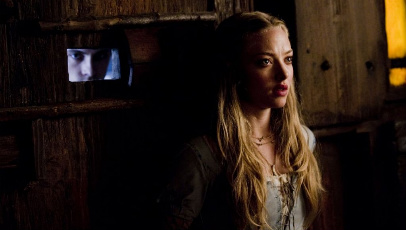
Red Riding Hood is director Catherine Hardwicke’s follow-up to the hugely successful Twilight, and stars Amanda Seyfried, Shiloh Fernandez, Max Irons, Lukas Haas, Billy Burke, Gary Oldman and Julie Christie.

Valerie (Seyfried) is a beautiful young woman torn between two men. She is in love with a brooding outsider, Peter (Fernandez), but her parents have arranged for her to marry the wealthy Henry (Irons). Unwilling to lose each other, Valerie and Peter plan to run away together when they learn that Valerie’s older sister has been killed by the werewolf that prowls the dark forest surrounding their village.

For years, the people have maintained an uneasy truce with the beast, offering the creature a monthly animal sacrifice. But under a blood red moon, the wolf has upped the stakes by taking a human life. Hungry for revenge, the people call on famed werewolf hunter, Father Solomon (Oldman), to help them kill the wolf. But Solomon’s arrival brings unintended consequences as he warns that the wolf, who takes human form by day, could be any one of them.

As the death toll rises with each moon, Valerie begins to suspect that the werewolf could be someone she loves. As panic grips the town, Valerie discovers that she has a unique connection to the beast – one that inexorably draws them together, making her both suspect and bait.

Hardwicke’s direction is limp and lifeless, undoubtedly let down by awkward staging, tacky production design and a script that doesn’t seem to know where it’s going, what era it’s in or how best to use its talent both in front of and behind the camera.

Seyfried is striking to look at and easily fulfills the sumptuous ‘big eyes’ part of the characters profile, but it never capitalises on the actress’ raw talent to demonstrate both innocence and transgression simultaneously.

The less said about the male leads, the better, as neither Fernandez nor Irons prove themselves capable of acting with conviction – they’re merely there as objects of Valerie’s affection.

The supporting crop, including Oldman, Christie, Haas and Burke, all take a decent stab at their respective characters, showing much more conviction and flair than the younger, more integral group, but they suffer from far too many cliches, hilariously cheesy dialogue, and severely limited screen time to make an overlying impression.

Red Riding Hood is quite obviously cashing in on the Twilight crowd, and does nothing to convince audiences otherwise. It’s badly acted, badly scripted and shockingly directed.

Saying that, with its glossy aesthetic, thundering emo-rock soundtrack and inclusion of Seyfried, there are obvious attempts at bringing the old Red Riding Hood fairytale into the 21st century, but sadly Hardwicke’s vision isn’t strong or clear enough for it to be any more than a disastrous attempt.

Review: Ceremony (2010)

Ceremony is writer/director Max Winkler’s feature film debut, and stars Uma Thurman, Michael Angarano, Lee Pace, Jake Johnson, Rebecca Mader and Reece Thompson.

The film centers on a young guy (Angarano) who takes his best friend to crash the wedding of the thirty-something woman (Thurman) he wants back.

Traces of Wes Anderson are too frequent to note, but its clear director Max Winkler has developed his own style. He displays a much more brisk and confidently naturalistic technique, with his smooth camera movements and unobtrusive shots.

Winkler counterbalances this with a script comprised of complex, interesting and engrossing characters who speak with quick, snappy dialogue from the outset.

The trouble is, Winkler never takes the time to form believable backstories for his characters. It seems all too implausible that Zoe and Sam had a past relationship in the first place, much less one that’s worth trying to reclaim. At its heart, Ceremony is a character piece, but unfortunately one that constantly goes through the motions, as if trying to prove itself too much.

Saying that, there are some truly terrific performances to behold. Thurman forges a very real and tender Zoe, one who obviously has a deep understanding of Sam, but can’t quite justify the relationships future. Angarano is the true revelation, delivering a wholly adult performance – something with abundant personality and immeasurable depth.

The supporting performances, including turns from Thompson, Johnson, Pace and Mader provide much needed escapism from the throes of the central focus; Johnson and Mader especially throw themselves into their respective characters and make their screen-time worthwhile and a joy to watch.

Ceremony is an elegantly made, cajoling and well acted film that proves Winkler is just as capable, if not more so, than his peers – even if it isn’t the masterpiece it seems to believe it is.

Review: Oranges & Sunshine (2010)

Based on a true story, Oranges & Sunshine is Jim Loach’s directorial debut, starring Emily Watson, Hugo Weaving, David Wenham, Lorraine Ashbourne and Richard Dillane.

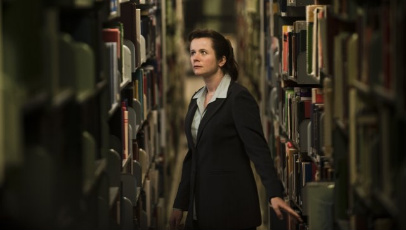
The film tells the story of Margaret Humphreys (Watson), a social worker from Nottingham who uncovered one of the most significant social scandals in recent times: the organised deportation of children in care from the United Kingdom to Australia.

Almost single-handedly, against overwhelming odds and with little regard for her own well-being, Margaret reunited hundreds of families, brought authorities in both countries to account and worldwide attention to an extraordinary miscarriage of justice.

Loach’s debut feature is a respectable adaptation of Humphreys’ novel Empty Cradles, taking the morose subject matter and handling it with care.

Instead of floundering in the children’s torment, Loach, with the help of screenwriter Rona Munro, manages to steer the film to the fault-lines but is careful never to thwart the source material, only revealing the true hardships where absolutely necessary.

There are several clumsy moments within Munro’s screenplay, and some of the dialogue is a little too heavy-handed, but these factors are minor enough to never detract from the overall message and conviction of the film.

Loach’s direction compliments the material exquisitely, and he puts his experiences in documentary film-making to admirable effect. His valiant use of hand-held camera is restrained, and the beautiful visual antithesis between a wintery Nottingham and the hot, dusty terrain of Australia is used strikingly to create two very distinctive locations.

Perhaps the films greatest assest are the performances, with each actor delivering extraordinarily refined turns as their respective characters, but none more so than Watson, Wenham and Weaving.

Watson simply dazzles as Margaret, combining the characters vulnerability and unquestionable determination to tremendous avail. Wenham is captivating as the intricate and tightly strung Len, and Weaving delivers a noteworthy performance as the damaged and emotionally troubled Jack.

Oranges & Sunshine is a robustly inspirational yet deeply enraging film about child exile, with a fiery central performance from Emily Watson. It’s certainly a a film that deserves voluminous attention.

Review: Winnie The Pooh (2011)

After 35 years, Walt Disney Animation Studios bring Winnie The Pooh back to the screen in a new adventure for the amiable gang.

During an ordinary day in Hundred Acre Wood, Winnie The Pooh sets out to find some honey. Misinterpreting a note from Christopher Robin, Owl convinces Pooh, Tigger, Rabbit, Piglet, Kanga, Roo and Eeyore that their young friend has been captured by a creature named “Backson” and they set out to save him, with the lovably pessimistic donkey keeping an eye out for his ever-disappearing tail along the way.

The plot, while simple, meanders with lively diversions making it both endearing and entertaining for the very young, and whimsical enough to appeal to the nostalgic older demographic.

Stephen J. Anderson and Don Hall do nothing in particular to disturb the status quo, but still manage to make Pooh look fresh and original, even while treading carefully to ensure they don’t ruin the beloved cultural memory of such a classic cartoon.

The animators superbly retain the look of E.H. Shephard’s classic illustrations while adding a number of sublime, modern touches through sharp attention-to-detail, luscious hand-painted backdrops and some well-integrated digital sequences.

Winnie and friends are all voiced with great care and energy. These classic characters look fantastic, but it’s through the skilful vocal work that they are truly brought to life. Whether it’s Tigger’s energetic lisp, Eeyore’s defeated sighs or Winnie’s emphatic “Bother”, these are very much the same animals you’ve come to know and love.

Zooey Deschanel’s quirky-cutesy voice works wonders in bringing Pooh into the 21st century, and helps the original songs to work harmoniously with the classically-tinged score, both of which beautifully enhance the overall experience.

Winnie The Pooh is enchanting, whimsical, and as luscious as the classic shorts. Its brevity makes it all the more winsome.

Review: Scream 4 (2011)

Directed by Wes Craven, Scream 4 is the fourth instalment in the popular slasher franchise, and comes eleven years after the pallid Scream 3 hit our screens.

The film centers on Sidney Prescott (Neve Campbell), who returns to Woodsboro on the last stop of her book tour. There she reconnects with Sheriff Dewey (David Arquette) and Gale (Courteney Cox), as well as her younger cousin Jill (Emma Roberts) and Aunt Kate (Mary McDonnell).

Unfortunately, Sidney’s appearance also brings about the return of Ghostface, putting Sidney, Gale, and Dewey, along with Jill, her friends, and the whole town of Woodsboro in grave danger.

Taking details from the original, Scream 4 presents itself as a horror reboot, and presents a twisted new set of rules. It calls out all the shoddy horror remakes and leaves them in its grisly wake, even taking time to be (genuinely) tech savvy and fit in a comical dose of social commentary.

Original screenwriter Kevin Williamson infuses his script with clever swipes at 21st century horror, nifty one-liners and genuinely surprising, very well executed twists.

The horror beats in the script make for a triumphant return. It truly feels as though Williamson has upped his game, especially with regard to the flaws in Scream 3 which occurred in his absence. He has returned to the original film’s ideas, and delivers a much more realistic and contemporary horror film – once again instilling fear and nervousness into the audience’s minds.

Wes Craven’s direction is snappy, coherent and naturalistic. Instead of relying on heavy camera tricks like many recent horror directors, he shoots his film in a very raw fashion – as if making a real effort to produce a much more natural horror within his viewers.

The gore has been increased to counteract any feeling of over-familiarity with the franchise, and the deaths have become increasingly inventive. Special regard goes to the hall-of-mirrors style opening, which takes the well worn opening sequence formula and turns it on its head.

It’s a joy to see the new cast gel so well with the returning trio – who, after eleven years, re-inhabit their respective roles exquisitely, making it feel as if no time at all has passed between films and the characters have been living on in peace.

All the newbies are up to the task and fully invest in their roles no matter the screen time, providing plenty of entertainment and witty one-liners. Of them, Roberts, Hayden Panettiere and Alison Brie are the most impressive, each moulding their personalities into fleshed out, humorous and believable characters.

Scream 4 is an undeniably sharp, well-crafted and suitably gory improvement on its weak predecessor, and a sprightly addition to the much-loved slasher franchise. Please, Craven, can we have some more?

Review: Wake Wood (2011)

Directed by David Keating, Wake Wood is the latest film from the recently revived Hammer Film Productions, and stars Timothy Spall, Aidan Gillen, Eva Birthistle and Dan Gordon.

The film centers on the parents of a girl killed by a savage dog who are granted the opportunity to spend three days with their deceased daughter.

Whilst there are a few distinctly stale looking shots that disclose the paltry budget, there’s enough directorial flair from Keating to overcome any unfortunate imperfections, and make him a filmmaker worth keeping an eye on.

The special effects are mostly retro and wonderfully eerie, and though not the most visually memorable horror production, it does engender a suitably unpleasant sense of foreboding, artfully ushering classic Hammer conventions into the 21st century.

The screenplay, however, doesn’t hold up to much analysis, often falling foul to erroneous cliches, but it’s nonetheless a boisterous and disconcerted piece that thrills from start to finish.

Gillen and Birthistle each deliver suitably grim and tormented performances as the grieving couple, while Spall manages to reign in his borderline over-the-top performance to a level of creepiness that chills more than you’d think possible.

Wake Wood is a sly, compelling and notably spooky British horror that astutely reintroduces classic Hammer conventions into modern cinema.

Review: Rio (2011)

Rio is the latest animation film from Blue Sky Studios, and features the voice talents of Jesse Eisenberg, Anne Hathaway, George Lopez, Jemaine Clement, Leslie Mann and Jamie Foxx.

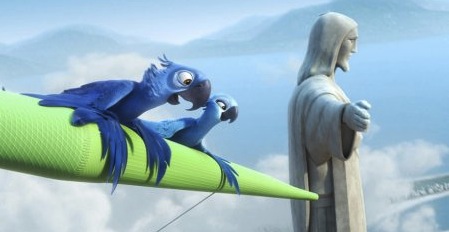
The film centers on Blu (Jesse Eisenberg), a domesticated macaw from small-town Minnesota, who, when he meets the fiercely independent Jewel (Anne Hathaway), takes off on an adventure to Rio de Janeiro with this bird of his dreams.

The peppy, action-packed and convivial screenplay – aside from struggling to sustain the party atmosphere to the end, and falling foul to the well-trodden romantic chase caper, and the trademark slapstick gags – combines charm, thrills, laughs and romance to admirable, sweet avail. It’s not overly complicated, and may feel a tad strained at times, but the approach is sharp enough to keep you entertained throughout.

The characters, including the humans, are under-developed and, no matter how top-notch the voice acting is, the dialogue feels too conventional and flaky to capture audiences attention like other, braver, animation films.

There is, however, one exception. Clement, who voices Nigel, a red-eyed cockatoo, steals every scene he’s in, even delivering a hilarious yet equally fearsome performance as the central villain.

In a technical sense, Rio is simply exquisite, with director Carlos Saldanha ensuring every scene twinkles with a remarkably high level of attention-to-detail. The 3D is crisp, richly attained with a tremendous depth of field, accentuating the glorious, picturesque scenery and wonderfully buoyant animation, and never feeling unnecessary.

The music, ranging from John Powell’s score to original songs by Taio Cruz and will.i.am, was tempestuous, but not always as soaring as you’d expect.

Rio may not be hugely original, and certainly has its share of flaws, but it has a refreshingly light, entertaining feel to it that, in addition to the superb animation and energetic voice acting, should leave you beaming from cheek to cheek.