Attack The Block
Director: Joe Cornish
Starring: Nick Frost, Jodie Whittaker and Luke Treadaway
Attack The Block
Director: Joe Cornish
Starring: Nick Frost, Jodie Whittaker and Luke Treadaway
1. Thor – £1,946,695
2. Fast Five – £1,608,463
3. Insidious – £1,315,358
4. Water for Elephants – £1,270,483
5. Hanna – £1,135,782
6. Something Borrowed – £707,863
7. Rio – £702,493
8. Priest – £396,038
9. Arthur – £309,683
10. Hop – £214,364
The King’s Speech
Director: Tom Hooper
Starring: Colin Firth, Helena Bonham Carter and Geoffrey Rush
Blue Valentine
Director: Derek Cianfrance
Starring: Michelle Williams, Ryan Gosling and Faith Wladyka
The Way Back
Director: Peter Weir
Starring: Jim Sturgess, Ed Harris and Colin Farrell
I Saw The Devil
Director: Jee-woon Kim
Starring: Byung-hun Lee, Min-sik Choi and Gook-hwan Jeon
Biutiful
Director: Alejandro González Iñárritu
Starring: Javier Bardem, Maricel Álvarez and Hanaa Bouchaib
Archipelago
Director: Joanna Hogg
Starring: Tom Hiddleston, Christopher Baker and Kate Fahy
Chico & Rita
Director: Tono Errando, Javier Mariscal and Fernando Trueba
Starring: Mario Guerra, Limara Meneses and Eman Xor Oña
Waiting For Superman
Director: Davis Guggenheim
Starring: The Black Family, Geoffrey Canada and The Esparza Family
1. Thor – $66M
2. Fast Five – $32.5M
3. Jumping The Broom – $13.7M
4. Something Borrowed – $13.1M
5. Rio – $8.2M
6. Water For Elephants – $5.6M
7. Tyler Perry’s Madea’s Big Happy Family – $3.9M
8. Prom – $2.4M
9. Soul Surfer – $2.1M
10. Hoodwinked Too! Hood Vs. Evil – $1.8M

Meek’s Cutoff is a new take on the western genre by acclaimed indie director Kelly Reichardt, and stars Michelle Williams, Paul Dano, Bruce Greenwood, Shirley Henderson, Will Patton and Zoe Kazan.
The film follows a group of settlers, traveling through the Oregon desert in 1845. When they find themselves stranded in this harsh environment, they capture a lone Cayuse Indian in the hope he will lead them to water.
The style is austere, minimalist even – for long passages there’s no dialogue, and Jonathan Raymond’s meandering, prudent script deflects traditional narrative conventions, instead shifting focus onto the characters, letting their arguments and troubled minds drive the narrative.
The languid pacing not only begs us to contemplate the characters’ world, but also allows us to further enjoy the visual poetry in the lingering and extraordinary camerawork.
Reichardt’s direction is sublime, carving a distinctive and atmospheric tone that compliments the passive narrative perfectly. With the help of cinematographer Chris Blauvelt, she’s able to indulge in some extraordinary panoramic shots, using the landscape as a mirror for the characters’ hopeless trek.
The restricting format Meek’s Cutoff is filmed in, and the very little music used, gives the boundless desert a distressing claustrophobia and repetitiveness. These factors all exquisitely add to the almost frightening atmosphere, and highlight the apparent feelings of alienation, isolation and loneliness that taint the weary travelers.
Michelle Williams’ performance is a tour de force. She is tremendous in her role as the strong-willed Emily. It’s clear she feels comfortable with the material, and Reichardt extracts the best in her, rivalling her award-nominated turn in Derek Cianfrance’s Blue Valentine.
Kazan and Henderson are respectable as the films key supporting acts, both responsible for the films timid yet slick comic interludes.
Perhaps the only problem is how underused and underdeveloped the male characters feel. The men are theoretically in control of their female companions, but they are never given enough screen time for this idea to develop, or for their characters to truly flourish. Dano, Patton and Greenwood are all fantastic actors, so it’s a shame to see their involvement so mishandled.
Meek’s Cutoff is a beautifully evocative, sophisticatedly directed, and astonishingly acted portrait of life on the Oregon Trail.
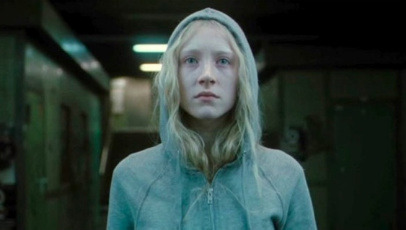
Hanna (Saoirse Ronan) is a teenage girl. Uniquely, she has the strength, the stamina, and the smarts of a soldier; these come from being raised by her father (Eric Bana), an ex-CIA operative. Living a life unlike any normal teenager, her upbringing and training have all geared towards making her the ideal assassin.
The turning point in her adolescence is unquestionably acute: sent into the world by her father on a mission, Hanna journeys covertly across Europe while deceiving agents sent after her by a adamant intelligence officer (Cate Blanchett). As she closes in on her ultimate target, Hanna faces terrifying revelations about her existence.
Hanna is a cross between fantastical fairytale odyssey – with multiple references being made to The Brothers Grimm – and an action-thriller in the vein of Bond or Bourne. It’s an amalgamation that sounds like it shouldn’t work, but thanks to an on-form Joe Wright (who surprisingly doesn’t look out of his comfort zone), it holds together brilliantly.
Ronan delivers yet another exceptional performance as Hanna, and admirably proves herself to be the most versatile actress of her age-range. She’s entirely believable as both an assassin and as a vulnerable, innocent young girl facing the harsh truths of reality for the very first time. Not only does Ronan kicks ass in her fervid action scenes, but she also captures the vulnerable side beautifully, which is wonderfully represented in the sweet yet irresolute relationship she strikes up with a vacationing family.
Blanchett is equally impressive as Ronan. She plays the ruthless CIA agent Marissa Wiegler with an astonishingly cold, suitably heartless zeal. It’s a real thrill to see her inhabit a supporting role so assuredly. Bana, on the other hand, brings humility to what is essentially a harsh and coercive character, but it isn’t enough to make Erik feel as essential to the narrative as he should.
Jessica Barden, as Ronan’s unlikely friend Sophie, injects a much-needed touch of humour and candor, showing exactly how naive people can be when they’re oblivious to the horrors of the world. Olivia Williams pops up as Sophie’s mother, and shares a delightfully testy exchange with Blanchett’s Marissa.
The plot does contain a few pitfalls, inconsistencies and hokum analogies, but they never become too much of an issue. The relentless pace, subtly witty dialogue and surefire levelheadedness that never takes itself too seriously let the viewers choose whether or not to dig deeper, and it is this that helps skip swiftly over the flaws.
Wright’s direction is utterly dazzling. He finds the right balance over a range of camera angles: from the sweeping long shot to intense, hand-held photography, blending the visceral action with the in-depth character-based drama.
By indulging in consistently sharp and comic-book like editing, Wright is able to enhance the velocity of the action and tenacious mood of the film, intercutting it with bewitching scenery shots.
Along with cinematographer Alwin H. Kuchler, he also uses some very unique set pieces to stage the films penetrating action sequences, including sewers, underground bunkers, and an abandoned amusement park. This works a treat as it makes the film feel more pragmatic, rather than something too science-fiction. In addition, by using off-key lighting and wondrous editing techniques, the fantastical feel is left to flourish, but in a way that maintains the mystery and element of intrigue.
The Chemical Brothers’ score brings all the incredible elements together magnificently, strikingly capturing the stamina, acuity and ruthlessness of the piece as a whole.
Hanna is a superb adrenaline-fuelled action-thriller come fantasy tale, with assured direction, solid acting, stylish cinematography and a blistering score to boot.
Hanna
Director: Joe Wright
Starring: Saoirse Ronan, Cate Blanchett and Eric Bana
Priest
Director: Scott Stewart
Starring: Paul Bettany, Karl Urban and Lily Collins
Something Borrowed
Director: Luke Greenfield
Starring: Ginnifer Goodwin, Kate Hudson and Colin Egglesfield
13 Assassins
Director: Takashi Miike
Starring: Kôji Yakusho, Takayuki Yamada and Yûsuke Iseya
My Dog Tulip
Director: Paul Fierlinger and Sandra Fierlinger
Starring: Christopher Plummer, Lynn Redgrave and Isabella Rossellini
Outside The Law
Director: Rachid Bouchareb
Starring: Jamel Debbouze, Roschdy Zem and Sami Bouajila
Everywhere & Nowhere
Director: Menhaj Huda
Starring: James Floyd, Adam Deacon , Alyy Khan
1. Thor – £5,449,300
2. Fast Five – £2,609,244
3. Insidious – £1,441,292
4. Rio – £801,102
5. Arthur – £682,187
6. Scream 4 – £396,190
7. Hop – £314,829
8. Beastly – £210,974
9. Source Code – £196,978
10. Red Riding Hood – £169,325
Water For Elephants
Director: Francis Lawrence
Starring: Reese Witherspoon, Robert Pattinson and Christoph Waltz
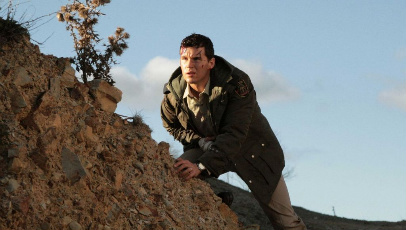
Red Hill is both a genre homage and an imitation, taking the long-standing logistics of the iconic western and infusing it with modern-day cinematic and narrative devices in a clever, intriguing, and unprecedented way.
The film centers on Shane Cooper (Ryan Kwanten), a police officer who moves to the middle of nowhere with his pregnant wife to escape the stresses of city life. On his first day on the local force he has to contend with his hostile boss Old Bill (Steve Bisley) and the imminent arrival of a very dangerous escaped convict (Tommy Lewis).
Patrick Hughes excels in his direction and, with the assistance of cinematographer Tim Hudson’s dreary lighting and clever camera angles, demonstrates an uncomfortably intrinsic ability to exploit and unnerve his viewers, particularly in the way he fleeces suspense out of the most elementary of happenings.
He elicits hearty performances from the entire cast, but most superby from the undeniably likeable Kwanten and acrimonious Bisley. Kwanten, in particular, is simply fantastic as Shane. Realistic, charismatic, and more than capable of taking on a lead role, Kwanten instils a wonderfully cool and collected air to Shane that makes him ever more matter-of-fact yet eerily frightening at the same time.
It’s due to uneven writing and a air of predictability, however, that the film stumbles. It starts out as an extremely tense, exciting and gritty revenge thriller but, through many foolish character choices and implausible narrative crossroads, slowly unravels into a generic, sometimes nonsensical, and all-too familiar blood bath.
While not too detrimental to the overall experience, especially since the coarse atmospherics and plastering of archetypal revenge western conventions gel surprisingly well together, it does prevent the film from being wholly logical, tonally sound and entirely convincing.
Nevertheless, Red Hill still manages to be an insanely fun, stunningly shot, brilliantly acted, and all together dazzling directorial debut. Hughes is a writer/director to keep your eye on.
 Empty Screens