Review: Paul (2011)

Simon Pegg and Nick Frost reunite in yet another bromance buddy film, this time from director Greg Motolla.

Paul sees two best friends, Graeme (Pegg) and Clive (Frost) embark upon a tour of UFO landing sites after visiting Comic-Con in San Diego. Fleeing into the night after angering some aggressive rednecks, they have a chance encounter with Paul (Seth Rogen), a wise-cracking alien who implores them to take him with them before he gets dragged back to Area 51.

All too keen to indulge in a geek fantasy, the two nerds stash Paul in the back of their rented RV and attempt to return him to his landing site. But things don’t go quite according to plan when they accidentally kidnap a trailer park attendant (Kristen Wiig) and discover that they have an FBI agent on their trail (Jason Bateman).

For the most part, the story is solid. It impressively finds the right balance between road movie and alien flick, and results in an old fashioned, grand, amped-up final showdown.

Motolla’s direction, however, is all-too tame and demonstrates that a Pegg and Frost film is banal without their counterpart Edgar Wright. Mottola makes a commendable effort, but is clearly out of his comfort zone.

Pegg and Frost, even without Wright, put their real-life friendship to good use and create a likable duo, with naturally blowing, witty banter and individualistic personalities, enough to differentiate them from their previous on-screen personaes.

Seth Rogen proves to be a inspired choice for Paul, reminding audiences he is in fact a talented actor, and not the one hit wonder he was in danger of becoming. And Kristen Wiig, in her first mainstream film, shows off her natural comedic talent, getting her own fair share of laughs in amongst an already headstrong cast.

Jane Lynch and Sigourney Weaver, though awarded with limited screen time, both bring a remarkable sweet-wise quality to their respective roles, making you ache for more.

Paul is an adequately enlivening Saturday night movie, with gratifying gags, a savvy cast and enough sci-fi references to keep everyone happy.

Review: No Strings Attached (2011)

Veteren comedy director Ivan Reitman returns with No Strings Attached, a rom-com that asks the question of whether or not friends with benefits can still be best friends without letting their emotions overrule their unattached “relationship”.

Emma (Natalie Portman) and Adam (Ashton Kutcher), after years of failed relationships, make a pact to use each other for sex. But when Adam starts seeing their relationship as something more, Emma instinctively wants to run the other way.

No Strings Attached – while it may be too long for its own good, is overly predictable and relies too heavily on crass humour – delivers feasibly well on all levels under the trained direction of Reitman and a competent script by Elizabeth Meriwether.

Ashton Kutcher, reprising the role he’s played in every other rom-com, is likeable and entertaining enough. Natalie Portman, in a role that is vastly different to her award-nominated performance in Black Swan, often feels uncomfortable in a genre that’s clearly not suited to her talents, but undeniably manages to deliver a relatively natural, appealing and sexy performance.

The supporting cast, including standout performances from Lake Bell and Greta Gerwig, notably aid the two leads, often stealing the film and creating an enjoyable diversion to the weak and predictable central storyline.

No Strings Attached is ultimately a fairly enjoyable rom-com that’s made watchable by an above-average script, credible direction and the best intentions of the entire cast.

Review: Gnomeo and Juliet (2011)

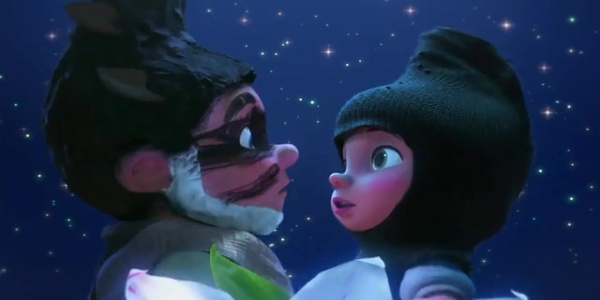
Gnomeo and Juliet is a new animation film loosely based on William Shakespeare’s play Romeo and Juliet. It’s directed by Kelly Asbury.

The film centers on two garden gnomes, Gnomeo (James McAvoy) and Juliet (Emily Blunt), caught in forbidden love. The couple looks to find lasting happiness and avoid tragedy as they are trapped in the middle of a feud between blue and red-hatted garden gnomes.

The heart and beauty of the film, aside from its queerness and spirit in bringing the garden gnomes to life, lies in the sheer attention-to-detail in the visual storytelling. The story and stunning animation, with all its quirks, draws you into the gnomes’ magical existence, and is so soft-hearted, daft and delightfully British that it’s hard not to be swayed.

Asbury awards each gnome a contemporary, individualistic personality that kids of all ages – including some adults – will respond to. In addition, the cast – including McAvoy, Blunt, Michael Caine, Jason Statham, Maggie Smith, Patrick Stewart, Ashley Jensen, Matt Lucas, Stephen Merchant, and even Ozzy Osbourne – enhance the enjoyability and retain the wholly British quality, inhabiting their respective personalities with such joy and comical timing.

The soundtrack, carefully constructed by Elton John, compliments the film seamlessly, becoming a character of its own and enhancing the story and mad-cap eccentricities unravelling on-screen, sweeping you away with its undeniable heart-warming nature.

While it may not have a hope in hell of reaching the dizzy heights of a fellow Pixar or Dreamworks Animation film, Gnomeo & Juliet is a wonderfully homegrown, quirky and seductively fun animation film that is sure to find a place in your heart, unless, however, it’s made of stone.

Review: True Grit (2010)

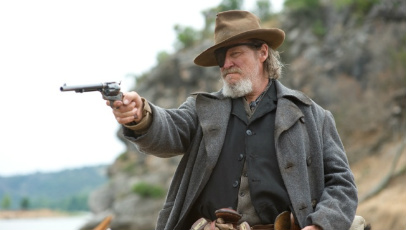
True Grit, the second adaptation of Charles Portis’ 1968 novel of the same name, is the latest film from writer/director duo Joel and Ethan Coen, and a robust one at that.

The film centres on Mattie Ross (Hailee Steinfeld), 14-year-old farm girl, who, when her father is murdered, sets out to capture the killer, hired hand Tom Chaney (Josh Brolin). To aid her, she hires the toughest U.S. marshal she can find, Reuben J. Cogburn (Jeff Bridges).

Mattie insists on accompanying Cogburn, whose drinking, sloth, and generally reprobate character do not augment her faith in him. Against his wishes, she joins him in his trek into the Indian Nations in search of Chaney.

They are joined by Texas Ranger LaBoeuf (Matt Damon), who wants Chaney for his own purposes. The unlikely trio find danger and surprises on the journey.

The Coen brothers have masterfully constructed a sombre, funny, elegiac and steadfastly if unconventional film, one peppered with sharp, witty one liners and surreal character interactions to lighten the mood.

The unconventional relationship between the unlikely trio is surreal, yet oddly captivating and sentimental. The testing environment and the harsh journey from which they are brought together forces them to establish a life-long, truth-worthy bond.

With the help of their trusty cinematographer Roger Deakins, the Coens use the barron landscape beautifully, capturing the grandeur of ripply rivers, craggy trees and desolate Indian Nations. Each and every visually minimalistic, yet suitably informative shot feels vital and imperative to the films overall tone and semblance.

The real heart of the film, however, lies in the performances. The casting is inspired and exact, and each actor thrives in the rich landscape so delicately constructed by the Coens.

Bridges and 14-year-old newcomer Steinfeld, in particular, give noteworthy and convicted turns as Reuben and Mattie, respectively.

Bridges is outstanding yet again; funny yet meaningful, truly just a juggernaut at the peak of his career. Steinfeld, on the other hand, emerges from obscurity and delivers a blow-away, fearless turn as Mattie, a girl with a vengeance that won’t quit.

Matt Damon, Josh Brolin and Barry Pepper all have value and tonality in their respective supporting roles, but unfortunately never match the giddy heights of the two leads.

True Grit – while it may not match the perfection of No Country for Old Men – is a masterfully written, beautifully directed and unforgettably acted Western by the masters of modern-day cinema.

Review: Never Let Me Go (2010)

Never Let Me Go, Mark Romanek’s adaptation of Kazuo Ishiguro’s acclaimed and highly influential novel, chronicles the phases of three characters’ lives: Ruth, Kathy and Tommy, and marks his first film in nine years.

As children, Ruth, Kathy and Tommy (played by Ella Purnell, Izzy Meikle-Small and Charlie Rowe), spend their childhood at Hailsham, a seemingly idyllic English boarding school in the English countryside for children who are special.

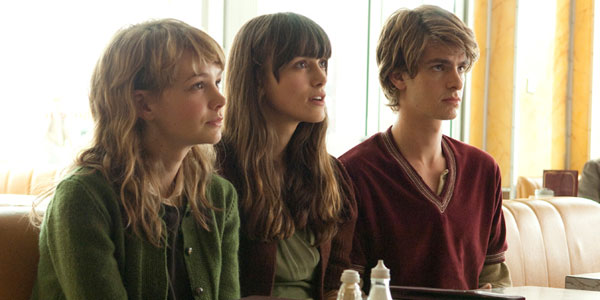
As they grow into young adults (played by Keira Knightley, Carey Mulligan and Andrew Garfield), they move to The Cottages and find that they have to come to terms with the strength of the love they feel for each other, while preparing themselves for the haunting reality that awaits them.

Ishiguro’s gentle sci-fi concept is executed with sombre subtlety by Romanek and, despite Alex Garland’s sometimes too methodical screenplay, preserves an eerie sense of mystery and discerning dubiety in its translation to screen. These elements, in a bid to keep the film realistic, are wisely buried within a wholly human story, one about love, loss and empathy.

Romanek’s successful direction is highlighted in the great care he has for the source material and the characters that inhabit it. His remarkable skill comes to light in the way he presents the dystopian British countryside as beautiful yet bleak. It perfectly juxtaposes the beautiful lives everyday people lead with the bleak lives lead by the donors.

The three central performances are equally astounding, each superbly displaying repressed desperation and their desire to achieve true happiness. Mulligan’s exquisite beauty and incandescent quality make her perfect as Kathy, confirming her newly won status, while Garfield is undeniably arresting as the troubled Tommy.

Knightley, who is left with the trickier role, hits the right notes of disdainful faux-sophistication, holding her own as the vindictive Ruth, the manipulative force of nature who interferes with the lives of Tommy and Ruth.

The supporting actors – Charlotte Rampling, Sally Hawkins, Nathalie Richard, Domhall Gleeson and Andrea Riseborough – hold their own against the powerful trio. Though none of them has much screen time, they all play their characters with conviction and restraint, further accentuating the central themes of loneliness and longing.

Rachel Portman’s etherial score, almost a character in itself, penetrates your heart, in a pondering, beautiful way that compliments, and often surmounts, the heart-rending narrative.

The only issue is with the sometimes irritatingly slow pacing, and the disproportionate narrative that works against audience involvement. This, however, isn’t necessarily a bad thing, especially considering the realistic and sinister themes the film explores – and is excellently concealed by the fantastic performances.

Never Let Me Go is not only a beautifully explorative, acted and directed piece of filmmaking, but a masterful adaptation and glorious cinematic achievement.

Review: Rabbit Hole (2010)

Becca (Nicole Kidman) and Howie Corbett (Aaron Eckhart) are a happily married couple whose perfect world is forever changed when their young son, Danny (Phoenix List), is killed by a car.

Becca tries to redefine her existence in a surreal landscape of well-meaning family and friends. Her experiences lead her to find solace in a mysterious relationship with a troubled young comic-book artist, Jason (Miles Teller) – the teenage driver of the car that killed Danny.

Becca’s fixation with Jason pulls her away from memories of Danny, while Howie immerses himself in the past, seeking refuge in outsiders who offer him sympathy and condolences. The couple, both adrift, make disconcerting and hazardous choices as they find ways to cope with their loss.

Rabbit Hole, based on a stage play by David Lindsay-Abaire’s, is a piercing portrait of a couple struggling to cope with the death of their son. Lindsay-Abaire, who also wrote the screenplay, provides an surprisingly funny, intensely honest insight into how grief can affect people and force them in opposing directions.

The writing style is sly and witty – sometimes crushing, sometimes downright nasty – cleverly punctuating the overriding sense of despair, which, in tell, provides hope to the couple and their future.

John Cameron Mitchell’s direction is nuanced and fraught, encapsulating the grief with a certain level of restraint that manages to keep us far enough out-with the emotional core of the film, so not to become too troubled by the distressed subject-matter.

The emotional outbursts are as accustomed as they are agonising, accentuated perfectly by Kidman and Eckhart’s, whose raw performances never lets the material slip into the melodrama.

The performances from the entire cast are irreproachable. Kidman’s Becca is fragile and antsy, abandoned by her friends and former colleagues she lashes out at her family’s clumsy efforts to help. It’s clear that there is no way of curing the feeling of grief that’s become central to her being, when everyday life and occurrences become harrowing remembrances.

Eckhart’s Howie, on the other hand, is a less intricate but no less integral character, one that naturally exudes warmth and affection. He’s the devoted husband – and former father – who eats, sleeps and breathes his family. Even after all they’ve been through, he still has the desire, and strength, to fight to save his broken marriage.

Rabbit Hole is an impressively crafted, highly emotive and competent piece of cinema, bolstered by stand-out performances from Kidman and Eckhart.

Review: Tangled (2010)

Tangled is the 50th animated feature in the Walt Disney Animated Classics series and is largely based on the German fairy tale Rapunzel by the Brothers Grimm.

After receiving the healing powers from a magical flower, the baby Princess Rapunzel (Mandy Moore) is kidnapped from the palace in the middle of the night by Mother Gothel (Donna Murphy). Mother Gothel knows that the flower’s magical powers are now growing within the golden hair of Rapunzel, and to stay young, she must lock Rapunzel in her hidden tower. Rapunzel is now a teenager and her hair has grown to a length of 70-feet.

The beautiful Rapunzel has been in the tower her entire life, and she is curious of the outside world. One day, the bandit Flynn Ryder (Zachary Levi) scales the tower and is taken captive by Rapunzel. Rapunzel strikes a deal with the charming thief to act as her guide to travel to the place where the floating lights come from that she has seen every year on her birthday. Rapunzel is about to discover the world for the first time, and who she really is.

All the classic fairy tale tropes are here: a corrupt step-mother; humanised animal characters; a romance; and plenty of blisteringly energetic and feel-good musical numbers. What’s more, the animation is spectacular, as we’ve come to expect from Disney. It certainly trumps the likes of How To Train Your Dragon and Despicable Me, maintaining Disney’s animation reign.

Nathan Greno and Byron Howard’s direction is superb, accentuating the best elements in the sometimes frustratingly old-fashioned narrative. The clever characters, emotional core and tremendously emphasising use of 3D makes up for the feeling of deja vu, and opens the film up to a wide audience remarkably well.

Moore, Levi and Murphy’s voice acting is boisterous; all three bringing energy, emotion and depth to their respective characters. The style of the characters carefully constructed with the formula for Disney classics in mind, while still maintaining the individualistic feel with their differentiating mannerisms, set off a number of cartoonish elements that are so well-loved by long-time fans of Disney,

Tangled 3D was boisterously enjoyable, witty and energetic. Not Disney’s finest, but it was of high quality and entertainment nonetheless.

Review: The Fighter (2010)

David O. Russell’s new film, The Fighter, is about a dysfunctional family based on the boxer Mickey Ward’s turbulent life.

The Fighter tells the story of boxer “Irish” Micky Ward’s (Mark Wahlberg) who’s attempts at a boxing career are always met with failure. Trained by his drug-addicted brother, Dicky, and managed by their manipulative mother, Alice, Micky struggles to escape his tight-knit family and carve a successful life of his own.

Dicky’s dramatic fall from grace and the fractured shards of his dysfunctional family spur Micky forward, tearing him down, yet building him up at the same time, leading him to girlfriend Charlene and a career-move to LA.

Shepherded by Wahlberg’s Micky and Bale’s Dicky, The Fighter builds its dynamic around the family, choosing to focus on the families relationship, rivalry and manipulation, rather than the boxing itself, which is seen as a form of escapism, for Micky in particular.

Wahlberg and Bale each inhabit their respective characters absolutely, their personaes played against one another to represent two brothers struggling against the odds to make a name for themselves in the world.

Amy Adams embodies Charlene with a magnificently arresting force, striving to free Micky from the cycle of exploitation and anxiousness he’s been stuck in for years, allowing him to reach his full potential.

Melissa Leo is boorish in her rendering of Alice; exploiting and disrupting Micky and Dicky’s quest for stardom and freedom as mother/manager Alice. She’s one of those women from hell, all cigarettes and chicanery.

Russell’s direction is wonderful, mixing docu-style with intense, evasive cinematography, constructing everything with a perfect sense of naturalism and vivid energy.

Disappointedly, the script doesn’t, at times, match up to the strength of the direction and performances. It fails to find the right balance between boxing film and family psychodrama, making it difficult for viewers to fully invest in the characters’ lives; never quite reaches the heights its premise is destined for.

The Fighter is a well-directed, powerful film, with some truly sublime performances, regretfully let down by an often poor and in-cohesive script.

Review: Morning Glory (2010)

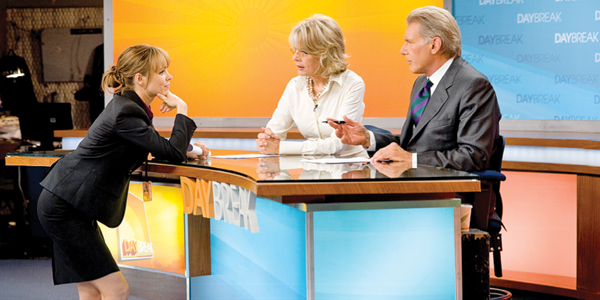
Morning Glory centers on Becky (Rachel McAdams), a hard-working morning TV show producer, who accepts the challenge of reviving struggling show Daybreak.

However, it soon becomes clear that the challenge at hand, including the task of pairing current host Colleen Peck (Diane Keaton) with respected newsman Mike Pomeroy (Harrison Ford), may be more difficult than even she can handle.

Surprisingly, despite opening with the usual generic rom-com characteristics, this is no predictable rom-com; instead more of a mature workplace comedy.

Director Roger Michell nails the direction, wonderfully transposing the busting and haphazard nature of Daybreak’s workplace to the bright, spacious and orderly environment Becky aspires to be a part of: the dizzy heights of well-rated commercial TV.

Aline Brosh McKenna’s script, in addition, is dynamic and vigorous. It uses some of the better rom-com characteristics and applies them remarkably well to the workplace comedy, increasing the films impact with fast-paced, sharp dialogue and well-rounded, emotive characters.

The performances are strong across the board. Harrison Ford, in particular, is on excellent form as the headstrong Pomeroy, and his sparring with co-star Colleen, played humorously by Keaton, is priceless.

It’s Rachel McAdams that’s the real triumph here. If, say, someone like Katherine Heigl had been cast instead, Morning Glory wouldn’t have the same pizaz it does with McAdams at the centre. Not only does she carry the film with her energetic, sleek and eminent performance, but she lifts it to a whole new level.

As an actress who has consistently delivered performances across a wide variety of genres, McAdams remains one of Hollywood’s most underrated actors. If there’s any justice, Morning Glory will do for McAdams what The Devil Wears Prada did for Anne Hathaway and Emily Blunt: propel her to universal stardom.

With a clever, grown-up script and some brilliant performances at work, Morning Glory is able to shred its predictability and become something special.

Review: NEDS (2010)

Peter Mullan returns to the 1970’s Glasgow of his youth with NEDS, his third feature as writer, director and star.

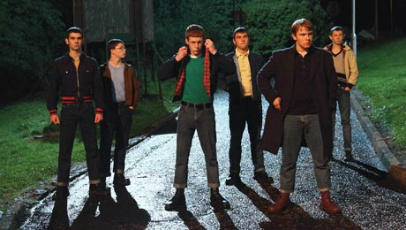
The film centers on John McGill, a bright and sensitive young boy about to start secondary school. Before long, social mores and peer pressure turn the John feral, forcing him among the eponymous NEDS, his only form of acceptance.

Despite clearly being influenced by the work of Ken Loach and Shane Meadows, Mullan abandons all the usual inviting genre tropes, instead opting for full-on, stark, discomforting realism, disrupted by the occasional stroke of surrealism, executing it terrifically.

The stark realism lets us, on a one-to-one basis, experience John’s intimidation and harsh, lonely lifestyle. It’s discomforting, but works terrifically in the films favour, highlighting the pernitent inescapability from gang culture in the 1970’s.

McCarron, plucked from obscurity by Mullan, gives a startlingly assured, emotional debut performance as John, convincingly showcasing his downward journey from the giddy heights to the violent, life-altering lows.

NEDS is an intimate, poignant and charmingly peculiar film, remarkably directed by Peter Mullan.