Review: Win Win (2011)

From the studio that brought us awards darling Little Miss Sunshine comes an offbeat sports comedy-drama from upcoming writer/director Thomas McCarthy, starring Paul Giamatti, Amy Ryan and newcomer Alex Shaffer.

The film centers on Mike Flaherty (Giamatti), a disheartened attorney and high school wrestling coach, who stumbles across a star athlete (Shaffer) through some questionable business dealings while trying to support his family. Just as it looks like he will get a double payday, the boy’s mother (Melanie Lynskey) shows up fresh from rehab and flat broke, threatening to derail everything.

McCarthy specialises in light humanism: storytelling that features ordinary people facing their relatable existences with an honest realism and finesse that is all too relatable. Win Win is no exception, and it exemplifies this in an extremely dignified and absorbing way, which should – at last – propel McCarthy into the mainstream.

His self-penned screenplay is full of warmth, fully realised characters, witty scenarios and bag fulls of humour – proving that dramedies needn’t have overblown set-pieces or self-conscious scrutiny to have a long-lasting, appeasing affect on their viewers. Even though the narrative splits off in several directions, Mike’s inner-turmoil and devotion to his family and friends remains at the forefront.

Furthermore, the direction is breezy, never overly infringing upon the drama. It perfectly compliments the material, as it lets the characters’ respective predicaments and the astutely criss-cross narrative breathe in a naturalistic and sensible way.

The triumph, however, lies in the casting. Giamatti delivers a wholly warm, genteel and august performance as the emotionally thwarted Matt, which is complimented extraordinarily by Amy Ryan as his benevolent yet overly vigilant wife Jackie.

Both are shamefully underrated actors, and their flawless paring alone – one that effuses a sense of easiness that’s so rarely captured by on-screen couples – undeniably affirms them as strong-willed and vital actors.

The supporting cast, including a pitch-perfect Jeffrey Tambor as Mike’s life-long friend Terry and a note-worthy Lynskey as Kyle’s off the rails mother, hold their own tremendously against the compelling duo.

When it comes to it, though, the real star is newcomer Shaffer. Plucked from obscurity for his naturalistic skill in the wrestling ring, Shaffer delivers a fantastic debut performance as Kyle, owning his scenes in a way that stays with you long after the credits roll. His chemistry with Giamatti glows with warmth and adoration, making their father and son-like dynamic radiate.

Win Win is both a richly engaging and wittily observed human affair that offers consistent offbeat humour, endearing performances and amiable direction.
Review: My Dog Tulip (2009)

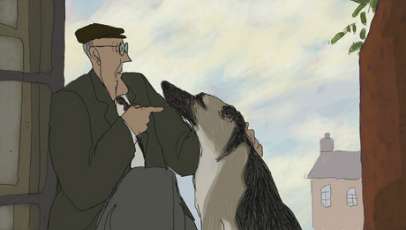
My Dog Tulip is based on the 1956 book of the same name by acclaimed author J. R. Ackerley, and tells the story of an elderly bachelor’s bittersweet relationship with his German shepherd.

The narrative both humorously and touchingly details the life that Ackerley and Tulip have shared – from her disdain of social interactions to his persistence in finding her a partner to breed with. It’s both charming and wholly matter of fact about the pair’s relationship, refusing to anthropomorphise Tulip in the way that has become all too fashionable recently. This ensures that their bond is always at the centre of the film, and keeps it feeling very authentic.

Paul and Sandra Pierlinger’s animation, done entirely on a tablet device, has a hand-drawn, rustic quality that exudes charm and love throughout. By keeping the animation minimal and sketch-like, the film represents Ackerley’s writing and temperamental thought process to wondrous avail. The mix between colourful scenes and black and white interludes is beautifully realised, visually separating the past from the present.

Christopher Plummer’s soothing and relaxing narration compliments the daydream-style animation perfectly. He nails the world-weary and lonesome nature of Ackerley, whose relationship with Tulip provides his only sense of life and love. Lynn Redgrave, who plays the meddling sister, also provides excellent voice work, though her contribution is disappointingly small.

If there’s a criticism to be noted, it’s that the film feel over-stretched at its 83 minute running time. If only the filmmakers had condensed the narrative to fit a 20 minute short, and perhaps avoided focusing the majority of the narrative on Tulip’s sexual frustrations, then it could have been quite extraordinary.

Still, these are minor disappointments, and My Dog Tulip is a marvellously animated and affably observed portrait of the devotion between one man and his dog – something that has been shamefully belittled in the past. It’s a film that deserves to be commended for it’s courageousness.

Review: Attack The Block (2011)

Attack The Block is a low-budget British sci-fi blockbuster from writer/producer extraordinaire Joe Cornish, starring a mix of established actors and unknowns engaged in an intense battle for their meagre council estate in South London.

The film begins with young nurse Sam (Jodie Whittaker) being mugged by a horde of teenagers from her South London housing estate, when they are interrupted by something large falling onto a nearby car. The action immediately switches to the youths confronting and killing a vicious, unearthly creature – unknowingly making themselves the target of an invasion of flesh-ripping aliens.

The premise may seem straightforward, but Cornish injects the script with such warmth, humour, action, violence and thrills that it evolves from a low-budget sci-fi film into something much larger. He finds that elusive dynamic that makes an instantly timeless blockbuster, which is as much a nail-biting action-thriller as it is an amusing character study.

The fact that the action remains within the surrounding environment of the titular “block” makes the film feel even more claustrophobic, realistic and altogether climactic. However, by littering the film with witty dialogue, playful characters and a wonderfully fanciful yet astute premise, Attack The Block manages to be hardcore and genuinely frightening, while never taking things too far and losing its earthy charm.

Cornish’s direction complements the confined action superbly. By layering it with throwbacks to 1980’s filmmaking, Cornish keeps the special effects, gimmicks and tricks to a minimum. Instead, he opts for laid back, restrained camera angles, letting the actors, action and scenery spur on events and take centre stage. The similarities to John Carpenter films are uncanny, but Cornish is bold and defiant enough to put his own mark on the creature feature genre.

The alien effects are almost entirely practical, and are exposed magnificently through abrupt snatches of ruthless imagery that’s reminiscent of several cult-classic horror films, including An American Werewolf In London and Ghostbusters. Their rugged design is blazingly original, making them undeniably more figurative than most mega-budget Hollywood beasts. A few subtle CGI enhancements add visceral gloss without ever ruining the authenticity of the aliens and supplementary gang war.

The cast, which is splendidly comprised of three known UK actors – Whittaker, Nick Frost and Luke Treadaway – alongside a smorgasbord of unknown teenagers, are uniformly top-notch. Frost delivers an over-the-top yet wonderfully humorous turn as Ron, Whittaker plays Sam with a captivating naivety and earthiness, and Treadaway brilliantly captures the personality of a posh stoner. Meanwhile, John Boyega stands out from amongst the unknowns, giving a powerful and genuinely unnerving performance as Moses.

The casting itself gives the film an extra layer of realism, as most of the actors were handpicked from council estates and youth clubs around London. Moreover, the willingness to address many current questions about war, racism, and violence in today’s society allows the film to remain level headed and appealing to a wide viewership. It’s unlikely to leave many feeling unimpressed or unaffected.

All in all, Attack The Block is a thoroughly entertaining, truly original, strikingly executed and – in my opinion – instantaneously classic British sci-fi cross-breed. It’s a film that simply cannot be missed.

Review: Meek’s Cutoff (2010)

Meek’s Cutoff is a new take on the western genre by acclaimed indie director Kelly Reichardt, and stars Michelle Williams, Paul Dano, Bruce Greenwood, Shirley Henderson, Will Patton and Zoe Kazan.

The film follows a group of settlers, traveling through the Oregon desert in 1845. When they find themselves stranded in this harsh environment, they capture a lone Cayuse Indian in the hope he will lead them to water.

The style is austere, minimalist even – for long passages there’s no dialogue, and Jonathan Raymond’s meandering, prudent script deflects traditional narrative conventions, instead shifting focus onto the characters, letting their arguments and troubled minds drive the narrative.

The languid pacing not only begs us to contemplate the characters’ world, but also allows us to further enjoy the visual poetry in the lingering and extraordinary camerawork.

Reichardt’s direction is sublime, carving a distinctive and atmospheric tone that compliments the passive narrative perfectly. With the help of cinematographer Chris Blauvelt, she’s able to indulge in some extraordinary panoramic shots, using the landscape as a mirror for the characters’ hopeless trek.

The restricting format Meek’s Cutoff is filmed in, and the very little music used, gives the boundless desert a distressing claustrophobia and repetitiveness. These factors all exquisitely add to the almost frightening atmosphere, and highlight the apparent feelings of alienation, isolation and loneliness that taint the weary travelers.

Michelle Williams’ performance is a tour de force. She is tremendous in her role as the strong-willed Emily. It’s clear she feels comfortable with the material, and Reichardt extracts the best in her, rivalling her award-nominated turn in Derek Cianfrance’s Blue Valentine.

Kazan and Henderson are respectable as the films key supporting acts, both responsible for the films timid yet slick comic interludes.

Perhaps the only problem is how underused and underdeveloped the male characters feel. The men are theoretically in control of their female companions, but they are never given enough screen time for this idea to develop, or for their characters to truly flourish. Dano, Patton and Greenwood are all fantastic actors, so it’s a shame to see their involvement so mishandled.

Meek’s Cutoff is a beautifully evocative, sophisticatedly directed, and astonishingly acted portrait of life on the Oregon Trail.

Review: Hanna (2011)

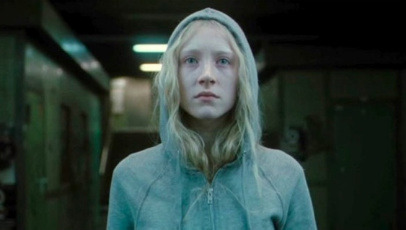
Hanna (Saoirse Ronan) is a teenage girl. Uniquely, she has the strength, the stamina, and the smarts of a soldier; these come from being raised by her father (Eric Bana), an ex-CIA operative. Living a life unlike any normal teenager, her upbringing and training have all geared towards making her the ideal assassin.

The turning point in her adolescence is unquestionably acute: sent into the world by her father on a mission, Hanna journeys covertly across Europe while deceiving agents sent after her by a adamant intelligence officer (Cate Blanchett). As she closes in on her ultimate target, Hanna faces terrifying revelations about her existence.

Hanna is a cross between fantastical fairytale odyssey – with multiple references being made to The Brothers Grimm – and an action-thriller in the vein of Bond or Bourne. It’s an amalgamation that sounds like it shouldn’t work, but thanks to an on-form Joe Wright (who surprisingly doesn’t look out of his comfort zone), it holds together brilliantly.

Ronan delivers yet another exceptional performance as Hanna, and admirably proves herself to be the most versatile actress of her age-range. She’s entirely believable as both an assassin and as a vulnerable, innocent young girl facing the harsh truths of reality for the very first time. Not only does Ronan kicks ass in her fervid action scenes, but she also captures the vulnerable side beautifully, which is wonderfully represented in the sweet yet irresolute relationship she strikes up with a vacationing family.

Blanchett is equally impressive as Ronan. She plays the ruthless CIA agent Marissa Wiegler with an astonishingly cold, suitably heartless zeal. It’s a real thrill to see her inhabit a supporting role so assuredly. Bana, on the other hand, brings humility to what is essentially a harsh and coercive character, but it isn’t enough to make Erik feel as essential to the narrative as he should.

Jessica Barden, as Ronan’s unlikely friend Sophie, injects a much-needed touch of humour and candor, showing exactly how naive people can be when they’re oblivious to the horrors of the world. Olivia Williams pops up as Sophie’s mother, and shares a delightfully testy exchange with Blanchett’s Marissa.

The plot does contain a few pitfalls, inconsistencies and hokum analogies, but they never become too much of an issue. The relentless pace, subtly witty dialogue and surefire levelheadedness that never takes itself too seriously let the viewers choose whether or not to dig deeper, and it is this that helps skip swiftly over the flaws.

Wright’s direction is utterly dazzling. He finds the right balance over a range of camera angles: from the sweeping long shot to intense, hand-held photography, blending the visceral action with the in-depth character-based drama.

By indulging in consistently sharp and comic-book like editing, Wright is able to enhance the velocity of the action and tenacious mood of the film, intercutting it with bewitching scenery shots.

Along with cinematographer Alwin H. Kuchler, he also uses some very unique set pieces to stage the films penetrating action sequences, including sewers, underground bunkers, and an abandoned amusement park. This works a treat as it makes the film feel more pragmatic, rather than something too science-fiction. In addition, by using off-key lighting and wondrous editing techniques, the fantastical feel is left to flourish, but in a way that maintains the mystery and element of intrigue.

The Chemical Brothers’ score brings all the incredible elements together magnificently, strikingly capturing the stamina, acuity and ruthlessness of the piece as a whole.

Hanna is a superb adrenaline-fuelled action-thriller come fantasy tale, with assured direction, solid acting, stylish cinematography and a blistering score to boot.

Review: Red Hill (2010)

Red Hill is both a genre homage and an imitation, taking the long-standing logistics of the iconic western and infusing it with modern-day cinematic and narrative devices in a clever, intriguing, and unprecedented way.

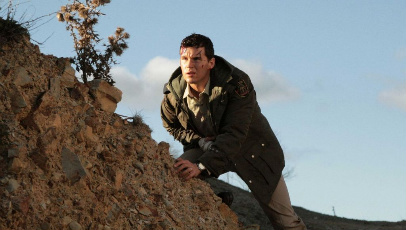
The film centers on Shane Cooper (Ryan Kwanten), a police officer who moves to the middle of nowhere with his pregnant wife to escape the stresses of city life. On his first day on the local force he has to contend with his hostile boss Old Bill (Steve Bisley) and the imminent arrival of a very dangerous escaped convict (Tommy Lewis).

Patrick Hughes excels in his direction and, with the assistance of cinematographer Tim Hudson’s dreary lighting and clever camera angles, demonstrates an uncomfortably intrinsic ability to exploit and unnerve his viewers, particularly in the way he fleeces suspense out of the most elementary of happenings.

He elicits hearty performances from the entire cast, but most superby from the undeniably likeable Kwanten and acrimonious Bisley. Kwanten, in particular, is simply fantastic as Shane. Realistic, charismatic, and more than capable of taking on a lead role, Kwanten instils a wonderfully cool and collected air to Shane that makes him ever more matter-of-fact yet eerily frightening at the same time.

It’s due to uneven writing and a air of predictability, however, that the film stumbles. It starts out as an extremely tense, exciting and gritty revenge thriller but, through many foolish character choices and implausible narrative crossroads, slowly unravels into a generic, sometimes nonsensical, and all-too familiar blood bath.

While not too detrimental to the overall experience, especially since the coarse atmospherics and plastering of archetypal revenge western conventions gel surprisingly well together, it does prevent the film from being wholly logical, tonally sound and entirely convincing.

Nevertheless, Red Hill still manages to be an insanely fun, stunningly shot, brilliantly acted, and all together dazzling directorial debut. Hughes is a writer/director to keep your eye on.

Review: The Extraordinary Adventures Of Adèle Blanc-Sec (2010)

The Extraordinary Adventures Of Adèle Blanc-Sec marks the return of fanciful writer/director Luc Besson, and is the big screen adaptation of Jacques Tardi’s acclaimed series of comics.

The film centers on Adèle Blanc-Sec (Louise Bourgoin): a young, go-getting journalist who embarks on an adventure to Egypt, and ups up face to face with all sorts of mummies. Meanwhile, in Paris, panic ensues.

Besson’s film is busy and energetic. The action is adventurous, the plot absorbing, the characters vibrant and the humour dark and caustic.

To some, the plot may seem a little implausible and out-of-control, but it’s hard to condemn the film too much when Besson is being so imaginative and impressively daring with the material.

Adèle, unquestionably the most intriguing character, is played with a breezy, almost klutzy charm by Louise Bourgoin. Although a marvellously feisty, cocksure and brilliantly cutting heroine, Bourgoin brings an impressive level of self-assuredness to Adèle that commendably keeps the character – and film – grounded, appealing, and focused on the task at hand.

The supporting cast are equally terrific, including a blustering, lazy cop (Gilles Lellouche); a trigger-happy hunter (Jean-Paul Rouve); and a charming young scientist (Nicolas Giraud). Each approach their frolicsome roles with both assertiveness and playfulness.

Besson rightfully plays the whole thing for laughs, which makes up for the overindulgent supernatural elements and chaotic sub-plots. Rather than attempting to impress with mountains of CGI, he keeps the action and adventure scenes grounded, with a naturalistic and wholly believable feel. That said, when CGI effects are used, they imbue the film with a touch of class and a stylish air.

The Extraordinary Adventures Of Adèle Blanc-Sec is a joyfully intrepid, if slightly overloaded, fantasy adventure, boasting a director at his most imaginative, and a wondrously energetic lead performance.

Review: Hobo With A Shotgun (2011)

Hobo With A Shotgun is a feature-length adaptation of the highly successful fake trailer made for Quentin Tarantino and Robert Rodriguez’ Grindhouse, and stars Rutger Hauer, Pasha Ebrahimi, Robb Wells and Molly Dunsworth.

The film centres on a homeless vigilante, Hobo (Hauer), who finds himself trapped in urban chaos. He is surrounded by armed robbers, corrupt cops and even a paedophile Santa. Hobo decides to bring about justice the best way he knows how – with his trusty pump-action shotgun.

Screenwriter John Davies litters the film with throwbacks to 1970′s horror, while conserving a gleeful level of originality and satirical humour into the oft-told one-against-the-world tale. It does wonders to keep viewers on the edge of their seats, and thoroughly entertained throughout. While the premise is a tad sketchy, the scenarios that derive from it – murderous dodgems, a torturous pinata, and the aforementioned unorthodox Santa – certainly aren’t.

Jason Eisener, who opts for practical effects over digital CGI, manages to balance a realistic feel with over-the-top, cartoonish, and incredibly gory violence. He indulges in frenetic cinematography, glorified lighting and a stomping soundtrack to boot, all in keeping with the exploitation genre and the films to which he is paying homage.

The choice to recast Hauer as the Hobo was one of utter genius, and he plays it with effectively straight assurance, keeping the film grounded amidst the hysteria. The supporting cast, a smorgasbord of unknowns and ex-TV stars, helps further to instil and sustain the feel of an authentic exploitation flick – something that previous studios’ efforts have failed to capitalise on.

Dunsworth – a prostitute and Hobo’s unimaginable foil, Abby – stands out amongst the supporting cast. She does tremendously well with a severely underwritten character, providing a brilliant antithesis to Hobo’s ruthlessness. They have a sizzling chemistry on-screen, and a subversive, darkly amusing rapport that feels extremely gratifying.

It’s clear Eisener has an eye for the schlock genre and, by letting his imagination run wild, Hobo With A Shotgun emerges as a sure-to-be perennial, shockingly violent and wonderfully clever yet purposely screwball modern-day vigilante thriller. It’s “bloody” terrific fun.

Review: Pina 3D (2011)

Twenty years in the making, Pina 3D is visionary filmmaker Wim Wenders’ tribute and love letter to German dance extraordinaire Pina Bausch.

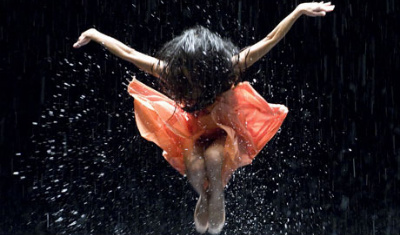
The film is centered on four of Bausch’s most celebrated choreographies – Cafe Müller, The Rite of Spring, Vollmond and Kontakthof – intercut with personal memories of Bausch, related by various members of her international dance company Tanztheater Wuppertal. Wenders’ central focus, however, remains on the dances, bravely leaving Bausch herself as an elusive and mysterious figure.

The various dances – both newly filmed and presented from archive footage – are captured by Wenders in incredibly bold, enthralling and hugely cinematic ways. Whether it be indoors on the theatre stage, or outdoors – at traffic intersections, in parks, or on the monorail – Wenders uses bold cinematography to present viewers with a closer look at the beauty of Bausch’s unique vision.

The spellbinding fusion between dance and documentary proves dance as an incredibly evocative and powerful piece of cinema. By infusing the movements with 3D, Wenders shows that the spatial relationships on the stage can speak to people in different ways, giving us a all together better insight into Bausch’s work. Shots are composed, through vibrant colours or endless perspective, to ensure they make true sense in 3D: opting for the conventional 2D would be missing the point entirely.

As a novice myself, the experience was truly eye-opening: a beautiful and enthralling tribute to Bausch.Instead of employing 3D technology in an attempt to take focus attention away from the under-developed narrative like many recent films, Wenders uses it very carefully, only to accentuate and express the realism of dance. It may well be the best 3D film I’ve ever had the pleasure of seeing.

To Wenders, cinema is an ongoing experiment. Pina 3D, whether you’re a dance lover or complete novice, wonderfully highlights this in a way that opens Bausch’s work up to a whole new audience, while never ignoring or sidelining Bausch’s die-hard followers and collaborators. It’s a truly majestic and enterprising piece of expressionist cinema.

Review: Last Night (2010)

Last Night is a grown-up relationship drama from screenwriter Massy Tadjedin, and stars Sam Worthington, Keira Knightley, Eva Mendes and Guillaume Canet.

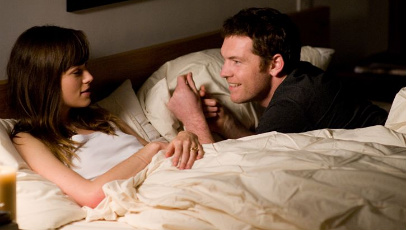
The film follows a married couple, Michael and Joanna (Worthington and Knightley), spending the night apart while Michael takes a business trip with attractive colleague Laura (Mendes).

While Michael’s resisting temptation in Los Angeles, Joanna encounters her past love, Alex (Canet), and must battle her own tenacious emotions.

The evocative and provoking screenplay deals with very real and prominent questions, leaving no stone unturned. While some moments seem a little too contrived, once the story finds its feet, it thrusts you back into the characters’ turbulent thoughts and emotions, tossing you from approval of their affairs to complete condemnation.

Tadjedin proves herself as a talent to watch with her stylish, confident and subtle direction, mixing close-ups with long-shots to contrast the amped up tension with the way she teases the multiple relationships.

Knightley is the pick of the four leads, carelessly bouncing from one emotional peak to the next with ease, proving her acting chops outside of her usual period pieces.

Her hidden and under-explored relationship with Canet’s cool and alluring Alex is believable, exhilarating and simply oozing with chemistry, signifying that not all relationships should be ruined with romance.

Worthington commendably conveys the torment of his situation through his performance as Michael, and has the strain written all over his face. Mendes does her seductive mistress justice, making you empathise with Laura’s emotionally strenuous past, no matter how corrupt she is.

Tadjedin has crafted a wonderfully subtle yet probing study into the giddy highs and devastating lows of relationships, proving herself as a director to watch and Last Night as a near-perfect talky romantic thriller.